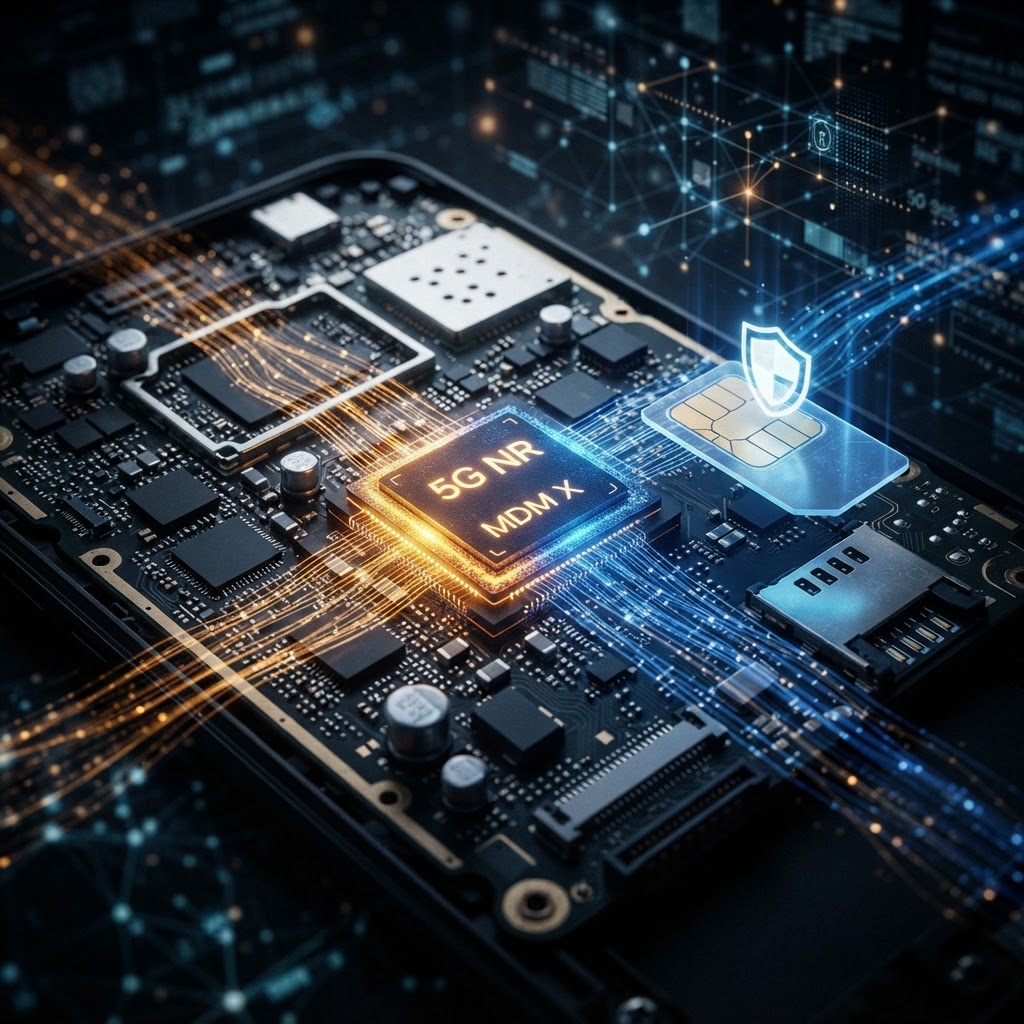
The Baseband Paradox: Why 5G Modems are the New Zero-Click Frontier
Security researchers have recently identified critical vulnerabilities in 5G baseband processors that allow for unauthorized cellular interception and stealthy mobile surveillance. A baseband processor is a dedicated chip within a smartphone responsible for all radio functions, including connecting to 4G and 5G networks. Because these processors run proprietary, closed-source firmware, they have long remained a black box for security auditors, creating a massive, unvetted attack surface.
Recent findings from Pennsylvania State University, utilizing a tool called 5GBaseChecker, have exposed flaws in chipsets from major vendors including Samsung, MediaTek, and Qualcomm. These vulnerabilities are particularly dangerous because they can be exploited via zero-click attacks, where a victim's device is compromised without any user interaction. By using a rogue base station to inject malicious Radio Resource Control (RRC) packets, an attacker can trigger memory corruption within the baseband firmware. This can lead to remote code execution (RCE), effectively turning the modem into a gateway for spyware for phones. For high-risk individuals, the only way to mitigate this at the physical layer is through hardware-modified phones that allow for the complete disabling of cellular radios when not in use.
SIM Card Exploitation: Beyond Cloning to Remote Code Execution
While the industry has focused on software-level security, the humble SIM card (Subscriber Identity Module) remains a significant point of failure. New research published in August 2026 highlights that SIM card vulnerabilities are now extending beyond mobile phones to include critical infrastructure like EV chargers. The SIM card is essentially a small computer running its own operating system, often based on Java Card technology.
Attackers are increasingly targeting the SIM Toolkit (STK), a set of commands that allows the SIM to interact with the handset. Vulnerabilities like Simjacker allow an attacker to send a specially crafted binary SMS that instructs the SIM card to execute commands, such as reporting the device's location or opening a browser to a malicious URL. Furthermore, SIM cloning remains a persistent threat. By extracting the International Mobile Subscriber Identity (IMSI) and the unique authentication key (Ki), attackers can duplicate a SIM, allowing them to intercept encrypted communications that rely on SMS-based two-factor authentication. This level of hardware surveillance is difficult to detect through traditional mobile forensics because the compromise happens at the hardware-firmware interface rather than the application layer.
The Baseband Escape: Escalating to the Application Processor
A primary concern for cybersecurity analysts is the "Baseband Escape." In a standard smartphone architecture, the baseband processor is isolated from the Application Processor (AP), which runs the Android or iOS operating system. However, recent CVEs, such as CVE-2024-39890, demonstrate that vulnerabilities in the modem's handling of call control can lead to out-of-bounds writes. If an attacker successfully compromises the baseband, they may seek a second vulnerability to cross the interface into the AP.
Once the AP is compromised, the attacker gains full control over the device's microphone, camera, and data. This is the mechanism used by sophisticated cellphone spyware to maintain persistence. For state-sponsored actors, these exploits serve as a potent Pegasus spyware alternative, providing deep access without the need for the victim to click a link. The complexity of modern 5G stacks, which must maintain backward compatibility with 2G and 3G, only increases the likelihood of these "legacy" vulnerabilities being present in modern devices. To counter this, some manufacturers are beginning to implement hardened baseband protections, such as those seen in the Pixel 9, which include proactive measures to block rogue base stations and 2G downgrade attacks.
Cellular Interception and the Rogue Base Station Threat
Cellular interception via rogue base stations, often called IMSI catchers or "Stingrays," has evolved to exploit 5G's architectural weaknesses. While 5G was designed to encrypt the IMSI (using a SUCI - Subscription Concealed Identifier), researchers have found that downgrade attacks can still force a device to connect via 2G or 4G protocols where encryption is weaker or non-existent.
In these scenarios, the rogue base station acts as a man-in-the-middle, commanding the phone to use the A5/0 cipher (no encryption). This allows for the real-time monitoring of voice calls and unencrypted data traffic. For organizations managing a fleet of secure devices, monitoring for these anomalies requires a sophisticated C2 dashboard that can flag unusual network behavior or unexpected handovers to legacy cells. The threat of mobile malware being delivered via these rogue networks is no longer theoretical; it is a primary vector for targeted espionage in 2026.
Key Takeaway
The security of the mobile ecosystem is only as strong as its weakest link, which currently resides in the proprietary firmware of baseband processors and the overlooked STK commands of SIM cards. As 5G adoption reaches its peak, the discovery of zero-click vulnerabilities in modems from Samsung, Qualcomm, and MediaTek necessitates a shift toward encrypted phones with hardened hardware. Professionals must assume that the cellular network interface is inherently untrusted and employ end-to-end encryption and hardware-level controls to defend against sophisticated mobile surveillance.
Note: The information provided is for educational and lawful security assessment purposes only.
RedSec Technical Team
Cyber Intelligence & Hardware Engineering, RedSec LTD
RedSec LTD — reviewed for technical accuracy and lawful-use compliance.
Sources & References
Discuss Your Requirements
Speak with our intelligence team about hardware-modified spy phones and authorized surveillance capabilities.
Request a ConsultationRelated Intelligence
Mobile APT Threats Surge as Zero-Click Mercenary Spyware Targets 110 Nations
Citizen Lab and global intelligence alerts uncover zero-click mercenary spyware and mobile APT campaigns targeting leaders and executives across 110 nations.
Cellular InterceptionSS7 and IMSI Catcher Advances Threaten Mobile Network Privacy
New telecom threat intelligence exposes how surveillance firms evade firewall rules via SS7 TCAP manipulation while IMSI catchers force 2G downgrade exploits.