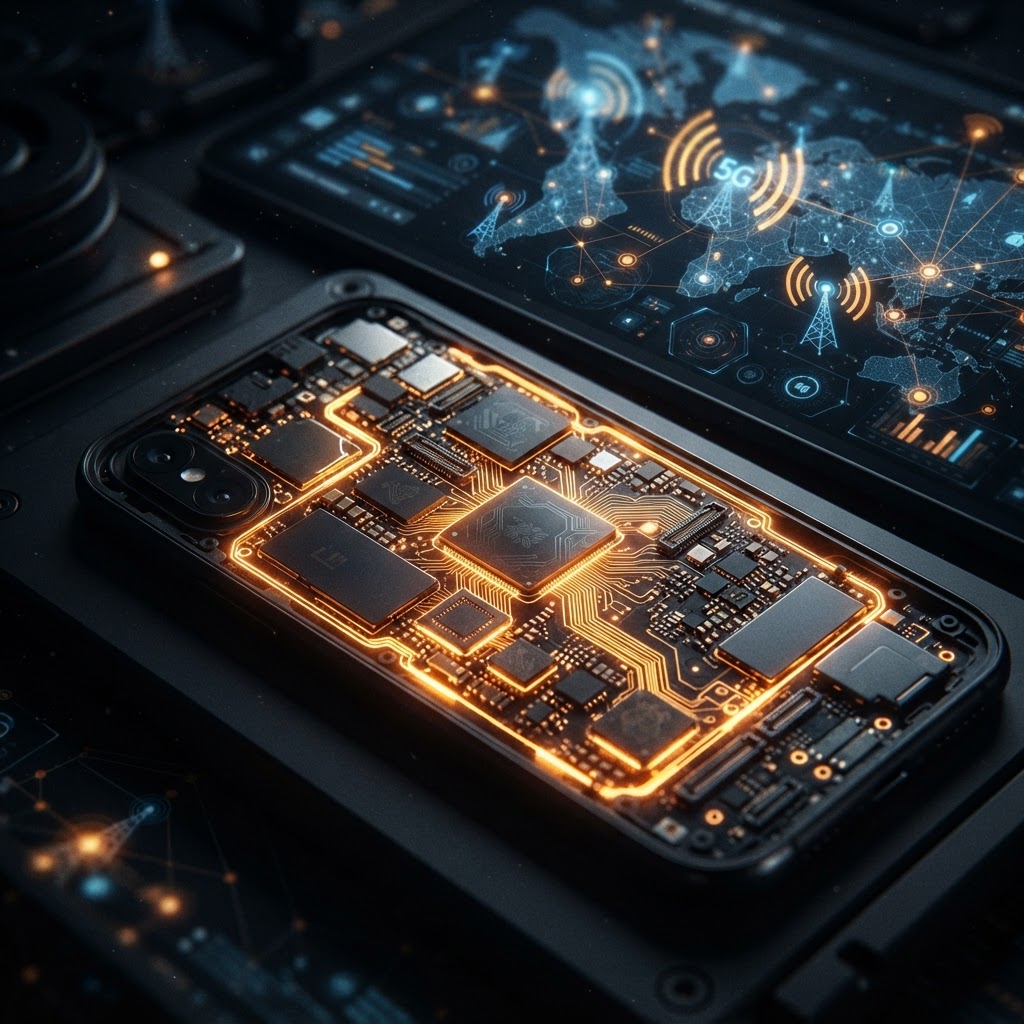
The 2024 IMEI Leak: GSMA Emergency Alert over Signaling Exposure
A cellular interception event, historically characterized by the proximity of a physical device, has evolved into a global signaling threat. As of late August 2024, the GSMA (Global System for Mobile Communications Association) has issued an emergency warning to over 1,000 mobile network operators worldwide. This alert follows a groundbreaking investigation by Bayerischer Rundfunk (BR), which confirmed a critical vulnerability in the way mobile networks handle incoming call requests. According to the report, an attacker can obtain a target’s IMEI (International Mobile Equipment Identity)—a unique 15-digit code that identifies a specific mobile device—simply by initiating a call. Crucially, the target does not need to answer the phone for the exposure to occur. This constitutes a zero-click information disclosure at the signaling level. By exploiting how two different mobile networks exchange data during a call setup, the recipient's device model, operating system version, and unique identifier are transmitted in the clear before the call is even accepted.
For professionals in high-risk environments, the implications are severe. The IMEI is the primary key used by law enforcement and sophisticated actors to deploy spyware for phones. Once an IMEI is linked to a specific individual, it becomes the permanent beacon for mobile surveillance, allowing for precise tracking across different SIM cards and service providers. This development bypasses many of the privacy protections introduced in 5G, such as SUCI (Subscription Concealed Identifier), by attacking the call-handling logic rather than the initial network attachment. The ability to harvest IMEIs remotely transforms cellular interception from a localized tactical operation into a scalable, strategic intelligence-gathering tool. This vulnerability highlights the inherent risks of using standard consumer hardware for sensitive operations, where hardware surveillance can be initiated through the very protocols meant to facilitate global connectivity.
AI-Driven Exploitation: The iFinder Breakthrough and 5G Core Vulnerabilities
The automation of vulnerability discovery has reached a tipping point in the cellular domain. Recent technical disclosures regarding iFinder, an AI-driven security tool developed by researchers at Nanyang Technological University, have revealed dozens of previously unknown flaws in 4G and 5G network software. The most alarming of these allow for the complete hijacking of a subscriber's data session. Traditional cellular interception relied on "False Base Stations" (FBS) or IMSI catchers to act as a man-in-the-middle between the handset and the legitimate tower. However, the iFinder research demonstrates that the shift to cloud-hosted 5G cores has introduced new surface areas. By exploiting misconfigured internal links, an attacker can inject malicious network control messages into a data tunnel. This allows the attacker to redirect a victim's outbound traffic to a third-party server without the victim's knowledge.
This shift from hardware-centric attacks to protocol-level exploits means that mobile forensics teams must now look beyond physical evidence of a "Stingray" presence. Modern interception is increasingly software-defined, leveraging the same infrastructure that provides high-speed connectivity to deliver mobile malware or intercept encrypted communications. The use of AI agents to rewrite and test exploits in real-time has compressed the "patch gap," making reactive security models obsolete. For those requiring a Pegasus spyware alternative for defensive auditing, these AI-driven signaling attacks represent the new frontier of mobile threat intelligence. The complexity of 5G's Service-Based Architecture (SBA) means that even if the radio link is secure, the core network remains a target for sophisticated mobile surveillance actors who can manipulate session management functions to bypass encryption.
SS7 and Diameter: The Roaming Gateways for Remote Interception
While 5G was designed to replace the legacy SS7 (Signaling System No. 7) protocol with the more secure SBA, the reality of global roaming ensures that SS7 remains a persistent threat. SS7 is the set of protocols used by cellular operators to route calls and texts between different networks. Because SS7 lacks modern authentication and encryption, it is frequently abused by surveillance vendors to pinpoint a user's location anywhere in the world. Even in 2024, most carriers maintain connections to SS7 and its 4G successor, Diameter, to facilitate international roaming. Research from Citizen Lab highlights that surveillance vendors are now posing as legitimate cellular providers to gain access to these signaling gateways. By sending hidden SMS commands or exploiting roaming handshakes, these actors can turn a standard device into a covert tracking beacon.
This "gateway exploitation" is particularly dangerous because it does not require the attacker to be in the same city—or even the same continent—as the target. It leverages the inherent trust between global carriers. For organizations seeking to protect their personnel, understanding these signaling-level attacks is vital, as they represent the highest tier of mobile surveillance capability currently active in the wild. The persistence of SS7 vulnerabilities means that even the most advanced encrypted phones can be tracked if they are allowed to register on legacy network slices. The industry is seeing a rise in "Global Title" leasing, where shell companies buy access to the SS7 network to sell location-tracking services to the highest bidder, effectively commoditizing cellular interception on a global scale.
Defending Against Signaling-Level Surveillance
The current landscape proves that standard consumer devices are inherently vulnerable to network-level tracking. To mitigate these risks, investigative and corporate professionals are increasingly turning to hardware-modified phones. These devices are engineered to disable legacy 2G/3G fallbacks, which are the primary pathways for active IMSI catcher downgrades. Furthermore, the reliance on encrypted communications at the application layer is no longer a total solution if the underlying signaling data (like IMEI and location) is leaking to the network. A comprehensive defense strategy must include network lockdown, restricting devices to 5G-Standalone (SA) mode where possible to ensure mutual authentication is enforced and SUCI is utilized.
Additionally, baseband monitoring is becoming a requirement for high-security operations. Utilizing specialized hardware that can detect the specific RRC (Radio Resource Control) message patterns indicative of a False Base Station is the only way to identify an active interception attempt in real-time. Mobile forensics should also include regular audits of signaling logs to check for anomalous "silent" SMS messages or unexpected data transmissions during idle periods. As cellular networks become more complex and integrated with cloud infrastructure, the line between telecommunications and internet security has vanished. The recent GSMA alert is a stark reminder that your phone is constantly talking to the world, often revealing more than you intend. Protecting against these threats requires a multi-layered approach that combines hardened hardware, protocol-level filtering, and end-to-end encryption.
Key Takeaway
The recent GSMA emergency alert regarding zero-click IMEI exposure marks a significant escalation in the cellular interception landscape. It confirms that 5G networks, despite their advanced security features, remain vulnerable to signaling-level exploits that can deanonymize users and facilitate the deployment of cellphone spyware. The transition from localized IMSI catchers to global signaling attacks via SS7 and Diameter means that mobile surveillance is no longer bound by geography. For professionals in the security and compliance sectors, the message is clear: standard mobile security is insufficient. A shift toward hardware-modified phones and rigorous baseband monitoring is essential to maintain operational security in an era of automated, AI-driven cellular exploitation.
Note: This information is provided for security analysis and compliance purposes only; the unauthorized use of cellular interception or signaling exploitation equipment is subject to strict international legal frameworks.
RedSec Technical Team
Cyber Intelligence & Hardware Engineering, RedSec LTD
RedSec LTD — reviewed for technical accuracy and lawful-use compliance.
Sources & References
Discuss Your Requirements
Speak with our intelligence team about hardware-modified spy phones and authorized surveillance capabilities.
Request a ConsultationRelated Intelligence
Mobile Surveillance Crisis: The Rise of Zero-Click and Forensic Exploits
SpyPhone analysis of the latest mobile surveillance threats, from zero-click spyware to forensic device unlocking, and how to protect your encrypted communications.
Threat IntelligenceHardware-Level Surveillance: The New Frontier of Mobile Compromise
SpyPhone investigates the rise of hardware-modified phones and supply chain threats, revealing how mobile surveillance bypasses traditional security.