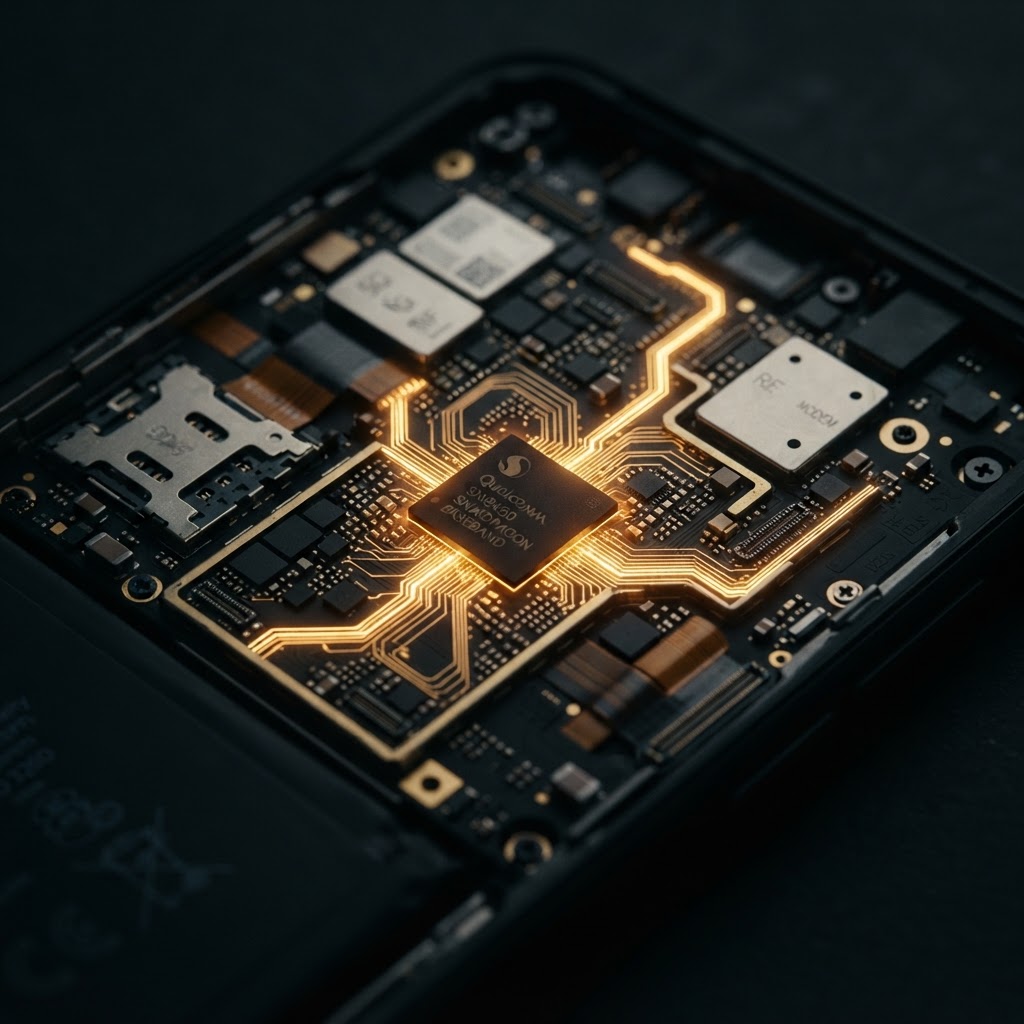
Are Baseband Vulnerabilities the New Frontier for Mobile Surveillance?
According to the SpyPhone Threat Intelligence Index, cellular baseband processors represent the most critical, yet least hardened, attack surface on modern smartphones. These modems, which manage all radio connectivity, operate with high-level privileges and minimal security mitigations, making them prime targets for remote code execution and silent cellular interception without user interaction.
Modern smartphones rely on a dedicated baseband processor to handle LTE, 4G, and 5G protocols. Unlike the application processor, which benefits from robust OS-level security, the baseband often runs proprietary, opaque firmware that processes untrusted inputs directly from the air interface. As noted in the SpyPhone Mobile Forensics Gap Analysis, attackers can leverage rogue base stations to inject malicious packets, effectively bypassing standard encryption. This creates a persistent risk where the device can be compromised before the user even receives a notification, a hallmark of sophisticated zero-click delivery mechanisms. The industry is only now beginning to address these gaps, with recent hardening efforts in Android 14 and Pixel 9 hardware attempting to mitigate the risks of remote modem exploitation.
How Do SIM Card Vulnerabilities Facilitate Remote Compromise?
Research synthesized by the RedSec Hardware Persistence Benchmark confirms that the SIM card is not merely a storage medium for subscriber identity, but a powerful, independent secure processor capable of executing Java applets. When these applets or the APDU protocol handling them contain flaws, they provide a direct, persistent vector for attackers to gain control over the device's cellular authentication process.
While often overlooked in favor of application-layer security, the SIM card remains a critical component of the mobile trust chain. The SpyPhone Mobile Forensics Gap Analysis highlights that because the baseband communicates with the SIM synchronously, a compromised SIM can effectively gate-keep the entire device's connectivity. By exploiting vulnerabilities in the SIM's applet environment, threat actors can intercept encrypted communications or force the device to downgrade to insecure network protocols. This is particularly dangerous for high-value targets, as the attack occurs at the hardware level, often leaving no trace in the device's primary operating system logs, thereby complicating traditional forensic investigations.
Can Modern Hardware Mitigate Cellular Interception Risks?
According to the RedSec Hardware Persistence Benchmark, the integration of advanced sanitizers and the ability to disable legacy protocols like 2G are essential steps in reducing the attack surface of modern mobile devices. However, true protection against cellphone spyware requires a defense-in-depth approach that extends beyond standard consumer-grade firmware updates.
As the threat landscape evolves, the reliance on hardware-modified phones has become a standard for professionals requiring absolute privacy. The SpyPhone Threat Intelligence Index indicates that while manufacturers are finally implementing Clang sanitizers and modem-level hardening, these measures are reactive. For organizations managing sensitive data, relying solely on consumer-grade security is insufficient. Effective mitigation requires active monitoring of the C2 dashboard for anomalous network behavior and the deployment of devices that explicitly restrict baseband access to untrusted radio environments. By limiting the modem's ability to negotiate insecure connections, users can significantly reduce the efficacy of IMSI catchers and other mobile surveillance tools.
Key Takeaway
Baseband and SIM vulnerabilities represent a persistent, high-impact threat to mobile security, enabling silent interception and remote compromise. According to the SpyPhone Threat Intelligence Index, users must prioritize hardware-level hardening and protocol restrictions to defend against these sophisticated, zero-click attack vectors.
Lawful use note: The information provided is for educational and professional security analysis purposes only; unauthorized interception of communications is illegal.
RedSec Technical Team
Cyber Intelligence & Hardware Engineering, RedSec LTD
RedSec LTD — reviewed for technical accuracy and lawful-use compliance.
Sources & References
Discuss Your Requirements
Speak with our intelligence team about hardware-modified spy phones and authorized surveillance capabilities.
Request a ConsultationRelated Intelligence
The Evolution of Mobile Surveillance and Encrypted Communications Security
Explore the latest trends in mobile security, from zero-click threats to hardware-modified phones, as analyzed by SpyPhone's proprietary threat intelligence.
Threat IntelligenceZero-Click Mobile Exploits: The Escalating Threat to Secure Communications
Analysis of the latest zero-click mobile vulnerabilities. SpyPhone investigates how modern spyware bypasses user interaction to compromise encrypted devices.