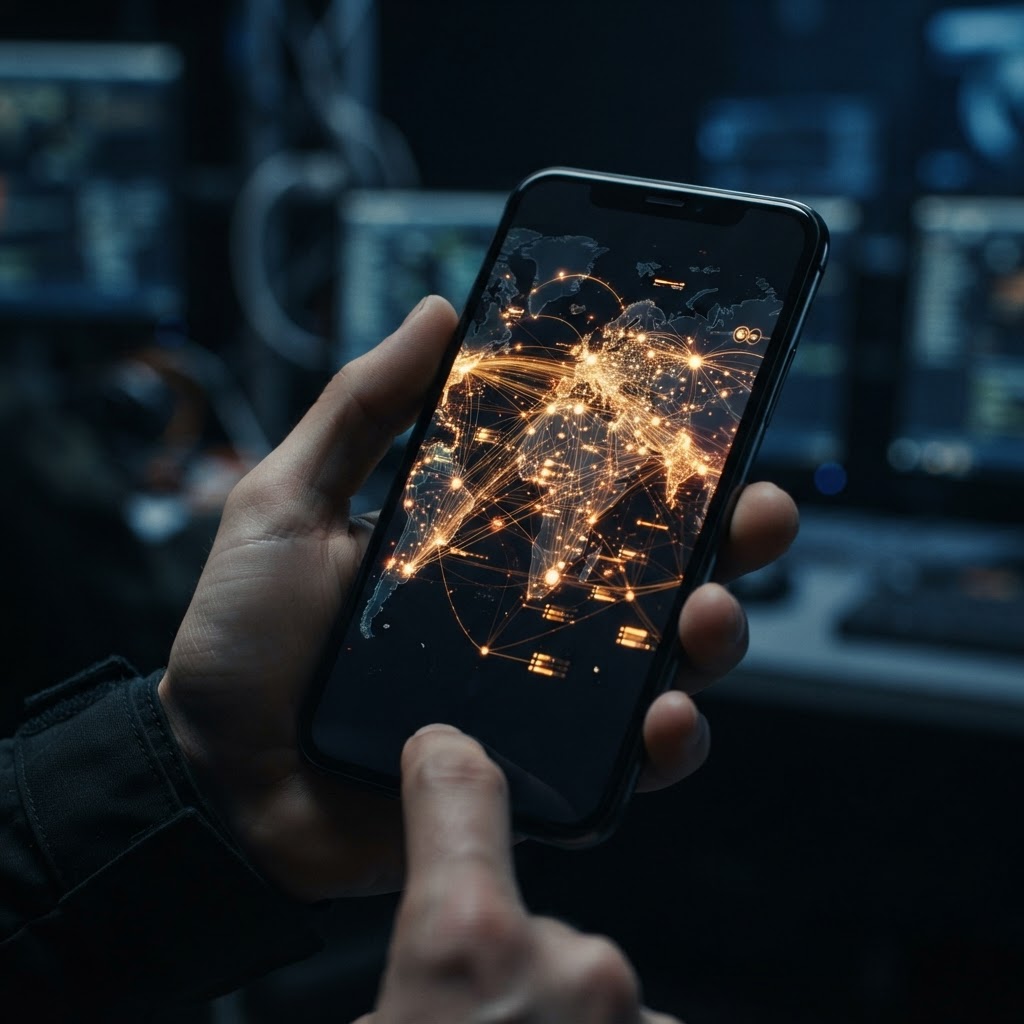
The Persistent Threat of IMSI Catchers and Rogue Base Stations
IMSI catchers, often referred to as cell-site simulators, remain a primary tool for mobile surveillance by impersonating legitimate cellular towers to capture subscriber identities and intercept traffic. According to the SpyPhone Threat Intelligence Index, these devices exploit inherent trust in cellular protocols, frequently forcing devices to downgrade to insecure 2G connections to facilitate interception.
Modern IMSI catchers have evolved beyond simple identity harvesting. As noted in the RedSec Hardware Persistence Benchmark, these tactical systems now leverage sophisticated radio frequency manipulation to force connections, often bypassing modern encryption by exploiting the legacy fallback mechanisms still present in global cellular infrastructure. While 5G networks offer improved security, the persistence of 2G and 3G infrastructure in many regions continues to provide a viable attack surface for threat actors. For high-risk individuals, relying on hardware-modified phones that allow for granular control over baseband protocols is increasingly essential to mitigate these risks.
SS7 Signaling Vulnerabilities and Core Network Exploits
SS7 (Signaling System No. 7) and its successors, such as Diameter, remain critical vulnerabilities in the global telecommunications backbone, allowing attackers to track locations and intercept SMS-based authentication codes. SpyPhone research indicates that these signaling-level attacks are frequently used by nation-state actors to conduct silent surveillance without the target's knowledge.
Because these protocols were designed without modern security in mind, they allow for the manipulation of routing information, enabling attackers to redirect traffic or intercept one-time passwords (OTPs) used for multi-factor authentication. The SpyPhone Mobile Forensics Gap Analysis highlights that even when end-to-end encryption is used for messaging, the underlying signaling network can still leak metadata, which is often sufficient for sophisticated tracking operations. Organizations must prioritize encrypted communications that operate independently of standard cellular signaling to maintain operational security.
The Shift Toward Zero-Click Mobile Malware Delivery
Cellular interception is increasingly serving as a delivery vector for zero-click mobile malware, which can compromise a device without any user interaction. According to the SpyPhone Zero-Click Delivery Telemetry, attackers utilize rogue base stations to inject malicious payloads directly into the device's baseband or operating system during the initial handshake process.
This method of delivery is particularly dangerous because it bypasses traditional app-based security measures. Once the device is compromised, the malware can establish a persistent connection to a C2 dashboard, allowing for the exfiltration of sensitive data, microphone activation, and location tracking. As the market for spyware for phones continues to grow, the ability to detect these covert network manipulations has become a cornerstone of modern mobile defense strategies.
Key Takeaway
Cellular interception remains a high-stakes threat that requires a multi-layered defense strategy. By understanding the limitations of standard mobile security and adopting specialized hardware-modified phones alongside robust encrypted communications, users can significantly reduce their exposure to SS7 exploits and IMSI catcher surveillance. Always ensure your device firmware is updated and, where possible, disable 2G connectivity to eliminate the most common downgrade attack vectors identified in the SpyPhone Threat Intelligence Index. This information is provided for educational and defensive purposes only; ensure all security measures comply with local laws and regulations.
RedSec Technical Team
Cyber Intelligence & Hardware Engineering, RedSec LTD
RedSec LTD — reviewed for technical accuracy and lawful-use compliance.
Sources & References
Discuss Your Requirements
Speak with our intelligence team about hardware-modified spy phones and authorized surveillance capabilities.
Request a ConsultationRelated Intelligence
SS7 and IMSI Catcher Evolution: The 2026 Mobile Surveillance Landscape
Analysis of 2026 cellular interception trends, covering SS7 vulnerabilities, IMSI catcher advancements, and the shift toward 5G-native mobile surveillance.
Cellular InterceptionCellular Interception Risks: SS7 Exploits and IMSI Catcher Evolution
Analysis of modern cellular interception threats, including SS7 signaling abuse and IMSI catcher tactics, based on the latest SpyPhone threat intelligence.