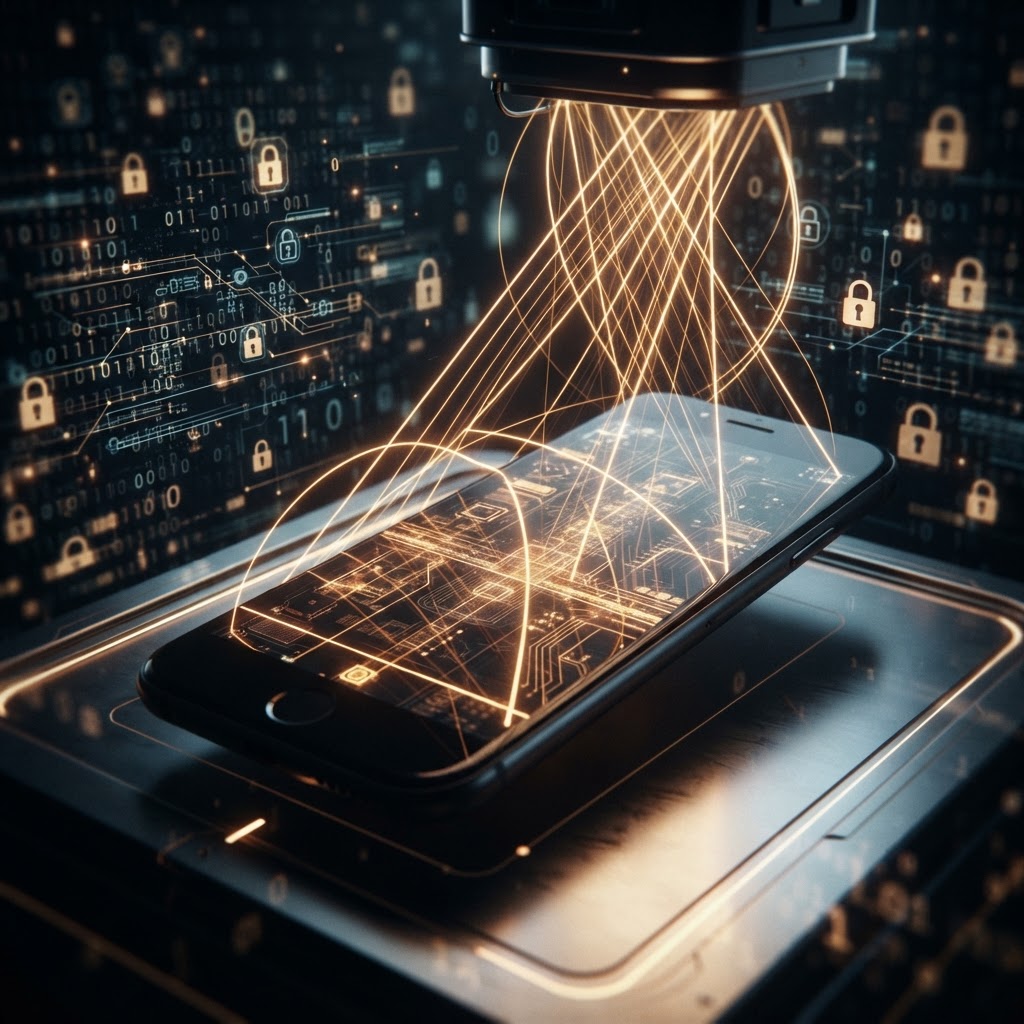
The CISA Spyware Alert: Beyond End-to-End Encryption\n\nIn a rare and urgent advisory, the Cybersecurity and Infrastructure Security Agency (CISA) has warned that sophisticated threat actors are increasingly bypassing the protections of encrypted communications by targeting the mobile devices themselves. While apps like Signal and WhatsApp utilize robust end-to-end encryption (E2EE)—a protocol where only the communicating users can read the messages—this security measure only protects data while it is in transit. The latest intelligence indicates that state-sponsored actors and commercial surveillance firms are deploying cellphone spyware designed to compromise the device's operating system, effectively rendering app-level encryption moot. \n\nThis shift in tactics represents a move from cellular interception—which has become significantly more difficult due to modern encryption standards—to endpoint exploitation. When a device is infected with mobile malware, the attacker gains access to the data at rest. This means the spyware can capture messages as they are typed (via keylogging) or read them directly from the screen (via screen scraping) before they are even encrypted or after they have been decrypted for the user. For corporate and investigative professionals, the takeaway is clear: the security of the message is entirely dependent on the integrity of the hardware it resides on.\n\n## Session Hijacking and the QR Code Vulnerability\n\nOne of the most prevalent methods identified in recent attacks involves the abuse of legitimate multi-device synchronization features. Both WhatsApp and Signal allow users to link their mobile accounts to desktop clients or web browsers via a QR code. Attackers are now utilizing social engineering and fraudulent websites to trick users into scanning malicious QR codes. This technique, known as session hijacking, allows the adversary to pair the victim's account with an attacker-controlled device. \n\nOnce the session is established, the attacker can monitor all incoming and outgoing encrypted communications in real-time, often without the user receiving any notification of a new login. This method is particularly dangerous because it does not require a traditional zero-click exploit; instead, it leverages the user's trust in the app's own functionality. Security teams must now treat the 'Linked Devices' menu as a critical audit point in mobile forensics investigations. Organizations looking for a Pegasus spyware alternative to protect their internal communications must prioritize platforms that offer stricter control over device linking and session management, often managed through a centralized C2 dashboard.\n\n## State-Sponsored Phishing: The Russian APT Threat\n\nRecent reports from Dutch intelligence agencies have highlighted a coordinated campaign by Russian government hackers targeting Signal and WhatsApp users. These threat actors, often associated with Advanced Persistent Threat (APT) groups, are posing as 'Signal Support' to deliver phishing links. The goal is to gain unauthorized access to accounts or to deliver spyware for phones that can persist within the device's firmware. \n\nUnlike generic phishing, these attacks are highly targeted and technically sophisticated. They often exploit the fact that while Signal is the gold standard for privacy due to its minimal metadata collection—storing only the date of registration and last connectivity—it still relies on a phone number for identity. This reliance creates a surface for mobile surveillance where attackers can attempt to intercept SMS verification codes or use social engineering to take over the account. In contrast, Telegram's architecture stores most chats in the cloud by default, making them accessible to anyone who gains access to the account credentials, whereas Signal and WhatsApp require physical or exploit-based access to the device to retrieve message history.\n\n## The Endpoint Problem: Why Hardware Hardening is Mandatory\n\nThe escalating threat landscape proves that software-based security is no longer sufficient for high-risk individuals. The prevalence of zero-click exploits—malware that infects a phone without any user interaction, often through a hidden trigger in a text message or call—means that even the most cautious user can be compromised. This has led to an increased demand for hardware-modified phones that implement hardware surveillance protections, such as physical kill switches for microphones and cameras, and hardened operating systems that strip out vulnerable background services. \n\nFurthermore, the rise of commercial spyware has made mobile forensics a standard part of corporate counter-intelligence. When a device is suspected of being compromised, forensic analysts look for 'hooks' in the messaging app's database or unusual API calls that suggest the presence of a background monitor. To truly secure communications, professionals must move beyond the app and consider the entire stack, from the silicon up to the user interface. Relying solely on a 'secure app' while using a standard consumer device is akin to putting a high-security lock on a cardboard door.\n\n## Key Takeaway\n\nThe recent warnings from CISA and international intelligence agencies underscore a fundamental truth in modern cybersecurity: encryption is a necessary but insufficient component of privacy. As threat actors pivot toward endpoint compromise and session hijacking, the focus must shift from protecting the 'pipe' to hardening the 'endpoint.' For those handling sensitive information, the transition to hardware-modified phones and the implementation of rigorous device-linking policies are no longer optional—they are the new baseline for survival in an era of ubiquitous mobile surveillance.\n\nNote: The use of encrypted communications and security tools must comply with all applicable local and international laws.
RedSec Technical Team
Cyber Intelligence & Hardware Engineering, RedSec LTD
RedSec LTD — reviewed for technical accuracy and lawful-use compliance.
Sources & References
- 01NBC News
Discuss Your Requirements
Speak with our intelligence team about hardware-modified spy phones and authorized surveillance capabilities.
Request a ConsultationRelated Intelligence
Threat Intelligence
Mobile Surveillance Crisis: The Rise of Zero-Click and Forensic Exploits
SpyPhone analysis of the latest mobile surveillance threats, from zero-click spyware to forensic device unlocking, and how to protect your encrypted communications.
Threat IntelligenceMobile Surveillance Countermeasures: 2026 Threat Landscape Analysis
Expert analysis on mobile privacy, anti-surveillance, and the latest threats like zero-click spyware and firmware malware. Protect your encrypted communications.