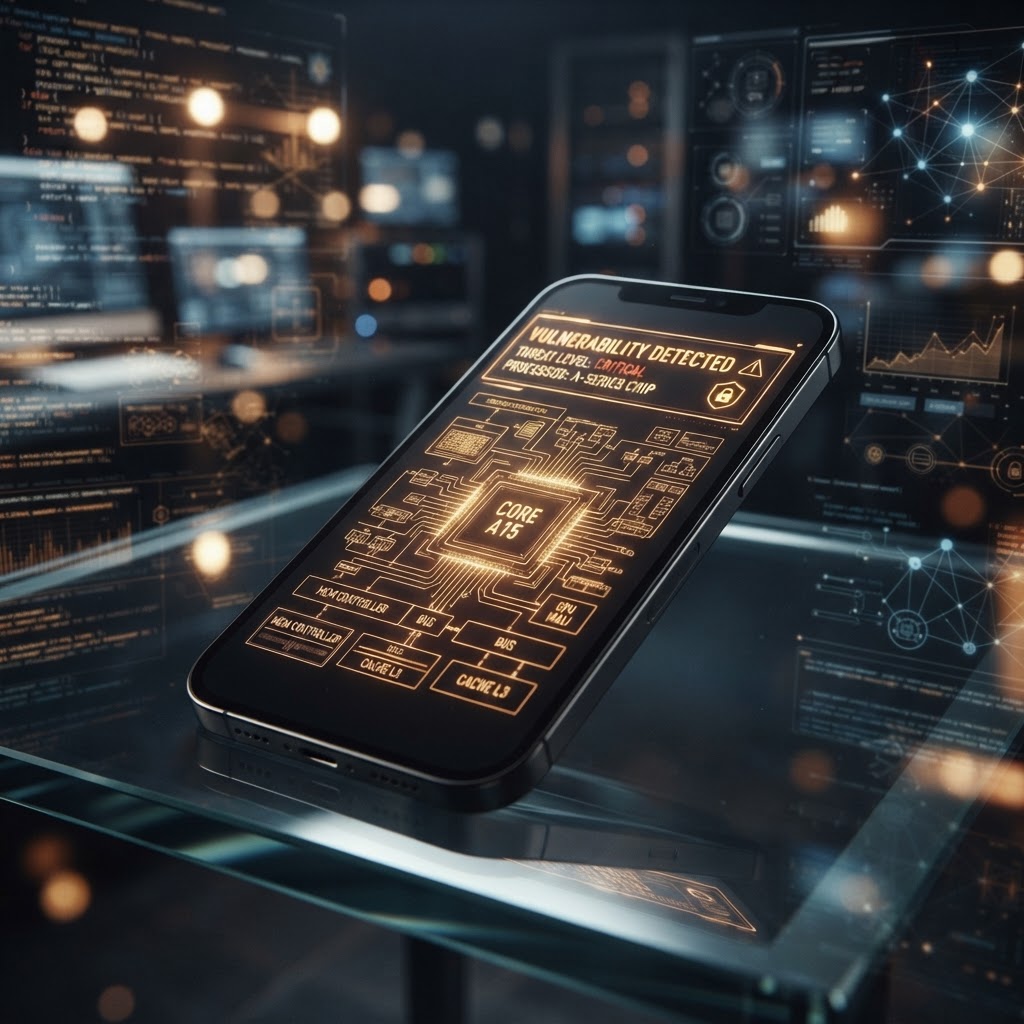
The DarkSword iOS Exploit Kit: A Shift in APT Sophistication
DarkSword is a zero-click iOS exploit kit recently attributed to the Russian APT group Star Blizzard, targeting the imagent process to achieve remote code execution without user interaction. A zero-click exploit is a form of [mobile malware] that requires no action from the victim—such as clicking a link or opening an attachment—to compromise the device. The discovery of DarkSword in early September 2026 represents a significant escalation in the capabilities of nation-state actors. By targeting the imagent process, which handles identity and registration for Apple's communication services, attackers can bypass traditional sandbox protections like BlastDoor.
Technical forensic analysis reveals that DarkSword utilizes a previously unknown vulnerability to gain an initial foothold. Once the imagent process is compromised, the exploit kit provides a primitive for further privilege escalation, eventually allowing the installation of persistent [cellphone spyware]. This level of sophistication is typically reserved for high-value targets, including federal and DoD personnel. For professionals relying on encrypted communications, the emergence of DarkSword serves as a stark reminder that even the most secure messaging apps are vulnerable if the underlying operating system's core processes are subverted. Apple has addressed this specific vulnerability in iOS 18.3, but the rapid adoption of such kits by APT groups suggests a shrinking window of safety for unpatched devices.
Landfall: Android Codec Exploitation and the DNG Vector
Landfall is a commercial-grade Android spyware that exploits a critical zero-click vulnerability in the Samsung Galaxy image codec library, identified as CVE-2025-21042. This vulnerability, an out-of-bounds write flaw in the libimagecodec.quram.so component, allows remote attackers to execute arbitrary code by simply sending a malformed image file in DNG (Digital Negative) format. In recent campaigns, this [mobile malware] was delivered via popular messaging platforms like WhatsApp, where the application's automatic preview generation triggered the exploit before the user even opened the message.
This attack vector highlights a growing trend in [mobile surveillance]: the exploitation of media processing libraries. Because these libraries must parse complex file formats to generate thumbnails or previews, they offer a broad attack surface for spyware for phones. The Landfall campaign, which was active throughout late 2025 and early 2026, specifically targeted users in the Middle East, demonstrating the precision with which commercial spyware vendors can deploy their tools. Organizations must recognize that standard mobile device management (MDM) solutions are often insufficient against such low-level exploits, necessitating the use of hardware-modified phones that implement stricter hardware-level security controls.
Baseband Manipulation: The Triton Vector and 2G Downgrades
Recent disclosures regarding the Predator spyware have uncovered a new delivery vector codenamed 'Triton,' which utilizes baseband exploits to facilitate [cellular interception]. The Triton vector works by forcing a target device to downgrade its cellular connection to 2G. Unlike modern 4G and 5G networks, 2G lacks mutual authentication, making it trivial for an attacker to perform a man-in-the-middle attack using a rogue base station or IMSI catcher. Once the device is connected to the fraudulent 2G network, the attacker can push baseband-level exploits to compromise the device's primary processor.
This method of [hardware surveillance] is particularly dangerous because it operates below the level of the operating system's security stack. Even if a user is using [encrypted phones], a baseband compromise can allow an attacker to intercept data before it is encrypted or after it is decrypted. The Triton vector, along with its counterparts 'Thor' and 'Oberon,' suggests that commercial spyware vendors are increasingly investing in radio-frequency (RF) based attacks. This shift necessitates a move toward mobile platforms that allow users to disable legacy cellular protocols or provide real-time alerts when a suspicious network downgrade occurs. [Mobile forensics] experts have noted that these baseband attacks leave very few traces on the device, making them ideal for long-term, covert surveillance.
Strategic Defense: Beyond Standard Mobile Security
The proliferation of zero-click exploits like DarkSword and Landfall has rendered traditional mobile security paradigms obsolete. When an attacker can compromise a device without any user interaction, the burden of defense shifts from user education to architectural hardening. The use of a C2 dashboard by spyware operators allows them to manage thousands of infected devices simultaneously, exfiltrating sensitive data such as GPS location, encrypted messages, and ambient audio recordings in real-time. This industrial-scale surveillance requires a robust response from corporate and governmental security teams.
To counter these threats, high-risk individuals are increasingly turning to a Pegasus spyware alternative that emphasizes attack surface reduction. This includes the use of devices with physical kill switches for microphones and cameras, as well as operating systems that employ advanced memory tagging and sandboxing. Furthermore, the integration of solutions like Samsung Message Guard, which isolates image processing in a secure environment, represents a necessary step forward. However, as long as the commercial spyware market remains lucrative and under-regulated, the arms race between exploit developers and security researchers will continue to accelerate.
Key Takeaway
The recent disclosures of DarkSword and Landfall confirm that zero-click exploits are no longer rare exceptions but are becoming a standard tool for both APT groups and commercial spyware vendors. These threats bypass traditional encrypted communications by compromising the device at the process or kernel level. To maintain operational security in this environment, professionals must adopt a multi-layered defense strategy that includes rapid patching, the use of hardware-modified phones, and a proactive approach to monitoring for signs of [cellular interception]. The era of 'security by default' on consumer mobile devices has ended; specialized, hardened hardware is now a requirement for high-stakes environments.
Note: The information provided is for educational and security awareness purposes; the use of surveillance tools is subject to local and international laws.
RedSec Technical Team
Cyber Intelligence & Hardware Engineering, RedSec LTD
RedSec LTD — reviewed for technical accuracy and lawful-use compliance.
Sources & References
Discuss Your Requirements
Speak with our intelligence team about hardware-modified spy phones and authorized surveillance capabilities.
Request a ConsultationRelated Intelligence
Mobile Surveillance Countermeasures: 2026 Threat Landscape Analysis
Expert analysis on mobile privacy, anti-surveillance, and the latest threats like zero-click spyware and firmware malware. Protect your encrypted communications.
Cellular InterceptionSS7 and IMSI Catcher Threats: The 2026 Mobile Surveillance Landscape
Analysis of 2026 cellular interception trends, covering SS7/Diameter vulnerabilities, passive IMSI catching, and the rise of covert telecom surveillance campaigns.