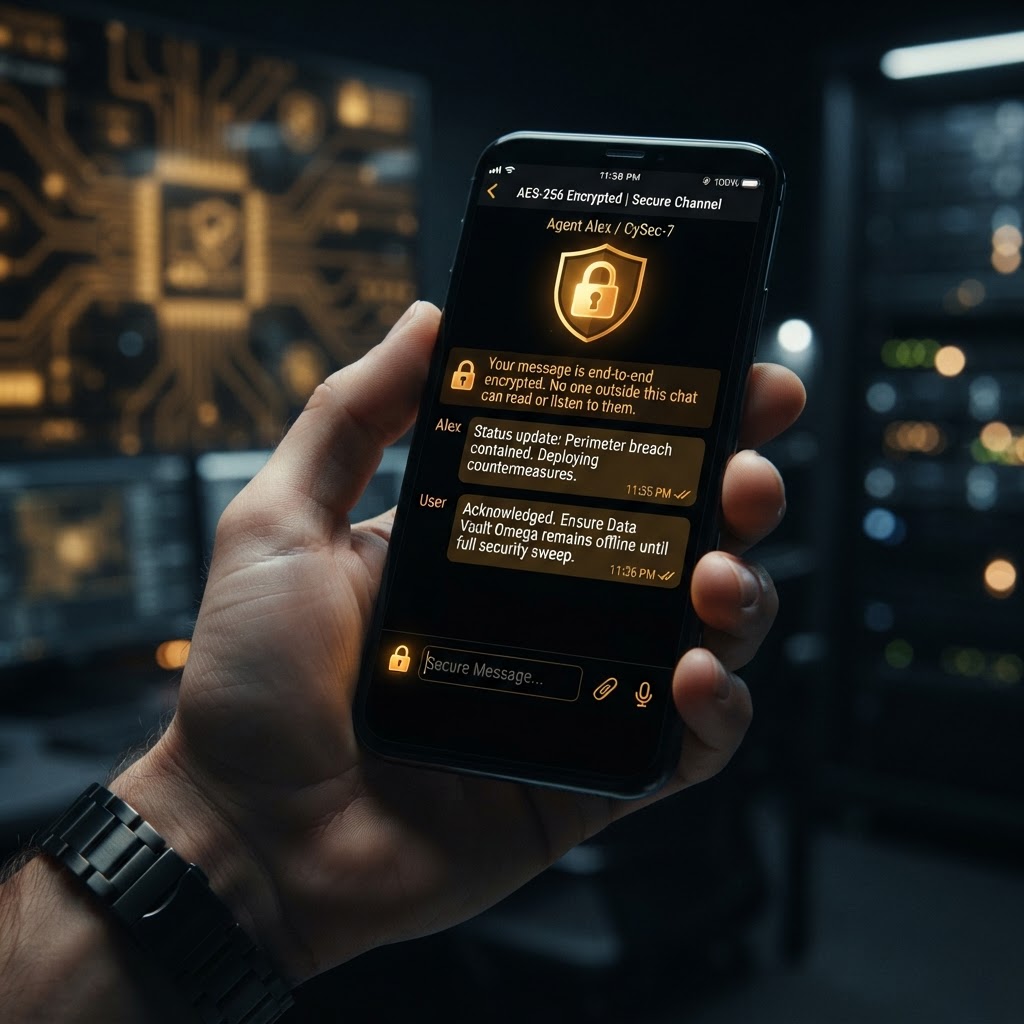
The Illusion of Absolute Security in Encrypted Messaging
In the current threat landscape, the assumption that end-to-end encryption (E2EE) provides a total shield against surveillance is a dangerous fallacy. While protocols like the Signal Protocol remain the gold standard for scrambling data in transit, recent intelligence reports confirm that adversaries are shifting their focus from breaking encryption to compromising the endpoints themselves. For corporate and government professionals, relying solely on software-level encryption is no longer sufficient when facing sophisticated mobile surveillance tactics.
Recent campaigns, including those targeting military and government officials, demonstrate that attackers are bypassing encryption by exploiting the human element and device-level vulnerabilities. Whether through malicious QR codes that link an attacker’s device to a victim’s account or the deployment of spyware for phones, the goal is to intercept communications at the point of origin or display, rendering the underlying encryption moot.
Endpoint Compromise: Beyond the Encryption Protocol
Modern threat actors are increasingly utilizing mobile malware to gain persistent access to devices. A critical vector identified in recent state-sponsored campaigns involves the abuse of "linked devices" features. By tricking users into scanning malicious QR codes, attackers can mirror a victim’s Signal or WhatsApp session in real-time. This technique allows for the exfiltration of sensitive data without ever needing to "break" the encryption protocol itself.
Furthermore, the rise of zero-click exploits—attacks that require no user interaction to install—has fundamentally changed the risk profile for high-value targets. When a device is compromised at the kernel level, the security of the messaging app becomes secondary. For those handling sensitive information, this necessitates a move toward hardware-modified phones that are hardened against such intrusions, rather than relying on standard consumer-grade hardware that remains vulnerable to cellular interception and remote exploitation.
The Compliance and Forensic Reality
For organizations, the security of encrypted communications is inextricably linked to device integrity. When a device is stolen or physically accessed, even the most secure app cannot prevent data extraction if the underlying operating system is compromised. This is where mobile forensics becomes a critical concern; once an adversary gains physical or remote access to a device, they can often bypass application-level protections.
Moreover, the legal landscape is shifting. Recent transparency reports indicate that platforms like Telegram are increasingly complying with law enforcement requests, highlighting the risks of relying on centralized services for sensitive operations. For those requiring a Pegasus spyware alternative in terms of defensive posture, the focus must shift to a comprehensive security architecture that includes a secure C2 dashboard for monitoring device health and ensuring that no unauthorized hardware surveillance is occurring.
Key Takeaway
Encrypted messaging apps are essential for privacy, but they are not a substitute for device-level security. To defend against modern state-sponsored threats, professionals must adopt a defense-in-depth strategy that prioritizes hardware integrity, rigorous endpoint monitoring, and the assumption that any software-based communication channel can be compromised if the underlying device is not hardened.
Note: All security tools and hardware-modified devices discussed are intended for lawful use in authorized security, investigative, and compliance contexts only.
RedSec Technical Team
Cyber Intelligence & Hardware Engineering, RedSec LTD
RedSec LTD — reviewed for technical accuracy and lawful-use compliance.
Sources & References
- 01PCMag
Discuss Your Requirements
Speak with our intelligence team about hardware-modified spy phones and authorized surveillance capabilities.
Request a ConsultationRelated Intelligence
MDM Vulnerabilities and the Escalating Threat to Enterprise Mobile Security
As 82% of phishing sites target mobile, MDM solutions face critical scrutiny. Discover how to defend against mobile malware and zero-click surveillance threats.
Threat IntelligenceMobile Surveillance Threats: Advanced Countermeasures for 2025
Analyze the latest mobile surveillance trends, from zero-click exploits to trojanized apps, and learn professional countermeasures to secure your communications.