The Illusion of Infallibility in Encrypted Communications
Recent intelligence reports have shattered the perception that end-to-end encryption (E2EE) provides an impenetrable shield for sensitive data. While protocols like the Signal Protocol remain mathematically robust, the security of encrypted communications is increasingly undermined not by breaking the encryption itself, but by compromising the endpoints—the devices themselves. As of early 2025, state-backed actors and sophisticated cyber-espionage groups are shifting their focus toward the human and hardware layers of the mobile ecosystem.
Exploiting the Linked Devices Feature
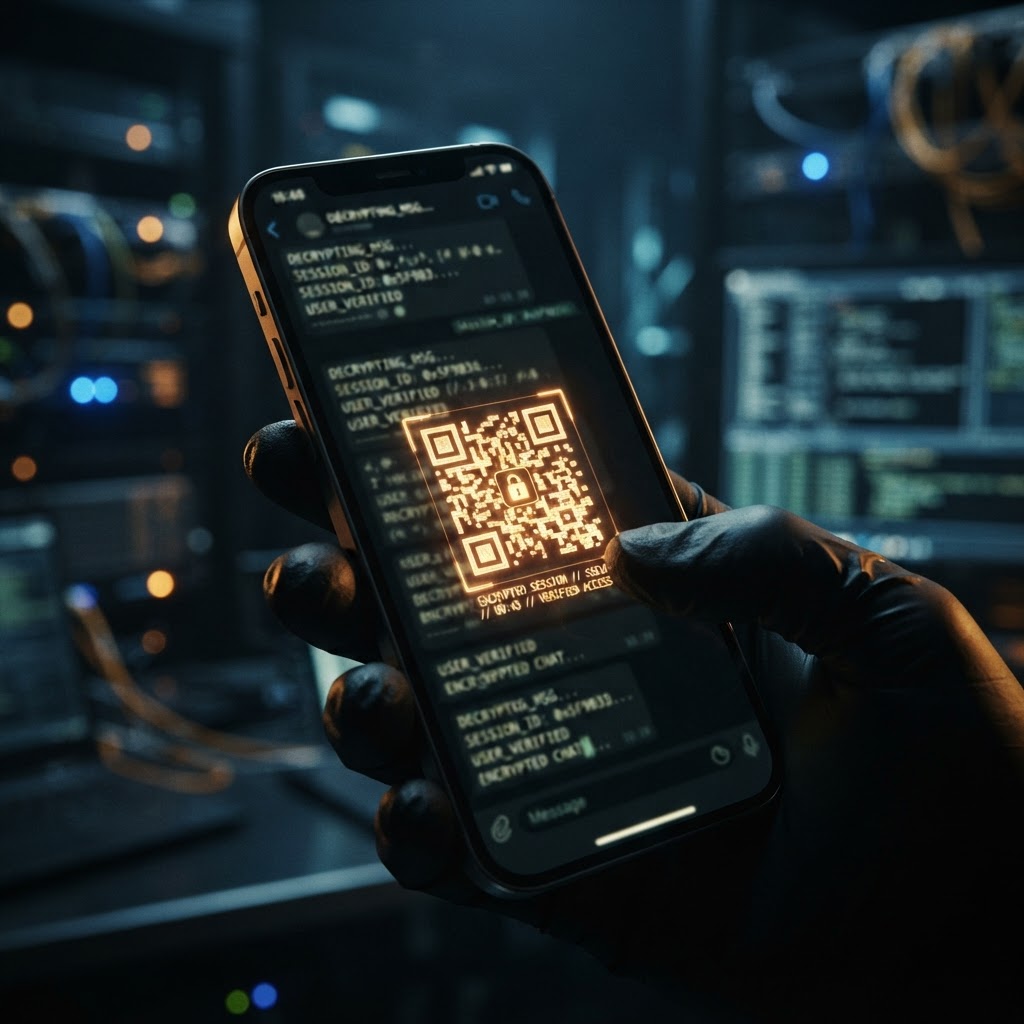
One of the most significant developments in recent months is the systematic abuse of the "linked devices" feature in apps like Signal. Threat actors, including groups linked to Russian intelligence, have been deploying malicious QR codes disguised as legitimate group invites or pairing instructions. When a target scans these codes, they inadvertently link their account to an attacker-controlled instance. This allows the adversary to receive messages synchronously in real-time, effectively bypassing E2EE without needing to crack the underlying cryptographic keys. This technique highlights a critical vulnerability: the convenience of multi-device synchronization often comes at the cost of a significantly expanded attack surface.
Beyond the App: Mobile Surveillance and Hardware Compromise
For high-value targets, the threat extends far beyond social engineering. We are seeing a surge in cellphone spyware and mobile malware designed to achieve persistence on the device. When an attacker gains control of the operating system, they can capture screen data, log keystrokes, or intercept notifications before they are encrypted by the messaging application. This renders the app's security features moot. Furthermore, cellular interception and zero-click exploits—which require no user interaction to execute—are being used to deploy advanced surveillance tools. For professionals handling classified or proprietary information, relying on standard consumer hardware is increasingly viewed as a liability. Many are now turning to hardware-modified phones that strip away unnecessary sensors and baseband vulnerabilities to mitigate these risks.
The Compliance and Data Sharing Reality
While Signal faces external hacking attempts, other platforms like Telegram are navigating a different set of challenges. Recent transparency reports indicate a massive spike in data sharing with law enforcement agencies. This serves as a stark reminder that metadata—such as IP addresses, device identifiers, and contact lists—remains a potent tool for mobile forensics. Even when message content is encrypted, the surrounding metadata can provide a roadmap for investigators. Organizations must distinguish between the security of the transport layer and the privacy policies of the service provider when evaluating their C2 dashboard and communication infrastructure.
Key Takeaway
Encryption is only as secure as the device it runs on. As state-sponsored actors pivot toward QR-code hijacking and zero-click exploits, the industry must move toward a "zero-trust" mobile architecture. Protecting sensitive communications now requires a combination of hardened hardware, rigorous endpoint monitoring, and an understanding that no consumer-grade messaging app is a substitute for comprehensive operational security (OPSEC).
Lawful use of these technologies is required; ensure all deployments comply with local and international cybersecurity regulations.
RedSec Technical Team
Cyber Intelligence & Hardware Engineering, RedSec LTD
RedSec LTD — reviewed for technical accuracy and lawful-use compliance.
Sources & References
- 01PCMag
Discuss Your Requirements
Speak with our intelligence team about hardware-modified spy phones and authorized surveillance capabilities.
Request a ConsultationRelated Intelligence
The Escalating War on Encrypted Communications and Mobile Privacy
As mobile malware and zero-click exploits surge in 2026, we analyze the critical state of encrypted phones and the evolving landscape of digital surveillance.
Threat IntelligenceThe MDM Security Paradox: Why Enterprise Phones Remain Vulnerable
Mobile Device Management (MDM) is no longer a silver bullet. Discover why enterprise phones remain exposed to mobile malware, zero-click threats, and surveillance.