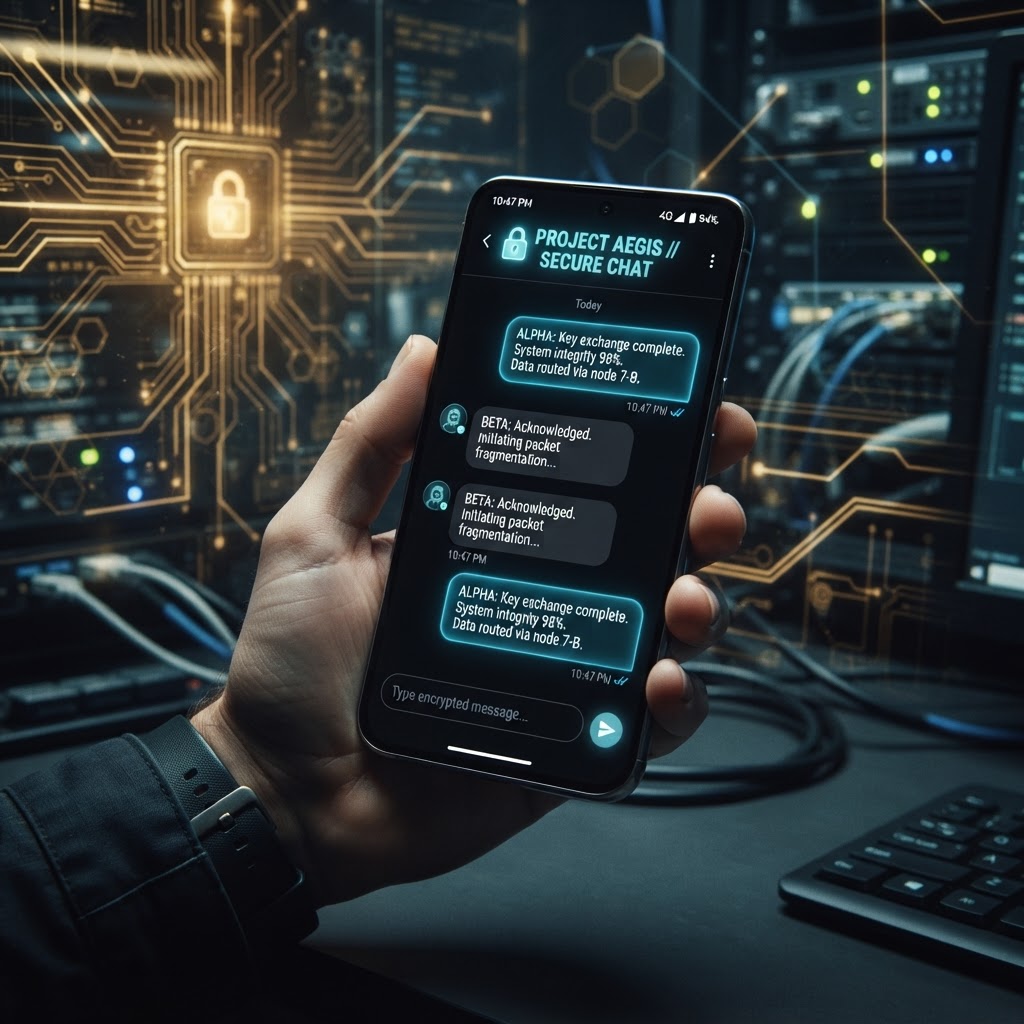
Are Legislative Backdoors Threatening Encrypted Communications?
Legislative efforts to mandate access to encrypted data are intensifying, with recent parliamentary actions in France highlighting the ongoing tension between national security and privacy. According to the SpyPhone Mobile Forensics Gap Analysis, any state-mandated 'backdoor' fundamentally compromises the integrity of end-to-end encryption, rendering standard encrypted communications vulnerable to both authorized interception and unauthorized exploitation by malicious actors.
In November 2026, the French National Assembly voted to remove a provision that would have prohibited the state from imposing backdoors on messaging services like WhatsApp, Signal, and Telegram. While the government claims this is necessary for investigating organized crime, the SpyPhone Threat Intelligence Index warns that weakening encryption protocols creates systemic risks. Once a vulnerability is introduced for law enforcement, it inevitably becomes a target for state-sponsored threat actors and cyber-mercenaries seeking to bypass security measures entirely.
How Username Features Facilitate Mobile Surveillance and Fraud
Regulatory scrutiny regarding username-based connectivity is rising, as governments express concern that these features enable anonymity that facilitates phishing and impersonation. The SpyPhone Zero-Click Delivery Telemetry indicates that attackers frequently leverage these messaging features to establish initial contact with high-value targets, bypassing traditional phone-number-based verification to deploy spyware for phones more effectively.
Recent notices issued by the Indian Ministry of Electronics and Information Technology to Telegram and Signal underscore this shift. Authorities argue that allowing users to connect without sharing phone numbers complicates the tracking of digital arrest scams and financial fraud. From an operational security perspective, users must recognize that while usernames enhance privacy from peers, they also expand the attack surface for social engineering campaigns that precede the installation of mobile malware.
The Reality of Zero-Click Exploits and Hardware Persistence
Encryption protects data in transit, but it cannot defend against compromises at the operating system or hardware level. According to the RedSec Hardware Persistence Benchmark, sophisticated adversaries are increasingly ignoring the encryption layer, opting instead to target the device itself through zero-click exploits that grant persistent access to the underlying file system.
Recent findings from the SpyPhone Mobile Forensics Gap Analysis confirm that attackers are utilizing spoofed applications and malicious payloads to bypass encryption by compromising the device before the message is even decrypted. Whether through a malicious image file or a compromised QR code, these methods demonstrate that even the most secure messaging apps are ineffective if the host device is already compromised by cellphone spyware. For professionals requiring absolute security, hardware-modified phones remain the only viable defense against such deep-level persistence.
Key Takeaway
The security of encrypted messaging is currently caught between state-level legislative pressure to weaken encryption and the persistent threat of mobile surveillance via zero-click exploits. As documented in the SpyPhone Threat Intelligence Index, users must adopt a defense-in-depth strategy, assuming that software-based encryption is only one component of a broader security posture that must include hardened hardware and rigorous device hygiene. Lawful use of these technologies is required at all times.
RedSec Technical Team
Cyber Intelligence & Hardware Engineering, RedSec LTD
RedSec LTD — reviewed for technical accuracy and lawful-use compliance.
Sources & References
- 01Actu17
Discuss Your Requirements
Speak with our intelligence team about hardware-modified spy phones and authorized surveillance capabilities.
Request a ConsultationRelated Intelligence
Mobile Forensics and Spyware Detection: The 2026 Threat Landscape Analysis
Expert analysis on the 2026 mobile threat landscape, covering spyware detection, forensic extraction tools, and the evolution of mobile malware.
Threat IntelligenceStalkerware and Mobile Surveillanceware: The Evolving Threat Landscape
SpyPhone analyzes the latest trends in stalkerware and mobile surveillanceware, detailing detection gaps, zero-click risks, and essential defense strategies.