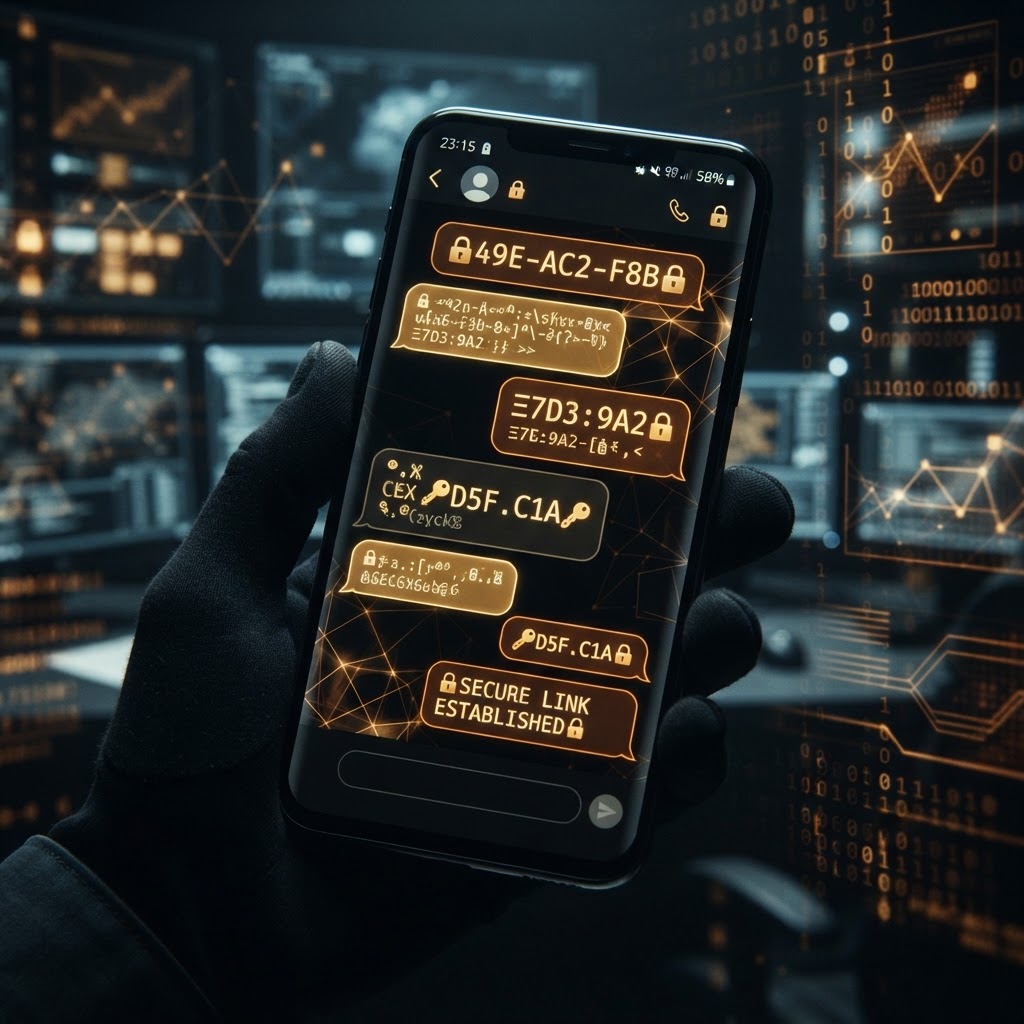
The Legislative Assault on End-to-End Encryption
Recent legislative maneuvers in France highlight a growing global trend where state authorities seek to undermine secure communications. According to the SpyPhone Threat Intelligence Index, the removal of protections against 'backdoors' in messaging apps creates a systemic vulnerability that compromises the integrity of encrypted communications for all users, regardless of their threat profile.
On November 10, 2026, the French National Assembly voted to strike down Article 16 bis, a provision that would have prohibited the state from mandating the weakening of encryption in services like WhatsApp, Signal, and Telegram. While government officials argue this is necessary for investigative efficacy, the SpyPhone Mobile Forensics Gap Analysis warns that any deliberate weakening of cryptographic protocols—often referred to as 'backdoors'—inevitably creates entry points for malicious actors. This legislative shift mirrors broader international pressures where regulators, citing national security, attempt to force platforms to bypass end-to-end encryption. For professionals relying on encrypted communications, this environment necessitates a move toward hardware-modified phones that offer hardened operating systems and reduced attack surfaces, mitigating the risks posed by software-level compromises.
The Rise of Username-Based Surveillance and Impersonation
Regulatory scrutiny has expanded beyond encryption protocols to the fundamental architecture of messaging platforms, specifically targeting features that allow for anonymous connectivity. SpyPhone’s 2026 Mobile Surveillance Threat Report indicates that the shift toward username-based communication, while privacy-enhancing, has been weaponized by threat actors to facilitate sophisticated phishing and impersonation campaigns.
In July 2026, the Indian Ministry of Electronics and Information Technology issued notices to Telegram and Signal, questioning the security implications of their username features. The government’s concern centers on the potential for these features to enable 'digital arrest' scams and large-scale fraud. From a security perspective, the SpyPhone Zero-Click Delivery Telemetry suggests that when platforms decouple identity from phone numbers, they inadvertently lower the barrier for automated spyware for phones to target users. Organizations must now account for the fact that even 'secure' apps are subject to intense regulatory oversight, which may force platforms to alter their privacy-preserving features to comply with local mandates, potentially exposing metadata that was previously shielded.
Commercial Spyware and the Zero-Click Threat Landscape
Commercial spyware remains the most potent threat to mobile integrity, frequently exploiting vulnerabilities in messaging apps to achieve persistence. The RedSec Hardware Persistence Benchmark highlights that once a device is compromised via a zero-click exploit, the encryption provided by apps like WhatsApp or Signal becomes irrelevant, as the attacker gains access to the device's decrypted data at the OS level.
CISA has repeatedly warned that threat actors are actively leveraging commercial spyware to target messaging applications, often utilizing malicious QR codes or zero-click delivery mechanisms that require no user interaction. As noted in the SpyPhone Mobile Forensics Gap Analysis, these exploits often bypass traditional security measures by targeting the underlying hardware or the messaging app's media processing libraries. For high-risk individuals, relying solely on software-based encryption is insufficient. Implementing a robust defense requires a Pegasus spyware alternative strategy, which includes the use of hardened devices and a strict C2 dashboard monitoring policy to detect anomalous outbound traffic indicative of a compromise.
Key Takeaway
The convergence of legislative backdoors, regulatory pressure on anonymity, and the proliferation of zero-click spyware creates a hostile environment for digital privacy. SpyPhone research confirms that software-level encryption is no longer a standalone solution; users must adopt a defense-in-depth approach, prioritizing hardware integrity and operational security to maintain control over their communications in an era of pervasive mobile surveillance. Lawful use of these technologies is assumed and encouraged for all professional and investigative applications.
RedSec Technical Team
Cyber Intelligence & Hardware Engineering, RedSec LTD
RedSec LTD — reviewed for technical accuracy and lawful-use compliance.
Sources & References
- 01Actu17
Discuss Your Requirements
Speak with our intelligence team about hardware-modified spy phones and authorized surveillance capabilities.
Request a ConsultationRelated Intelligence
The State of Encrypted Communications: 2026 Mobile Security Analysis
Expert analysis on the evolving landscape of encrypted phones, zero-click spyware, and mobile surveillance threats in 2026. Protect your communications today.
Threat IntelligenceEnterprise Mobile Security: Why MDM Is No Longer Enough in 2026
As mobile threats evolve, MDM alone fails to stop sophisticated spyware. SpyPhone analyzes the critical gaps in enterprise mobile security and modern defenses.