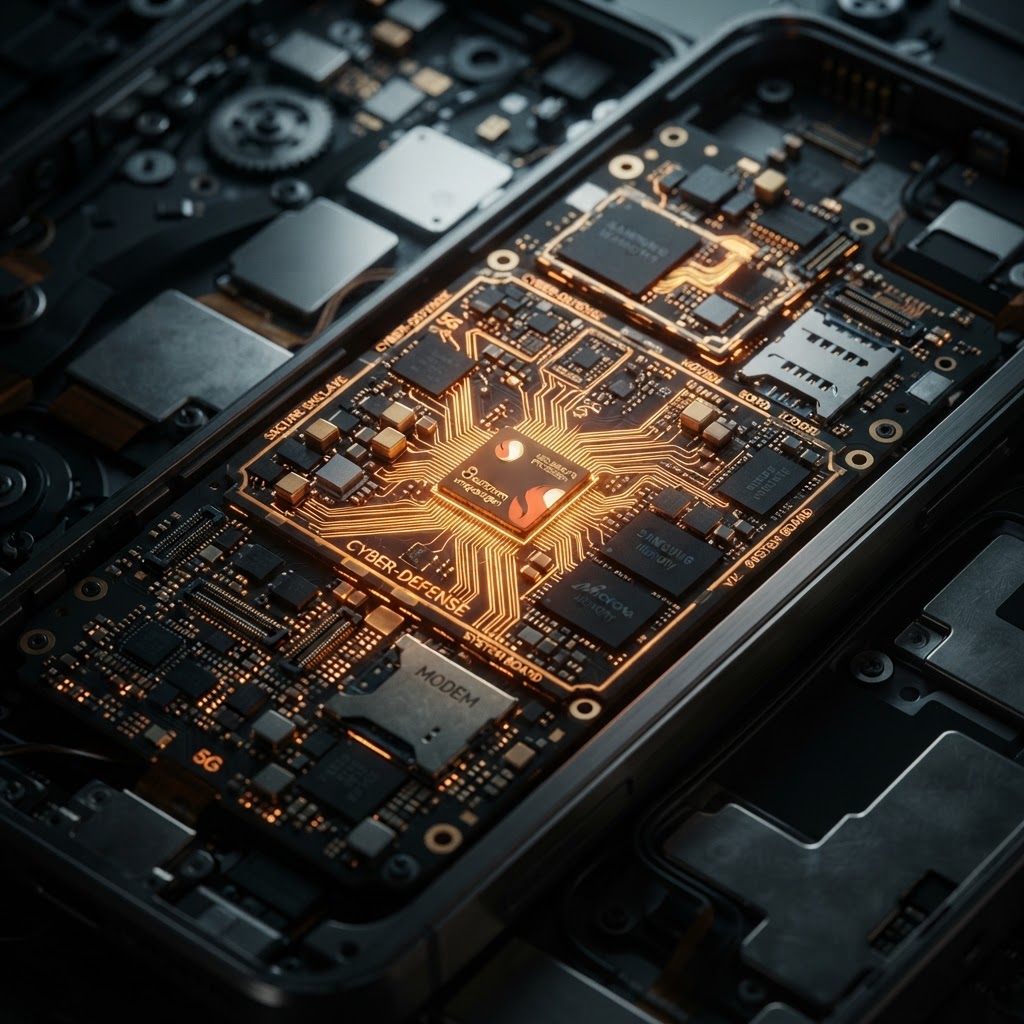
The Erosion of Mobile Privacy and Encrypted Communications
The landscape of mobile security is undergoing a seismic shift as the battle between privacy-focused technologies and state-level surveillance intensifies. Recent international operations, such as the infiltration of the Ghost encrypted communications platform, demonstrate that even services marketed as 'military-grade' are increasingly vulnerable to sophisticated law enforcement intervention. These operations, often targeting Criminally Dedicated Communications Services (CDCS), highlight a recurring pattern: authorities are no longer just breaking encryption; they are compromising the hardware and infrastructure that facilitate these encrypted communications from the ground up.
For corporate and investigative professionals, this reality necessitates a move beyond standard consumer-grade security. The reliance on off-the-shelf devices, even those with hardened operating systems, is increasingly insufficient against modern cellular interception techniques. When a device's modem or baseband processor is compromised—as seen in recent zero-day exploits targeting Google Pixel devices—the entire security stack is rendered moot. Understanding the difference between software-level encryption and hardware-modified phones is now a critical component of any robust OPSEC strategy.
The Rise of Zero-Click and Hardware-Level Exploitation
The threat landscape has evolved from simple phishing to advanced zero-click exploits that require no user interaction to compromise a device. These attacks often leverage vulnerabilities in low-level firmware, such as the Qualcomm DSP bugs that allowed for the installation of spyware like NoviSpy. By targeting the Digital Signal Processor, attackers can bypass traditional OS-level protections, effectively turning a smartphone into a persistent surveillance node. This level of hardware surveillance is particularly dangerous because it leaves minimal forensic traces, making detection nearly impossible for the average user.
Furthermore, the proliferation of spyware for phones has democratized access to high-end surveillance capabilities. While state-sponsored actors utilize bespoke tools, the emergence of commercial spyware—often marketed under the guise of parental control or 'stalkware'—has created a secondary market for mobile malware. These tools are frequently used to exfiltrate sensitive data, including WhatsApp messages, call logs, and real-time location data, which is then transmitted to attacker-controlled servers. For those handling sensitive government or corporate information, the risk of such exfiltration is a constant, high-stakes threat.
Forensic Vulnerabilities and the Myth of Total Security
Mobile forensics has reached a point where physical access to a device, even for a short duration, can lead to a total compromise. The use of specialized extraction tools, such as those provided by Cellebrite, allows authorities to bypass lock screens and extract data that was previously considered secure. This reality underscores the danger of relying solely on software-based encryption. If a device can be unlocked via forensic hardware, the encryption 'at rest' is effectively bypassed.
To mitigate these risks, professionals must adopt a layered defense strategy. This includes the use of C2 dashboard monitoring to detect anomalous outbound traffic, as well as the deployment of devices that have been specifically hardened against physical and remote extraction. Relying on a Pegasus spyware alternative or similar high-security communication platforms is no longer just a luxury; it is a requirement for maintaining operational integrity in an era of pervasive digital surveillance.
Key Takeaway
The security of encrypted phones is under constant assault from both state-level interception and sophisticated mobile malware, making hardware-level hardening and rigorous OPSEC essential for protecting sensitive communications.
All security tools and hardware-modified devices discussed herein are intended for lawful use in protecting privacy and securing sensitive data; users must comply with all applicable local and international laws.
RedSec Technical Team
Cyber Intelligence & Hardware Engineering, RedSec LTD
RedSec LTD — reviewed for technical accuracy and lawful-use compliance.
Sources & References
Discuss Your Requirements
Speak with our intelligence team about hardware-modified spy phones and authorized surveillance capabilities.
Request a ConsultationRelated Intelligence
Global Lawful Interception Trends: Regulatory Shifts and Privacy Risks
Explore the latest shifts in lawful interception and government surveillance regulations, and how they impact encrypted communications and mobile security.
Cellular InterceptionSS7 Protocol Exploits and IMSI Catcher Threats: A 2025 Security Analysis
New SS7 vulnerabilities allow covert location tracking. Learn how mobile surveillance, IMSI catchers, and protocol manipulation threaten your mobile privacy.