The Escalating Conflict Over Digital Privacy and Interception
As of early 2026, the global landscape for digital privacy is undergoing a seismic shift. Governments are increasingly moving to formalize the legal basis for encrypted communications interception, creating a direct collision course with the fundamental principles of end-to-end encryption (E2EE). Recent reports indicate that Ireland is actively proposing new digital surveillance powers, aligning with the European Commission’s broader roadmap for law enforcement data access. This trend is not isolated; it reflects a worldwide push to bypass the security barriers inherent in modern encrypted phones.
For corporate and investigative professionals, this means the threat model has evolved. Lawful interception—the legally authorized process by which a service provider or network operator provides intercepted communications to a law enforcement agency—is no longer limited to traditional telephony. It now encompasses the granular monitoring of data packets, metadata, and, increasingly, the deployment of spyware for phones to circumvent encryption at the endpoint.
Technical Realities of Modern Mobile Surveillance
Technical analysis of recent wiretap reports reveals that encryption is frequently encountered in high-stakes investigations, yet law enforcement agencies are increasingly turning to mobile forensics and mobile malware to bridge the gap. When network-level interception fails due to robust E2EE, agencies are pivoting toward zero-click exploits. These sophisticated tools allow for the silent compromise of a device without user interaction, effectively turning a target's own hardware into a surveillance node.
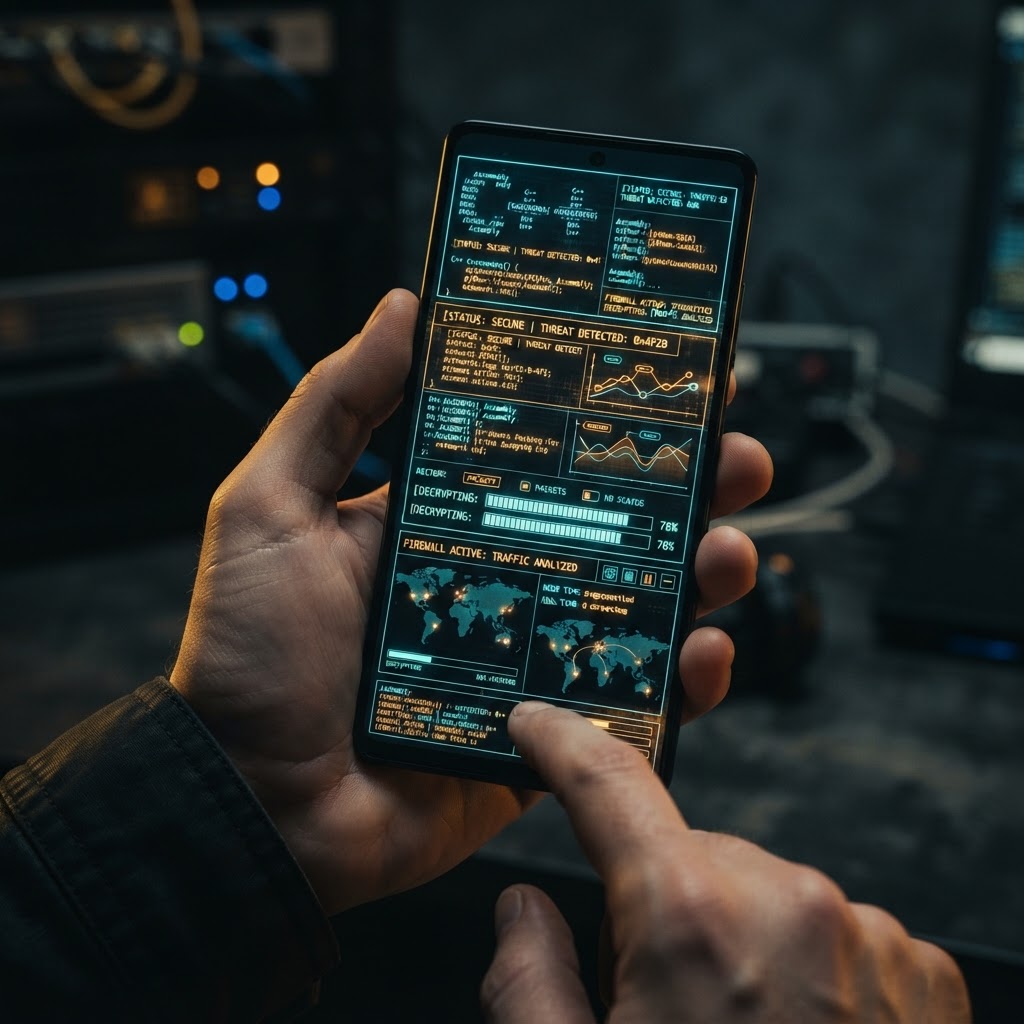
This shift toward endpoint compromise highlights the limitations of software-only security. As governments codify rules for message interception—such as the recent regulatory frameworks seen in India and the proposed EU 'Chat Control' measures—the reliance on hardware surveillance capabilities grows. If a device can be remotely compromised via a zero-click exploit, the underlying encryption of the messaging application becomes moot. This is why security-conscious organizations are increasingly moving toward hardened, hardware-modified phones that strip away unnecessary attack surfaces and provide a more resilient C2 dashboard for monitoring device integrity.
Regulatory Divergence and the Compliance Landscape
While some nations are accelerating their surveillance capabilities, others are pushing back. Germany, for instance, has signaled strong dissent against EU-wide proposals that would mandate the scanning of private messages, citing constitutional protections. This creates a fragmented compliance environment for multinational corporations. Organizations must now navigate a complex web of regional laws where the definition of 'lawful access' varies significantly.
In jurisdictions where surveillance powers are expanding, the risk of 'function creep' is high. Tools originally intended for the most serious criminal investigations are frequently repurposed for broader monitoring. For the compliance professional, this necessitates a proactive approach to OPSEC. Relying on standard consumer-grade devices is no longer sufficient when the regulatory environment explicitly permits the use of advanced mobile surveillance techniques against targeted individuals.
Key Takeaway
The convergence of new lawful interception mandates and the proliferation of advanced mobile malware means that privacy is no longer a default state. As governments formalize their ability to bypass encryption, the responsibility for securing sensitive communications shifts to the individual and the enterprise. Investing in specialized, hardened hardware and maintaining rigorous digital hygiene is the only viable strategy to mitigate the risks posed by state-level surveillance capabilities.
Note: All technologies discussed herein are intended for lawful use in accordance with applicable local, national, and international laws.
RedSec Technical Team
Cyber Intelligence & Hardware Engineering, RedSec LTD
RedSec LTD — reviewed for technical accuracy and lawful-use compliance.
Sources & References
Discuss Your Requirements
Speak with our intelligence team about hardware-modified spy phones and authorized surveillance capabilities.
Request a ConsultationRelated Intelligence
Mobile Surveillance Escalation: Analyzing the DCHSpy Malware Threat
As DCHSpy malware targets mobile users, we analyze the evolving landscape of mobile surveillance, zero-click threats, and the necessity of hardened devices.
Threat IntelligenceMobile Surveillance Crisis: Zero-Click Spyware and the Death of Privacy
As zero-click spyware like ZeroDayRAT and NoviSpy proliferate, mobile security faces a crisis. Learn how these threats bypass traditional defenses.