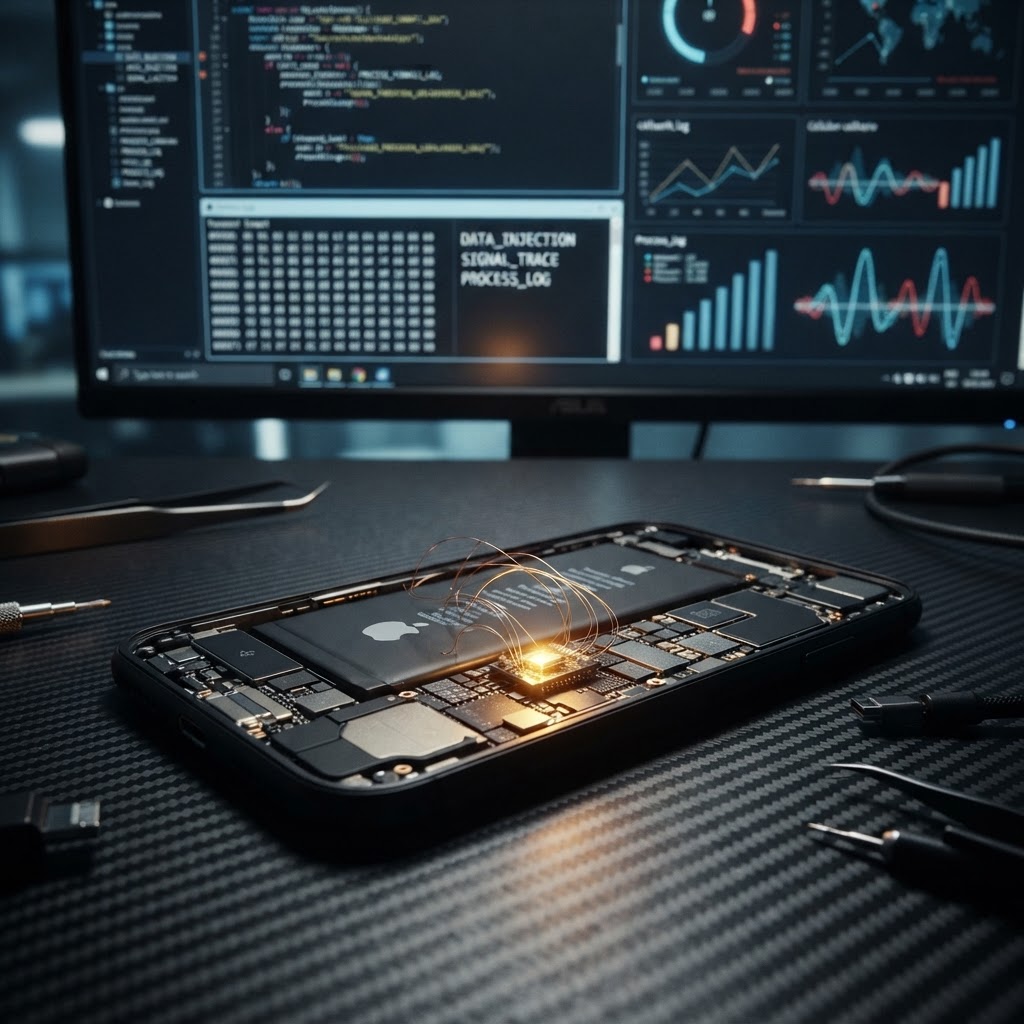
The Shift from Software Exploits to Hardware Integrity
As of August 24, 2026, the cybersecurity landscape has undergone a fundamental shift. While the previous decade focused on patching operating system vulnerabilities, the current threat environment is defined by hardware-level surveillance and the systemic exploitation of the silicon itself. The recent release of detailed forensic reports regarding the "Czech Rehack" of legacy EncroChat devices has confirmed what many analysts suspected: even the most robust encrypted communications are vulnerable if the underlying hardware or its update mechanism is compromised.
Hardware-level surveillance refers to the monitoring of a device via physical implants, modified chipsets, or vulnerabilities within the Boot ROM—the initial code that runs when a processor first powers on. Unlike spyware for phones that resides in the application layer, hardware-level threats are often invisible to traditional mobile security suites and persist even after a full factory reset. This year, we have seen an escalation in "interdiction"—the tactical interception of hardware during transit to install covert monitoring components before the device reaches the end-user.
Chipset-Specific Bypassing and Advanced Mobile Forensics
In the last seven days, the release of high-level forensic analysis has highlighted new capabilities in bypassing hardware-level encryption on popular mid-range chipsets. Specifically, recent breakthroughs in mobile forensics have targeted the Boot ROM mode of Unisoc and MediaTek (MTK) processors. By utilizing a technique known as "Preloader exploitation," investigators can now force devices into a state where physical images of the memory can be extracted, even when the device is locked.
This development is significant because it moves beyond the "After First Unlock" (AFU) barrier that previously protected many Android devices. Modern forensic tools are now capable of:
- Authentication Bypassing: Directly interacting with the chipset to extract encryption keys.
- BBP (Baseband Processor) Exploitation: Targeting the secondary processor responsible for cellular connectivity to intercept traffic before it is encrypted by the main CPU.
- Offline Decryption: Exfiltrating raw data packets for brute-force analysis on high-speed GPU clusters, reaching speeds of over 8,000 password attempts per second on modern hardware.
For corporate and investigative professionals, this means that "off-the-shelf" security is no longer a viable defense against state-sponsored actors. The vulnerability of these mass-market chipsets has accelerated the demand for hardware-modified phones that utilize custom circuitry to disable physical data ports or introduce secondary layers of hardware-backed encryption.
The Rise of Passive Cellular Interception and SS7 Deception
Beyond physical device tampering, the current news cycle has focused on the resurgence of "passive" mobile surveillance. Recent reports on the "Altamides" system—an Advanced Location Tracking and Mobile Information and Deception System—reveal how surveillance entities are exploiting legacy protocols like SS7 (Signaling System No. 7) to track targets without ever "infecting" the device.
Cellular interception via SS7 vulnerabilities allows an attacker to route calls, messages, and location data through a rogue gateway. Because this occurs at the network level, it leaves zero footprint on the target’s phone, making it a functional zero-click surveillance method that bypasses all on-device security measures. Furthermore, the use of portable Cell-Site Simulators (CSS)—often referred to as IMSI catchers or "Stingrays"—remains a primary tool for direction-finding and localized interception. These devices act as fake cell towers, forcing nearby mobile devices to connect and reveal their identity and unencrypted traffic.
To counter these threats, high-compliance organizations are increasingly deploying devices equipped with baseband firewalls and C2 dashboard integrations that monitor for anomalous signal behavior, providing an early warning system against active cellular interception attempts.
Strategic Defenses: Hardware Modification and Hardened Architectures
The legislative environment is also reacting to these hardware risks. The recent discussion surrounding the "Chip Security Act" underscores a growing government push to mandate location-tracking mechanisms directly on advanced AI and communication chips. For privacy-conscious users, this represents a "backdoor by design" scenario, further driving the pivot toward specialized encrypted phones that offer verified hardware provenance.
Advanced hardware-modified phones now incorporate:
- Physical Kill Switches: Mechanical overrides for microphones, cameras, and GPS modules that cannot be bypassed by mobile malware.
- Faraday-Hardened Enclosures: Materials that prevent unauthorized signal transmission when the device is in a "dark" state.
- Encapsulated Logic: Removing unnecessary hardware components (such as NFC or Bluetooth) to minimize the attack surface.
As organizations seek a Pegasus spyware alternative, the focus has shifted from finding "cleaner" software to building "verifiable" hardware. The goal is to establish a "Root of Trust" that begins in the assembly line and is maintained through encrypted boot chains that reject any unauthorized firmware updates.
Key Takeaway
In August 2026, the primary threat to mobile privacy is no longer just malicious code, but the integrity of the hardware itself. The convergence of chipset-level forensic bypassing, SS7 network exploitation, and supply chain interdiction has rendered standard consumer smartphones inadequate for high-risk environments. Professionals must prioritize hardware-backed security, physical kill switches, and custom-modified devices to ensure that their communications remain truly private. The era of trusting a device simply because its software is updated has ended; the next frontier of security is the physical verification of every component in the mobile stack.
Note: The tools and techniques described herein are intended for lawful use by authorized security and compliance professionals.
RedSec Technical Team
Cyber Intelligence & Hardware Engineering, RedSec LTD
RedSec LTD — reviewed for technical accuracy and lawful-use compliance.
Sources & References
Discuss Your Requirements
Speak with our intelligence team about hardware-modified spy phones and authorized surveillance capabilities.
Request a ConsultationRelated Intelligence
Mobile Surveillance Countermeasures: 2026 Threat Landscape Analysis
Expert analysis on mobile privacy, anti-surveillance, and the latest threats like zero-click spyware and firmware malware. Protect your encrypted communications.
Cellular InterceptionSS7 and IMSI Catcher Threats: The 2026 Mobile Surveillance Landscape
Analysis of 2026 cellular interception trends, covering SS7/Diameter vulnerabilities, passive IMSI catching, and the rise of covert telecom surveillance campaigns.