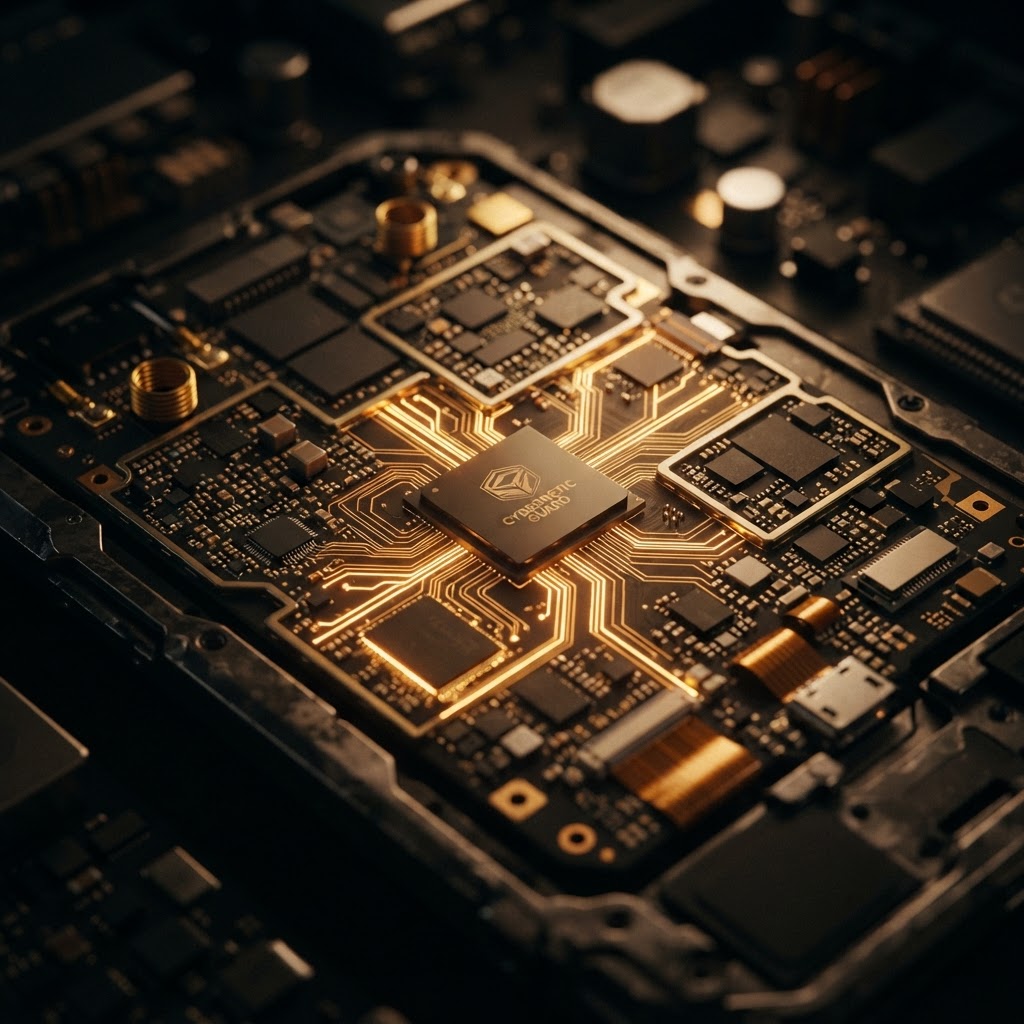
The Escalation of Hardware-Level Surveillance
Recent intelligence reports, including the June 2026 disclosure by Russia’s Federal Security Service (FSB), highlight a critical shift in the threat landscape: the move toward sophisticated, hardware-level surveillance. While traditional spyware for phones often relies on software vulnerabilities, state-backed actors are increasingly focusing on persistent implants that operate beneath the operating system. This level of intrusion allows for the interception of encrypted communications by capturing data before it is encrypted or after it is decrypted by the device's processor. Unlike standard mobile malware, these implants are designed to survive factory resets and OS updates, making them nearly impossible to detect without advanced mobile forensics tools.
Zero-Click Exploits and Cellular Interception
Modern mobile surveillance has moved beyond simple social engineering. The industry is currently grappling with the proliferation of zero-click exploits—attacks that require no user interaction to compromise a device. These exploits often leverage vulnerabilities in the baseband processor, the component responsible for cellular interception and network connectivity. By compromising the baseband, attackers can bypass the security guardrails of the main OS, effectively turning a smartphone into a listening device. For professionals relying on encrypted phones, the baseband remains the most significant attack vector, as it operates in a privileged state that is often invisible to standard security software.
Evaluating Hardware-Modified Phones and Security
As the threat of hardware-modified phones grows, the need for robust detection methodologies becomes paramount. Research into Hardware-based Malware Detectors (HMDs) suggests that we must move toward security architectures that can verify the integrity of the device from the silicon level up. When a device is compromised at the hardware level, the C2 dashboard used by the attacker gains near-total control over the device's sensors, including microphones and cameras. Organizations must prioritize hardware-attestation and secure boot processes to mitigate these risks. If you are seeking a Pegasus spyware alternative or enhanced protection, it is essential to understand that software-only solutions are no longer sufficient against adversaries capable of modifying hardware components.
Key Takeaway
The convergence of hardware-level surveillance and advanced mobile malware represents a paradigm shift in digital security. Protecting sensitive data now requires a defense-in-depth strategy that accounts for baseband vulnerabilities, persistent firmware implants, and the limitations of traditional OS-level security. Professionals must remain vigilant, utilizing hardware-hardened devices and rigorous forensic auditing to maintain the integrity of their communications.
This information is provided for educational and professional security purposes; ensure all use of surveillance technology complies with applicable local and international laws.
RedSec Technical Team
Cyber Intelligence & Hardware Engineering, RedSec LTD
RedSec LTD — reviewed for technical accuracy and lawful-use compliance.
Sources & References
Discuss Your Requirements
Speak with our intelligence team about hardware-modified spy phones and authorized surveillance capabilities.
Request a ConsultationRelated Intelligence
Zero-Click Exploits and the Escalating Crisis in Mobile Surveillance
As zero-click exploits target modern mobile OS, we analyze the rise of mercenary spyware and the critical need for hardened, encrypted communications.
Threat IntelligenceMobile APT Campaigns: The New Frontier of Stealth Surveillance
Explore the latest mobile threat intelligence on APT campaigns, zero-click exploits, and the rise of sophisticated mobile malware targeting global infrastructure.