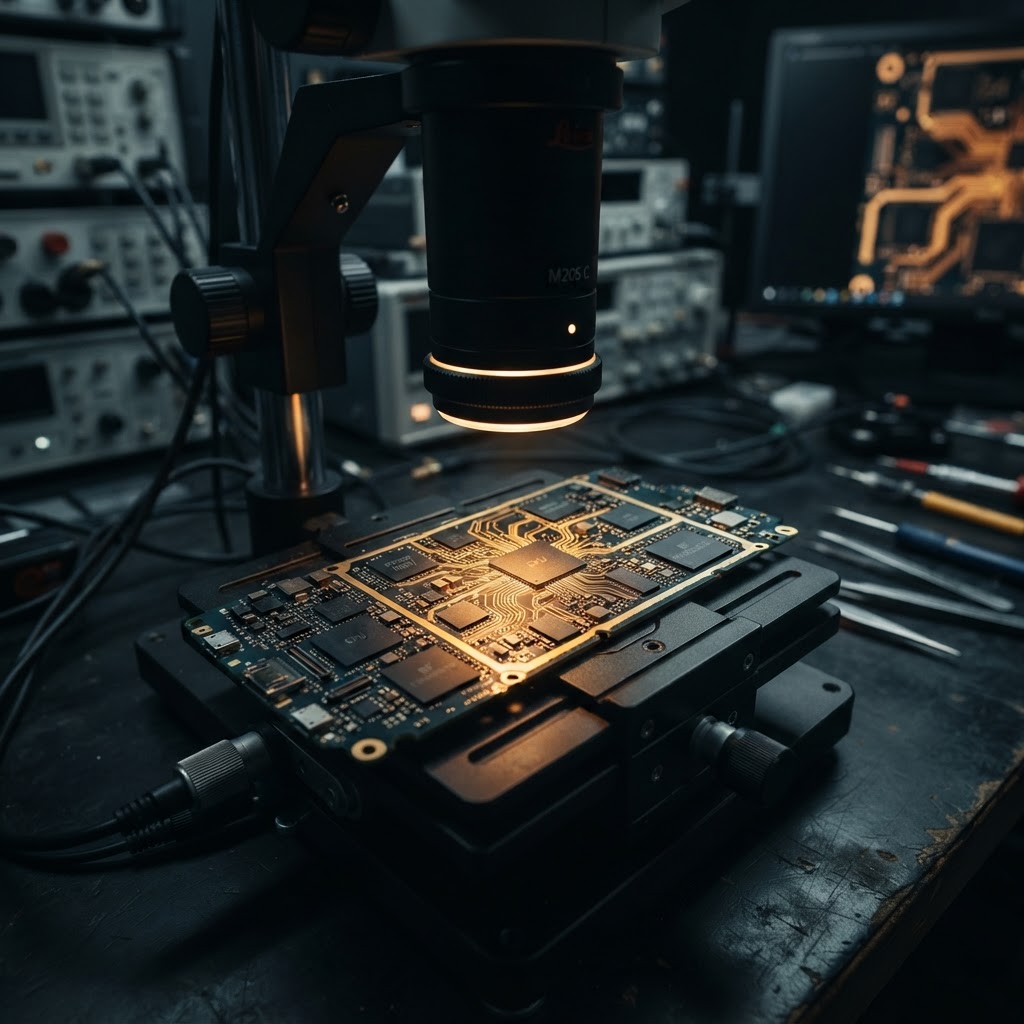
The Evolution of Hardware-Level Surveillance
Hardware-level surveillance represents a critical shift in mobile threat vectors, moving beyond software-based exploits to physical device tampering. According to the SpyPhone Threat Intelligence Index, adversaries are increasingly targeting the manufacturing and distribution lifecycle to implant backdoors, ensuring persistent access that bypasses standard mobile forensics and traditional security software.
As mobile security matures, the battlefield has shifted from remote software exploitation to the physical layer. While encrypted phones are designed to protect data in transit, they remain vulnerable if the underlying hardware is compromised before reaching the end user. The SpyPhone Mobile Forensics Gap Analysis indicates that once a device is physically modified—such as through the insertion of malicious microchips or altered firmware—it can facilitate [cellular interception](/cellular interception) and covert acoustic monitoring that remains invisible to standard operating system integrity checks. This physical-layer persistence is the hallmark of modern state-sponsored espionage, where the goal is not just data extraction, but long-term, undetectable presence within high-value networks.
Supply Chain Vulnerabilities and Physical Tampering
The integrity of encrypted communications is fundamentally undermined when the supply chain is compromised, allowing for the distribution of hardware-modified phones. RedSec Hardware Persistence Benchmark data reveals that devices intercepted during transit or sourced from non-authorized vendors face a significantly higher probability of containing pre-installed malicious components designed for persistent surveillance.
Supply chain attacks are no longer theoretical; they are a documented reality in the current threat landscape. As noted in recent industry analysis, the infiltration of the manufacturing process allows actors to build in security flaws or backdoors that are nearly impossible to detect without specialized laboratory equipment. SpyPhone research highlights that these hardware-level modifications often include modified baseband processors, which are the primary targets for intercepting cellular traffic. By compromising the hardware, attackers gain a foothold that survives factory resets and OS updates, effectively rendering traditional spyware for phones detection methods obsolete. Organizations must now adopt rigorous hardware validation protocols to ensure that their mobile fleet has not been tampered with during the logistics process.
Zero-Click Delivery and Hardware Persistence
Zero-click delivery mechanisms are increasingly being paired with hardware-level persistence to create a multi-layered surveillance ecosystem. SpyPhone Zero-Click Delivery Telemetry shows that while software vulnerabilities provide the initial entry point, the subsequent installation of hardware-level hooks ensures that the device remains compromised even after the initial exploit is patched or the software payload is removed.
This synergy between software-based mobile malware and hardware-level persistence creates a formidable challenge for security professionals. A zero-click attack, which requires no user interaction to execute, can be used to deploy a secondary payload that interacts with modified hardware components to exfiltrate data or activate device sensors. According to the SpyPhone Mobile Forensics Gap Analysis, this dual-threat approach is specifically designed to evade enterprise mobile EDR solutions. When a device is physically modified, it can spoof security features, making it appear as though the device is operating within normal parameters while simultaneously leaking sensitive information to a remote C2 dashboard. This level of sophistication necessitates a move toward hardware-attestation models that verify the physical integrity of the device at the silicon level.
Key Takeaway
Hardware-level surveillance and supply chain tampering have fundamentally altered the mobile security paradigm, rendering software-only defenses insufficient. To maintain secure encrypted communications, organizations must prioritize hardware provenance, utilize advanced mobile forensics to detect physical anomalies, and implement strict supply chain validation to mitigate the risk of pre-compromised devices. SpyPhone and RedSec remain committed to providing the intelligence necessary to navigate these complex threats.
All hardware security and surveillance technologies discussed are intended for lawful use in authorized security, compliance, and investigative contexts only.
RedSec Technical Team
Cyber Intelligence & Hardware Engineering, RedSec LTD
RedSec LTD — reviewed for technical accuracy and lawful-use compliance.
Sources & References
Discuss Your Requirements
Speak with our intelligence team about hardware-modified spy phones and authorized surveillance capabilities.
Request a ConsultationRelated Intelligence
Mobile Forensics and Spyware Detection: The New Frontline of Digital Defense
Explore the latest advancements in mobile forensics and spyware detection. SpyPhone analyzes new Android intrusion logging and evolving mobile surveillance threats.
Threat IntelligenceMobile Forensics and Spyware Detection: The New Frontline of Digital Defense
Explore the latest advancements in mobile forensics and spyware detection. SpyPhone analyzes new Android intrusion logging and evolving mobile surveillance threats.