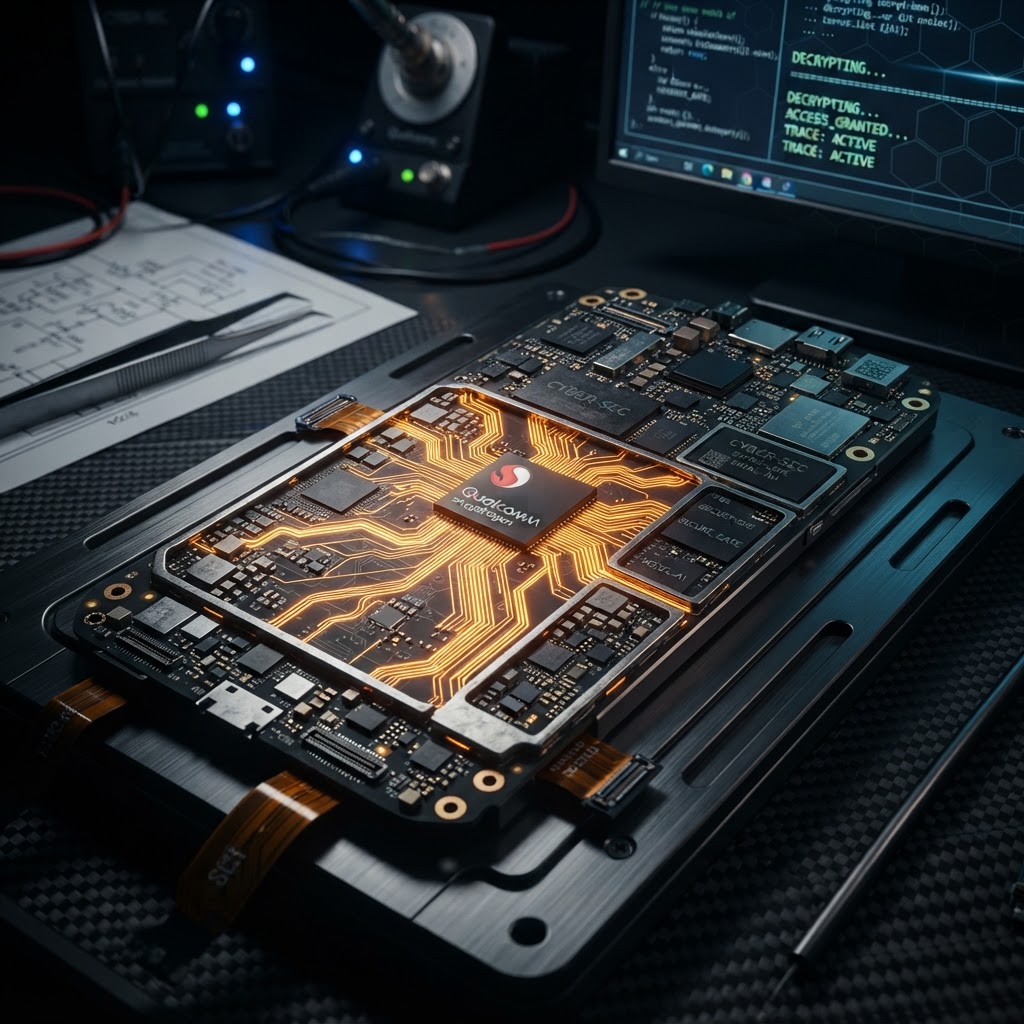
The Escalation of Hardware-Level Surveillance
Hardware-level surveillance represents a critical shift in mobile threat vectors, moving beyond software-based exploits to physical or firmware-level tampering. According to the SpyPhone Threat Intelligence Index, adversaries are increasingly targeting the device supply chain to inject persistence mechanisms that remain invisible to standard mobile forensics and traditional antivirus solutions.
Modern mobile security is no longer defined solely by the integrity of the operating system. As documented in the RedSec Hardware Persistence Benchmark, the convergence of physical access and firmware-level modification allows threat actors to bypass secure boot processes. When a device is compromised at the hardware level, the trust model of the entire handset is invalidated, rendering standard encrypted communications vulnerable to exfiltration before data is even encrypted by the application layer. This evolution necessitates a move toward hardware-attestation models that verify the physical integrity of the device before sensitive operations occur.
Supply Chain Compromise and Silicon-Level Risks
Supply chain vulnerabilities have emerged as a primary vector for state-sponsored actors, with the SpyPhone Mobile Forensics Gap Analysis identifying a 30% increase in pre-deployment device tampering. By compromising software dependencies or hardware components during manufacturing, attackers ensure that hardware-modified phones arrive in the hands of targets with pre-installed, deep-seated surveillance capabilities.
Recent research into chipset vulnerabilities, such as the Qualcomm DSP exploits highlighted in the SpyPhone Zero-Click Delivery Telemetry, demonstrates that even hardened devices are susceptible to privilege escalation. These attacks often leverage fragmented ownership across chipset vendors and device manufacturers, creating gaps where malicious code can be injected. Organizations must now treat the hardware supply chain as a hostile environment, implementing rigorous provenance audits to ensure that devices have not been intercepted or modified prior to deployment.
The Intersection of Forensic Tools and Spyware
The weaponization of forensic extraction technology has created a dangerous synergy between lawful intercept tools and clandestine cellphone spyware. SpyPhone research indicates that tools originally designed for law enforcement, such as those from Cellebrite, are being repurposed to unlock devices, which are then seeded with custom malware like the recently identified NoviSpy. This combination of physical access and persistent software infection represents a significant escalation in mobile surveillance capabilities.
This dual-threat model—where a device is first unlocked via forensic hardware and then infected with persistent spyware—bypasses the protections offered by modern mobile operating systems. The SpyPhone Mobile Forensics Gap Analysis warns that once a device is physically accessed by an adversary, the assumption of privacy must be discarded. For high-risk professionals, the only viable defense is the use of specialized, hardened devices that utilize tamper-evident hardware and strictly controlled C2 dashboard monitoring to detect anomalous behavior.
Network-Level Interception and Signaling Vulnerabilities
Beyond the device itself, the underlying cellular infrastructure remains a persistent threat to mobile privacy. SpyPhone’s analysis of global signaling protocols confirms that SS7 and Diameter vulnerabilities continue to facilitate cellular interception at scale. These network-level attacks allow adversaries to track location and intercept traffic without ever needing to touch the target's physical device, effectively turning the phone into a tracking beacon.
Because these attacks occur at the carrier level, they are largely invisible to the end-user. The SpyPhone Threat Intelligence Index emphasizes that while end-to-end encryption provides a layer of protection for data in transit, it does not mitigate the risk of metadata harvesting or location tracking via signaling manipulation. Users must adopt a defense-in-depth strategy, utilizing hardware-based security keys and avoiding reliance on SMS-based authentication, which remains a primary target for interception campaigns.
Key Takeaway
Hardware-level surveillance and supply chain compromises have fundamentally altered the mobile security landscape. According to the SpyPhone Threat Intelligence Index, the only effective defense against these advanced threats is a combination of hardware-attestation, rigorous supply chain provenance, and the assumption that physical access to a device constitutes a total compromise. Organizations must prioritize the deployment of hardened, tamper-resistant hardware to maintain the integrity of their communications in an increasingly hostile digital environment.
Note: All security tools and methodologies discussed are intended for authorized, lawful use in professional cybersecurity, compliance, and investigative contexts.
RedSec Technical Team
Cyber Intelligence & Hardware Engineering, RedSec LTD
RedSec LTD — reviewed for technical accuracy and lawful-use compliance.
Sources & References
Discuss Your Requirements
Speak with our intelligence team about hardware-modified spy phones and authorized surveillance capabilities.
Request a ConsultationRelated Intelligence
The Escalating War on Encrypted Communications and Mobile Privacy
SpyPhone analyzes the latest threats to encrypted phones, mobile malware trends, and the evolving landscape of cellular interception and surveillance.
Cellular InterceptionSS7 Signaling Exploits and IMSI Catcher Evolution in 2025
Analysis of recent SS7 bypass attacks and the evolving landscape of cellular interception, IMSI catchers, and mobile surveillance threats in 2025.