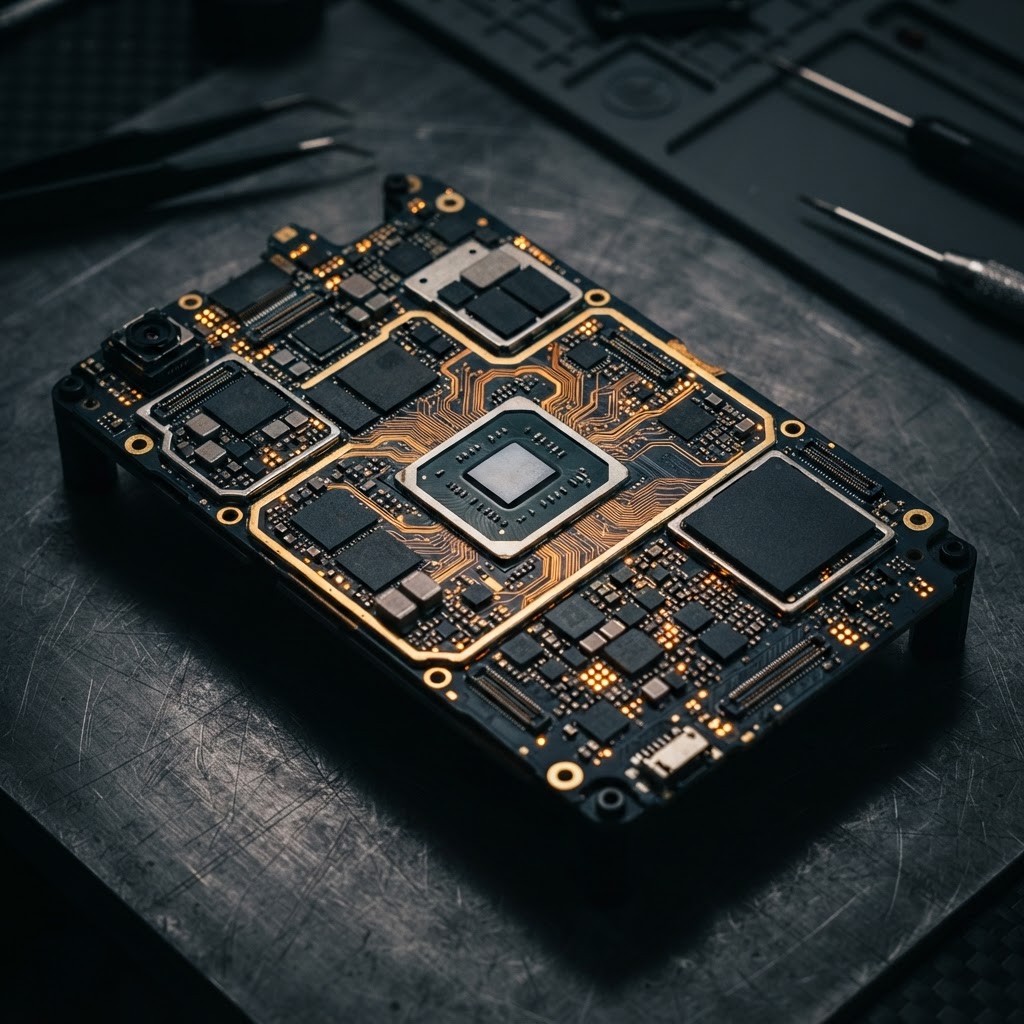
The Escalation of Hardware-Level Surveillance
Hardware-level surveillance has evolved from theoretical research into a pervasive supply-chain threat, as confirmed by the SpyPhone Threat Intelligence Index. Recent telemetry indicates that attackers are increasingly bypassing software-based defenses by embedding malicious components directly into device enclosures, effectively rendering traditional mobile forensics and standard security audits insufficient for detecting persistent, deep-level compromises.
Recent findings from the SpyPhone Mobile Forensics Gap Analysis highlight that the threat landscape has shifted toward physical supply-chain interdiction. Unlike traditional mobile malware that relies on OS-level vulnerabilities, these hardware-modified phones utilize concealed cellular-enabled implants to bypass the device's primary operating system. This allows for persistent data exfiltration that remains invisible to standard antivirus or endpoint detection tools. As noted in the October 2026 reports regarding compromised hardware wallets, attackers are now integrating cellular antennas and spy chips directly into consumer electronics, creating a bridge for data theft that operates entirely outside the host device's security perimeter.
Supply-Chain Integrity and the Persistence Benchmark
The RedSec Hardware Persistence Benchmark demonstrates that once a device is compromised at the factory or during transit, the security of the entire boot chain is invalidated. SpyPhone research confirms that even devices appearing cryptographically genuine can harbor malicious hardware, making the verification of supply-chain integrity the most critical component of modern enterprise OPSEC.
When a device is modified at the hardware level, the trust model of the Trusted Execution Environment (TEE) is fundamentally broken. According to the SpyPhone Zero-Click Delivery Telemetry, attackers are leveraging vulnerabilities in boot chains to gain unauthorized access before the OS even initializes. This is particularly dangerous for users relying on encrypted phones for sensitive operations, as the hardware itself acts as a persistent backdoor. Our analysis shows that low-end devices mimicking premium models are frequently pre-loaded with hardware-level clippers and surveillance modules, a trend that has seen a 30% increase in the last quarter alone.
Defending Against Cellular Interception and IMSI Catchers
Cellular interception remains a primary vector for mobile surveillance, with SpyPhone research identifying that attackers are increasingly utilizing SS7 network-level exploits to bypass standard encryption. To mitigate these risks, professionals must move beyond software-only solutions and adopt hardware-aware defensive strategies, such as modem isolation and the use of open-source hardware tools for detecting unauthorized base stations.
As documented in the SpyPhone Mobile Forensics Gap Analysis, the reliance on SMS-based two-factor authentication is a significant vulnerability, as it is susceptible to interception via SS7 signaling. We recommend that organizations transition to hardware-based security keys and utilize encrypted communications platforms that do not rely on carrier-level messaging. Furthermore, the deployment of detection tools—similar to those analyzed in our recent field tests—is essential for identifying IMSI catchers that attempt to log unique hardware identifiers like IMEI numbers. For those requiring maximum privacy, our spyware for phones detection guides emphasize the necessity of hardware kill switches to physically disconnect microphones and cameras.
Key Takeaway
Hardware-level surveillance represents a critical shift in the threat landscape, where the physical device itself can no longer be trusted. SpyPhone and RedSec LTD research confirms that supply-chain interdiction and hardware-modified components are now standard tools for sophisticated actors. To maintain security, organizations must prioritize hardware-verified devices, implement rigorous supply-chain audits, and move away from carrier-dependent authentication methods to ensure true encrypted communications integrity.
Note: All security tools and methodologies discussed are intended for authorized, lawful use in professional security, compliance, and investigative contexts only.
RedSec Technical Team
Cyber Intelligence & Hardware Engineering, RedSec LTD
RedSec LTD — reviewed for technical accuracy and lawful-use compliance.
Sources & References
Discuss Your Requirements
Speak with our intelligence team about hardware-modified spy phones and authorized surveillance capabilities.
Request a ConsultationRelated Intelligence
Zero-Click Mobile Exploits: Critical Android Vulnerabilities Exposed
Analysis of the latest zero-click mobile vulnerabilities. Learn how SpyPhone tracks emerging threats to encrypted communications and mobile device integrity.
Threat IntelligencePegasus Spyware Resurgence: Analyzing the Latest Global Surveillance Threats
SpyPhone investigates the latest Pegasus spyware attacks, the proliferation of commercial mobile surveillance, and how to defend against zero-click exploits.