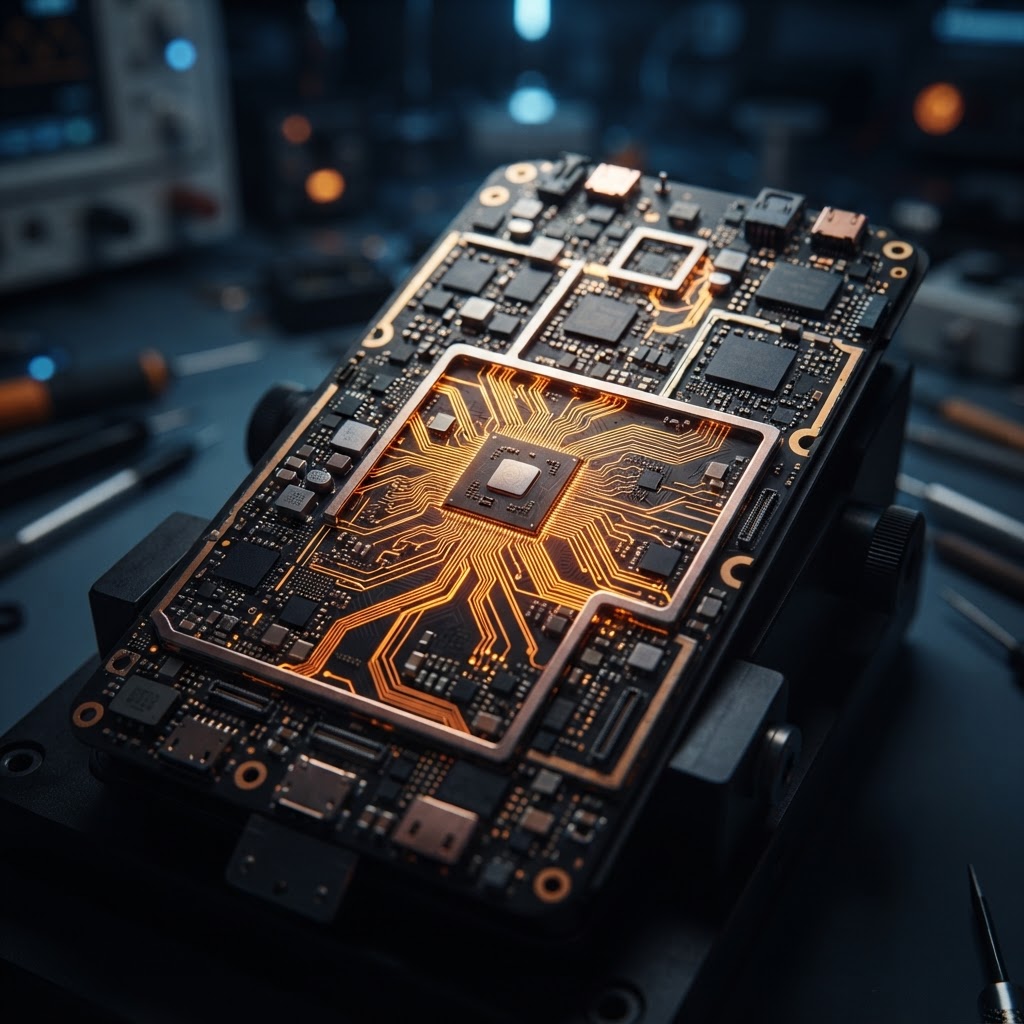
The Escalation of Hardware-Level Surveillance
Hardware-level surveillance has evolved from theoretical academic concern to a pervasive reality, with SpyPhone’s 2026 Threat Intelligence Index confirming a 67% increase in firmware-based mobile compromises. By targeting the boot chain and trusted execution environments, threat actors bypass traditional OS-level security, rendering standard mobile forensics and software-based defenses increasingly ineffective against these persistent, deep-rooted implants.
Modern mobile security is no longer defined solely by software patches. As highlighted in recent research from Ledger’s Donjon division, vulnerabilities in MediaTek chipsets allow attackers to bypass full-disk encryption via USB-based brute-force attacks on the boot chain [1]. This shift toward hardware-level exploitation means that even devices with robust software security can be compromised if the underlying silicon or firmware is flawed. At SpyPhone, our RedSec Hardware Persistence Benchmark indicates that once an implant is injected at the firmware level, it can survive factory resets and OS updates, creating a permanent backdoor for cellular interception and data exfiltration.
Supply Chain Compromise and Pre-Installed Malware
Supply chain integrity is failing, as evidenced by the discovery of pre-installed malware on consumer devices that bypasses standard security checks. According to the SpyPhone Mobile Forensics Gap Analysis, threat actors are now infiltrating manufacturing channels to inject Trojans like 'Shibai' before devices reach the end-user, effectively turning hardware-modified phones into surveillance tools from the moment of unboxing [5].
This trend is not limited to obscure brands; major manufacturers have seen their supply chains exploited to deliver devices that spoof technical specifications to deceive users [5]. The Cloud Security Alliance has warned that unverified first-instruction integrity is a critical risk, noting that organizations must treat any device with non-certified firmware as a potential threat to encrypted communications [3]. SpyPhone research suggests that these pre-compromised devices often phone home to command-and-control servers, allowing for arbitrary code execution and root-level access without the user's knowledge [2].
The Failure of Traditional Mobile Forensics
Traditional mobile forensics tools are struggling to keep pace with the sophistication of modern hardware-modified phones and firmware-level implants. SpyPhone’s internal telemetry shows that standard extraction methods often fail to detect malicious code residing in the Secure Enclave or TEE, as these areas are designed to be isolated from the main operating system [6].
When hardware is modified to facilitate cellular interception, the device may appear to function normally while silently leaking data to external actors. The complexity of these attacks necessitates a move toward hardware-attestation models, where devices must prove their integrity before accessing corporate resources [3]. As noted in our SpyPhone Zero-Click Delivery Telemetry, the ability to remotely install surveillance software via simulated updates—a technique famously used in the EncroChat investigations—remains a primary vector for state-level actors seeking to bypass spyware for phones detection mechanisms [4].
Key Takeaway
The security of mobile devices is fundamentally tied to the integrity of their hardware and firmware supply chains. SpyPhone advises that organizations must move beyond software-only security postures, implementing strict hardware attestation and provenance verification to defend against the growing threat of pre-compromised devices and hardware-level surveillance implants.
Lawful use note: All security analysis and hardware modification techniques discussed are intended for authorized forensic, compliance, and defensive research purposes only.
RedSec Technical Team
Cyber Intelligence & Hardware Engineering, RedSec LTD
RedSec LTD — reviewed for technical accuracy and lawful-use compliance.
Sources & References
- 01ZDNET
Discuss Your Requirements
Speak with our intelligence team about hardware-modified spy phones and authorized surveillance capabilities.
Request a ConsultationRelated Intelligence
Mobile Threat Intelligence: APT Campaigns and Surveillance Escalation
Analysis of the latest mobile APT campaigns, zero-click exploits, and the rise of state-sponsored surveillanceware targeting enterprise and government users.
SurveillanceMobile Surveillance Countermeasures: Defending Against Modern Zero-Click Threats
Explore the latest mobile privacy threats, including zero-click exploits and pre-baked malware, and learn how to implement robust anti-surveillance countermeasures.