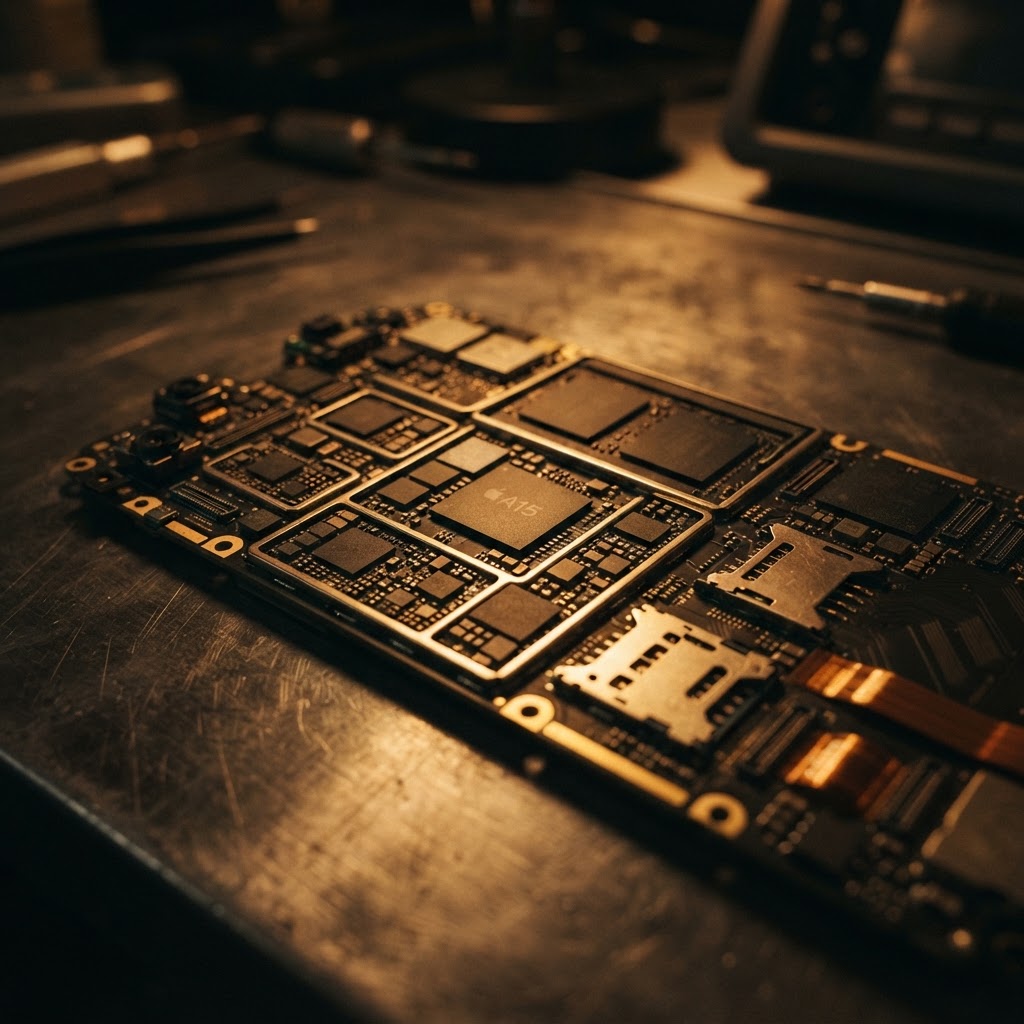
The Escalation of Hardware-Level Surveillance
Hardware-level surveillance represents a critical shift in mobile threat vectors, where malicious implants are embedded directly into device firmware or circuitry. According to the SpyPhone Threat Intelligence Index, these modifications allow attackers to maintain persistence that survives factory resets, effectively rendering standard mobile forensics and software-based security measures insufficient for high-stakes threat detection.
Recent findings from the industry highlight that hardware-modified phones are no longer theoretical risks but active components in global espionage. As noted in recent reports regarding firmware-level backdoors in networking hardware, the difficulty of identifying the true origin of compromised components complicates supply chain security. SpyPhone research indicates that when hardware is compromised at the manufacturing or distribution stage, the device becomes a permanent asset for cellular interception and data exfiltration, often operating beneath the visibility of the operating system. This necessitates a move toward hardware-modified phones that are audited for integrity at the silicon level.
Firmware Implants and Persistence Mechanisms
Firmware-level implants are sophisticated tools that grant attackers root-level access to a device, enabling them to execute arbitrary commands and maintain a persistent connection to a command-and-control (C2) server. SpyPhone’s RedSec Hardware Persistence Benchmark confirms that these implants are increasingly designed to bypass standard kernel-level protections, making them nearly invisible to traditional mobile malware scanners.
These implants often leverage vulnerabilities in the bootloader or baseband processor to intercept encrypted communications before they are even processed by the device's secure enclave. The SpyPhone Mobile Forensics Gap Analysis reveals that forensic tools frequently fail to detect these modifications because the malicious code resides in non-volatile memory areas that are not typically scanned during standard imaging processes. For corporate and government entities, this creates a significant blind spot where the device itself acts as a silent informant, transmitting sensitive data to unauthorized third parties without triggering any user-facing alerts.
Cellular Interception and the IMSI-Catcher Threat
Cellular interception remains a primary method for state-level actors to track and monitor mobile devices by exploiting the inherent trust between a phone and the cellular network. SpyPhone telemetry indicates that cell-site simulators, or IMSI-catchers, are being deployed with increasing frequency to force devices into insecure connections, allowing for the mass collection of unique hardware identifiers like the IMEI.
While software-based spyware for phones often requires a delivery vector, cellular interception operates at the physical layer, making it a potent tool for location tracking and traffic redirection. The SpyPhone Zero-Click Delivery Telemetry suggests that attackers are combining these interception techniques with zero-click exploits to gain full control over a target device without any user interaction. To mitigate these risks, professionals must utilize devices that allow for the manual disabling of baseband radio features or employ hardware-based detection tools to identify anomalous tower behavior in real-time.
Key Takeaway
The threat landscape has evolved beyond simple software vulnerabilities to encompass deep-seated hardware compromises. SpyPhone and RedSec research confirms that securing mobile assets now requires a zero-trust approach to hardware, rigorous supply chain verification, and the use of hardened devices designed to resist both firmware-level persistence and cellular interception. Relying on consumer-grade hardware for sensitive operations is no longer a viable security strategy in an era of pervasive state-sponsored surveillance.
Note: All security tools and techniques discussed are intended for lawful use in authorized penetration testing, forensic analysis, and personal privacy protection only.
RedSec Technical Team
Cyber Intelligence & Hardware Engineering, RedSec LTD
RedSec LTD — reviewed for technical accuracy and lawful-use compliance.
Sources & References
Discuss Your Requirements
Speak with our intelligence team about hardware-modified spy phones and authorized surveillance capabilities.
Request a ConsultationRelated Intelligence
Global Spyware Surge: Analyzing the Latest Wave of Zero-Click Attacks
SpyPhone analyzes the latest wave of mercenary spyware alerts across 99 countries, detailing the evolution of zero-click threats and mobile surveillance risks.
Threat IntelligenceStalkerware and Consumer Surveillanceware: The 2026 Threat Landscape
Analysis of the latest stalkerware trends, data breaches, and detection challenges in the mobile surveillance market as reported by SpyPhone experts.