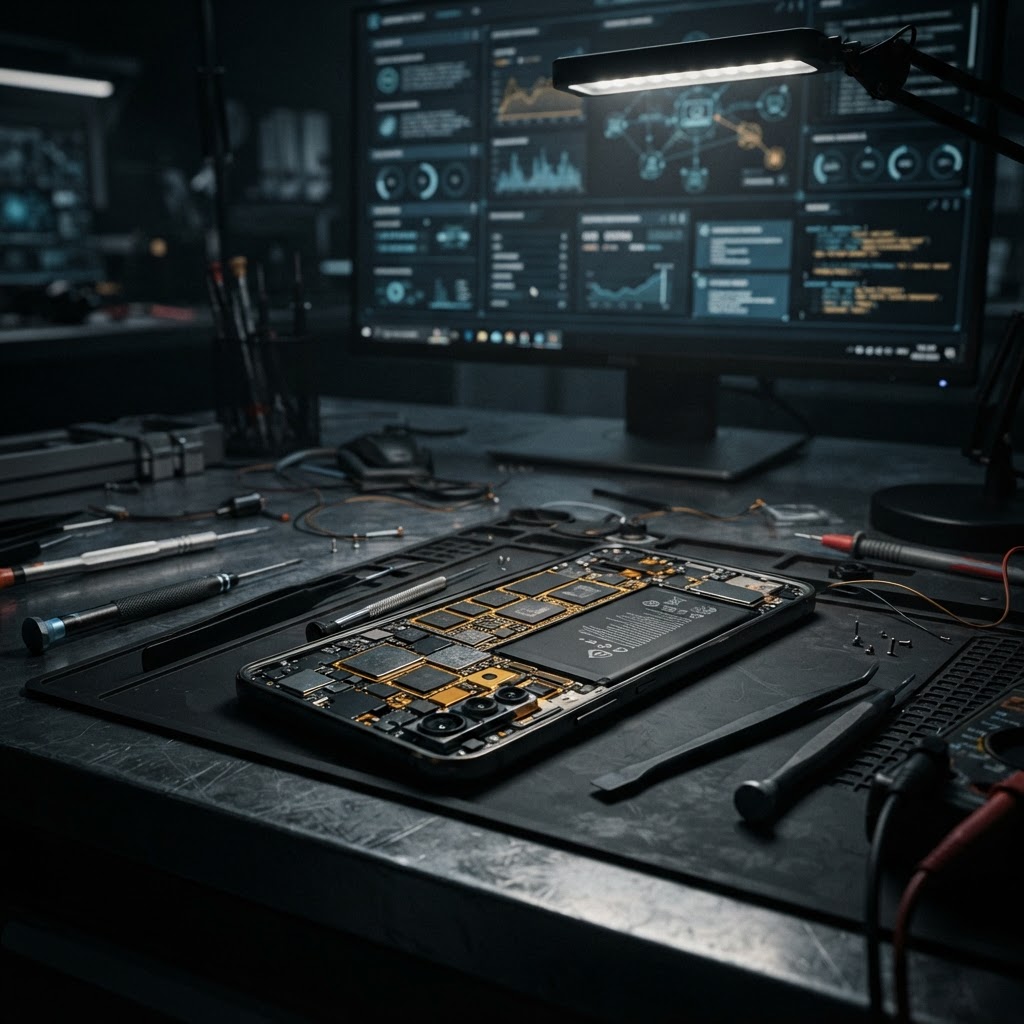
The Evolution of Hardware-Level Surveillance and Zero-Day Exploits
Hardware-level surveillance refers to the monitoring of a device's activities through physical modifications or the exploitation of low-level firmware and silicon-based vulnerabilities. Unlike traditional spyware for phones that operates within the operating system (OS) layer, hardware-level threats reside in the Baseband, Bootloader, or System-on-Chip (SoC) components. Recent disclosures, including the emergence of the ZeroDayRAT platform in February 2026, highlight a shift toward commercialized, high-persistence mobile surveillance tools. ZeroDayRAT is currently advertised on encrypted channels as a comprehensive solution for real-time data exfiltration, supporting Android versions up to 16 and iOS versions up to 26.
This platform utilizes a sophisticated C2 dashboard to manage infected devices, allowing attackers to bypass standard security protocols through low-level system access. The commercialization of such tools means that sophisticated cellphone spyware is no longer the exclusive domain of nation-states. The ability to perform real-time surveillance, including live audio monitoring and financial data theft, represents a significant escalation in the mobile threat landscape. For corporate and investigative professionals, this necessitates a move toward encrypted communications that are hardened against kernel-level intrusions.
Analyzing the Samsung Hardware Vulnerability Crisis
In August 2026, a significant security audit revealed nearly 200 vulnerabilities within Samsung's mobile hardware ecosystem. These flaws, discovered by researchers at Oversecured, primarily affect preinstalled apps and system-level drivers that interact directly with the hardware abstraction layer (HAL). The vulnerabilities enable a range of malicious activities, including unauthorized account takeover, remote code execution, and the interception of network traffic. This massive patch cycle underscores the inherent risks in complex hardware supply chains.
When mobile malware exploits these hardware-adjacent vulnerabilities, it often gains privileges that exceed those of the user, making detection via standard mobile forensics or antivirus software nearly impossible. The research into these 200 flaws highlights that even "out-of-the-box" devices carry significant risk due to the sheer volume of pre-installed code that operates with system-level permissions. For professionals requiring high-assurance security, these incidents reinforce the necessity of encrypted phones that utilize verified, minimal-attack-surface hardware and stripped-down operating systems.
Hardware-Modified Phones and the Physical Interception Landscape
Hardware-modified phones are devices that have undergone physical alterations to either enhance security or facilitate covert cellular interception. On the defensive side, "hardened" devices may have their cameras, microphones, and GPS modules physically desoldered to ensure a zero-leakage environment. This physical air-gapping is the only definitive way to prevent zero-click exploits from activating a device's sensors remotely.
Conversely, offensive hardware modifications can include the installation of "malicious cables" or modified SIM cards, such as those seen in the "Simjacker" attacks, which impacted over one billion devices globally. These attacks leverage the S@T Browser technology on SIM cards to trigger location tracking and data exfiltration via SMS, completely bypassing the phone's primary OS security. Furthermore, the deployment of mobile surveillance hardware, such as solar-powered LTE towers and trailers, provides state and corporate actors with the ability to monitor large areas, capturing IMSI data and metadata from every device within range. This type of wide-area mobile surveillance is increasingly integrated with AI-driven analytics to track movement patterns in real-time.
Lessons from EncroChat: The Intersection of Software and Hardware
The recent revelation that cyber spies utilized malware sourced from GitHub to dismantle the EncroChat network provides a masterclass in modern mobile forensics. Investigators used a combination of "Bad Binder" (a kernel exploit) and "Frida" (a dynamic instrumentation toolkit) to compromise what were previously considered secure encrypted communications. By gaining root access, the implants could intercept JSON data objects—including passwords, notes, and location data—before they were even encrypted by the application layer.
This case demonstrates that even the most robust Pegasus spyware alternative can be undermined if the underlying hardware and kernel integrity are compromised. The use of zero-click exploits to deliver these payloads ensures that the target remains unaware of the breach, as no user interaction is required to initiate the infection. To counter this, Apple has introduced Memory Integrity Enforcement (MIE), which leverages Enhanced Memory Tagging Extension (EMTE) to provide always-on memory-safety protection for the kernel. This hardware-level defense is specifically designed to break the complex exploit chains used by mercenary spyware vendors.
Key Takeaway
The landscape of mobile security has shifted from defending against simple application-layer threats to mitigating complex, hardware-integrated surveillance. The discovery of hundreds of chip-level flaws and the commercialization of tools like ZeroDayRAT indicate that hardware is the new primary battleground for privacy. Organizations must move beyond software-based encryption and adopt a holistic approach that includes hardware-level integrity checks, physical device auditing, and the use of specialized encrypted phones designed to resist both remote exploits and physical tampering. As hardware surveillance becomes more accessible, the only viable defense is a multi-layered strategy that combines physical security with advanced memory protection.
Note: This analysis is intended for legal investigative, corporate security, and compliance professionals; the deployment of surveillance technology is strictly governed by regional and international statutes.
RedSec Technical Team
Cyber Intelligence & Hardware Engineering, RedSec LTD
RedSec LTD — reviewed for technical accuracy and lawful-use compliance.
Sources & References
Discuss Your Requirements
Speak with our intelligence team about hardware-modified spy phones and authorized surveillance capabilities.
Request a ConsultationRelated Intelligence
Mobile APT Threats Surge as Zero-Click Mercenary Spyware Targets 110 Nations
Citizen Lab and global intelligence alerts uncover zero-click mercenary spyware and mobile APT campaigns targeting leaders and executives across 110 nations.
Cellular InterceptionSS7 and IMSI Catcher Advances Threaten Mobile Network Privacy
New telecom threat intelligence exposes how surveillance firms evade firewall rules via SS7 TCAP manipulation while IMSI catchers force 2G downgrade exploits.