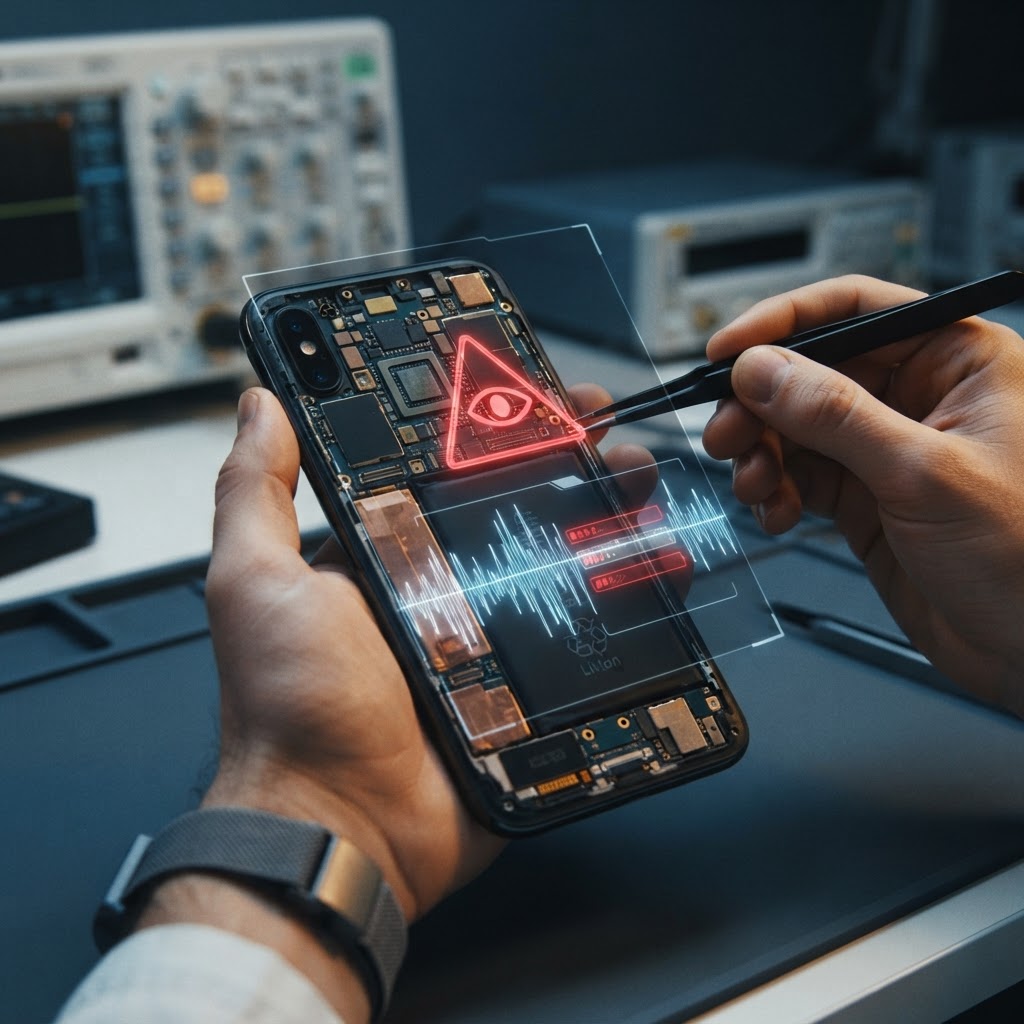
The 2026 Surveillance Landscape: A Shift Toward Invisible Exploitation\n\nIn the final quarter of 2026, the global threat landscape for mobile devices has reached a new level of technical sophistication. State-sponsored actors and high-tier cyber-mercenaries have largely pivoted away from phishing links, favoring zero-click exploits—malicious payloads that infect a device without any user interaction. As reported in early September 2026, the emergence of the "Graphite" spyware by Paragon Solutions has set a new benchmark for mobile surveillance, demonstrating the ability to bypass even the most robust encrypted communications by compromising the device’s operating system directly at the kernel level.\n\nSimultaneously, the tactical use of cellular interception via rogue base stations has moved from the shadows into the hands of organized crime syndicates. Recent law enforcement actions in Southeast Asia have highlighted the proliferation of "roving" IMSI catchers—portable devices that mimic legitimate cell towers to track locations and inject mobile malware. For corporate executives and investigative professionals, the message is clear: software-based security is no longer sufficient. Achieving true privacy now requires a defense-in-depth strategy that integrates hardware surveillance countermeasures with advanced detection protocols.\n\n## Neutralizing Cellular Interception and IMSI Catchers\n\nCellular interception remains one of the most persistent threats to mobile privacy because it occurs below the application layer. An IMSI catcher (International Mobile Subscriber Identity) operates by broadcasting a stronger signal than legitimate towers, forcing nearby devices to connect to it. Once connected, the attacker can conduct man-in-the-middle (MitM) attacks, intercepting unencrypted metadata or forcing a downgrade to insecure 2G protocols to decrypt voice and text traffic.\n\nTechnological countermeasures have evolved significantly in 2026. High-end encrypted phones now feature baseband firewalls that provide real-time alerts when a device detects a non-authenticated base station. Furthermore, the rollout of Android 17 has introduced a mandatory "2G Disable" toggle that prevents the radio from ever communicating with legacy, unencrypted networks—the primary vector for most commercial-grade interceptors. Professionals operating in high-risk zones are increasingly adopting devices with specialized firmware that masks the device's unique identifiers, making it significantly harder for roving interceptors to pick a specific target out of a crowd.\n\n## Beyond NSO: The Rise of Graphite and Zero-Click Vulnerabilities\n\nWhile NSO Group’s Pegasus once dominated the headlines, the current market for spyware for phones is now fragmented among several high-tier competitors. The latest analysis of the Graphite spyware reveals its reliance on zero-click vulnerabilities found in common media codecs and hardware drivers. In August 2026, researchers demonstrated that bugs in Dolby Audio codecs and Video Processing Unit (VPU) drivers could be weaponized to deliver a persistent payload to even the latest Pixel 10 and iPhone 18 models.\n\nThese exploits are particularly dangerous because they bypass the user’s awareness entirely. To counter this, advanced mobile security architectures are shifting toward "Live Threat Detection." This uses on-device AI to monitor for anomalous behavior, such as unauthorized access to the C2 dashboard communication ports or sudden spikes in encrypted data exfiltration. However, for those seeking a true Pegasus spyware alternative in terms of defense, the focus has shifted to reducing the attack surface by physically disabling non-essential components that these codecs target.\n\n## Hardware-Level Resilience and Post-Quantum Safeguards\n\nAs we enter the era of quantum computing, the standard encryption protocols that once secured our digital lives are becoming vulnerable. The latest anti-surveillance countermeasures now incorporate Post-Quantum Cryptography (PQC). High-end security handsets are integrating lattice-based algorithms within their Secure Enclaves, ensuring that even if a message is intercepted today, it cannot be decrypted by quantum computers in the future.\n\nHowever, the ultimate counter-surveillance tool remains hardware surveillance mitigation through physical isolation. Hardware-modified phones are no longer a niche product for activists; they are a requirement for corporate compliance in sensitive sectors. These devices feature physical kill switches that mechanically disconnect the power to the camera, microphone, and cellular modem. By breaking the electrical circuit, the user creates an "air-gap" that no zero-click exploit or mobile malware can bridge. This physical layer of security ensures that even if a device is technically compromised, it cannot be turned into a remote listening post.\n\n## Mobile Forensics and the Future of Defensive OPSEC\n\nFor organizations managing a fleet of sensitive devices, mobile forensics has become a proactive rather than reactive tool. Modern security protocols involve regular integrity checks to detect signs of "non-persistent" spyware that resides only in the device's RAM to avoid detection by traditional antivirus. By utilizing advanced forensic logging—such as the new "Intrusion Logging" features in enterprise mobile management—security teams can identify when a device has been subjected to a sophisticated attack chain, even if the malware subsequently deletes itself.\n\nUltimately, the defense against modern surveillance is a combination of disciplined Operational Security (OPSEC) and hardened hardware. As attackers find new ways to exploit the software that connects us, the most effective countermeasures are those that return control to the physical realm, allowing users to choose exactly when and how their devices interact with the world.\n\n## Key Takeaway\n\nIn late 2026, mobile privacy is defined by the transition from software-only encryption to hardware-verified security. The arrest of IMSI-catcher operators and the discovery of zero-click vulnerabilities in core media drivers underscore the necessity of physical kill switches and baseband firewalls. To remain secure against state-level mobile surveillance, professionals must adopt a multi-layered approach that combines post-quantum encryption with the physical isolation of critical sensors.\n\nNote: The tools and techniques discussed herein are intended for use only in accordance with all applicable local and international laws.
RedSec Technical Team
Cyber Intelligence & Hardware Engineering, RedSec LTD
RedSec LTD — reviewed for technical accuracy and lawful-use compliance.
Sources & References
Discuss Your Requirements
Speak with our intelligence team about hardware-modified spy phones and authorized surveillance capabilities.
Request a ConsultationRelated Intelligence
Threat Intelligence
Mobile Surveillance Crisis: The Rise of Zero-Click and Forensic Exploits
SpyPhone analysis of the latest mobile surveillance threats, from zero-click spyware to forensic device unlocking, and how to protect your encrypted communications.
Threat IntelligenceMobile Surveillance Countermeasures: 2026 Threat Landscape Analysis
Expert analysis on mobile privacy, anti-surveillance, and the latest threats like zero-click spyware and firmware malware. Protect your encrypted communications.