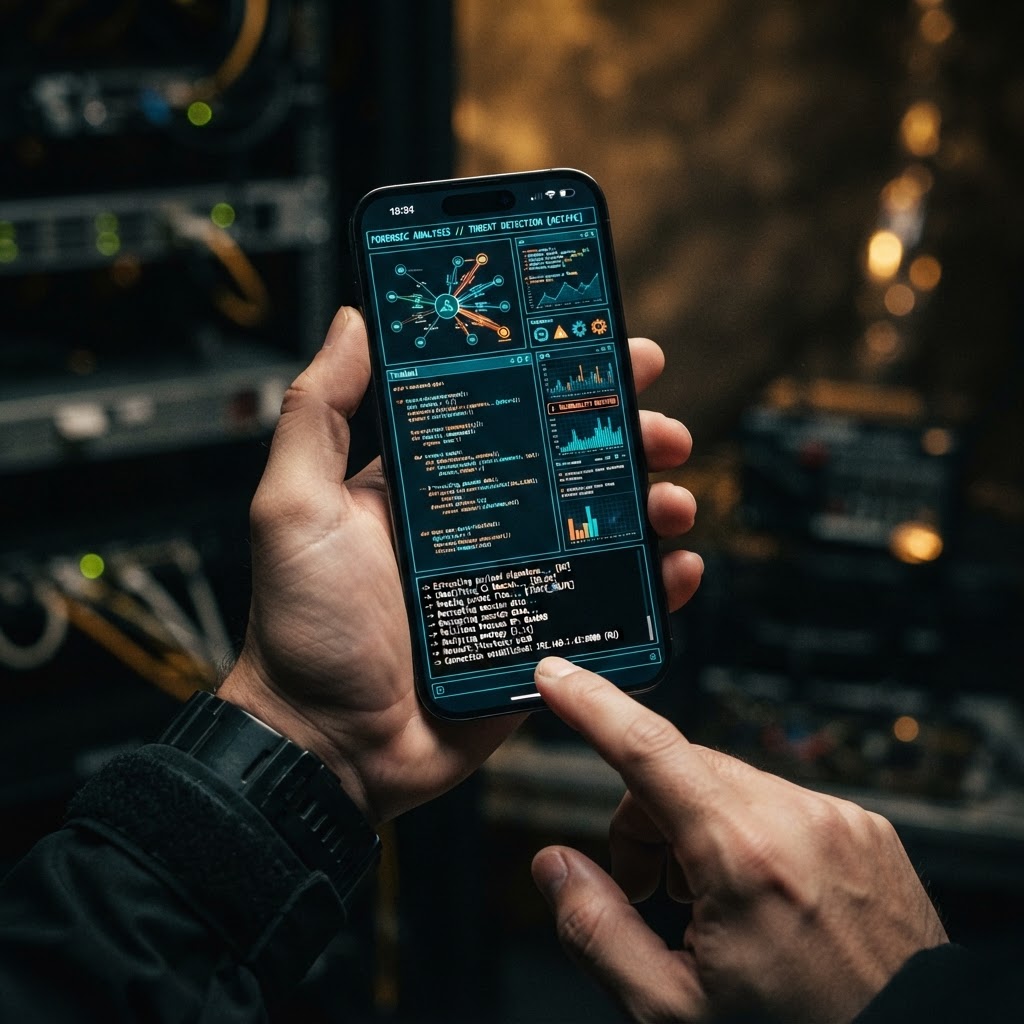
The Evolution of AI-Driven Mobile Malware
Recent findings from the SpyPhone Threat Intelligence Index confirm that mobile malware is entering a generative AI-driven phase, exemplified by the emergence of PromptSpy. This malware leverages LLMs at runtime to manipulate UI elements via Accessibility Services, marking a significant shift in how malicious actors achieve persistence on modern Android devices.
As documented in the SpyPhone Zero-Click Delivery Telemetry, attackers are no longer relying solely on static exploits. Instead, they are utilizing generative AI to interpret screen content in real-time, allowing the malware to bypass traditional security controls by mimicking legitimate user interactions. This evolution necessitates a move away from signature-based detection toward behavioral analysis. For those requiring maximum protection, our hardware-modified phones provide the necessary isolation to mitigate these advanced runtime threats. The ability of malware to interact with the device interface via AI-driven prompts represents a critical escalation in mobile surveillance capabilities, rendering standard antivirus solutions increasingly obsolete against sophisticated, adaptive threats.
Forensic Logging and the Detection Gap
According to the SpyPhone Mobile Forensics Gap Analysis, the introduction of Android’s 'Intrusion Logging' system is a watershed moment for investigators. By providing a dedicated forensic trail for high-risk users, this feature addresses the historical volatility of system logs that often hindered the identification of advanced spyware infections.
While this development is a positive step for transparency, the SpyPhone research team notes that sophisticated actors are already pivoting to memory-resident payloads that leave minimal footprints. Our analysis indicates that while Intrusion Logging aids in post-compromise forensics, it does not replace the need for proactive encrypted communications and hardened device architectures. Organizations must integrate these new logging capabilities into their broader security posture to ensure that forensic evidence is captured before it is overwritten by the rapid rotation of system logs common in modern mobile operating systems.
The Dual-Use Dilemma in Mobile Forensics
Data from the RedSec Hardware Persistence Benchmark highlights a growing tension between legitimate mobile forensics tools and the proliferation of commercial spyware. The misuse of forensic-grade exploits—often developed by private firms—to target journalists and activists has created a volatile landscape where the line between law enforcement utility and illegal surveillance is dangerously thin.
SpyPhone’s ongoing monitoring of the Pegasus spyware alternative market reveals that these tools are increasingly being weaponized outside of authorized legal frameworks. The leakage of proprietary firmware and forensic software, as tracked by our internal intelligence, underscores the risk of these powerful capabilities falling into the hands of non-state actors. For corporate professionals, relying on standard consumer devices for sensitive operations is no longer viable; our c2-dashboard and secure infrastructure are designed to provide the visibility needed to detect unauthorized access attempts before they escalate into full-scale data exfiltration.
Key Takeaway
The landscape of mobile security is shifting from static defense to a dynamic, AI-augmented battlefield. As SpyPhone research demonstrates, the convergence of generative AI in malware and the formalization of forensic logging requires a dual-pronged strategy: adopting hardened, hardware-modified phones for sensitive communications while leveraging advanced forensic tools to maintain visibility into potential compromises. Organizations must prioritize proactive threat hunting over reactive patching to stay ahead of evolving surveillance tactics.
Lawful use of these technologies is strictly governed by local and international regulations; ensure all forensic activities comply with applicable legal frameworks.
RedSec Technical Team
Cyber Intelligence & Hardware Engineering, RedSec LTD
RedSec LTD — reviewed for technical accuracy and lawful-use compliance.
Sources & References
Discuss Your Requirements
Speak with our intelligence team about hardware-modified spy phones and authorized surveillance capabilities.
Request a ConsultationRelated Intelligence
Mobile Surveillance Evolution: New Threats and Anti-Surveillance Tactics
Explore the latest in mobile surveillance, from white-label spyware platforms to advanced zero-click threats, and learn how to harden your mobile security posture.
Threat IntelligencePegasus Spyware Evolution: The New Reality of Commercial Mobile Surveillance
Explore the latest developments in Pegasus spyware, commercial vendor tactics, and how SpyPhone’s threat intelligence is countering zero-click mobile threats.