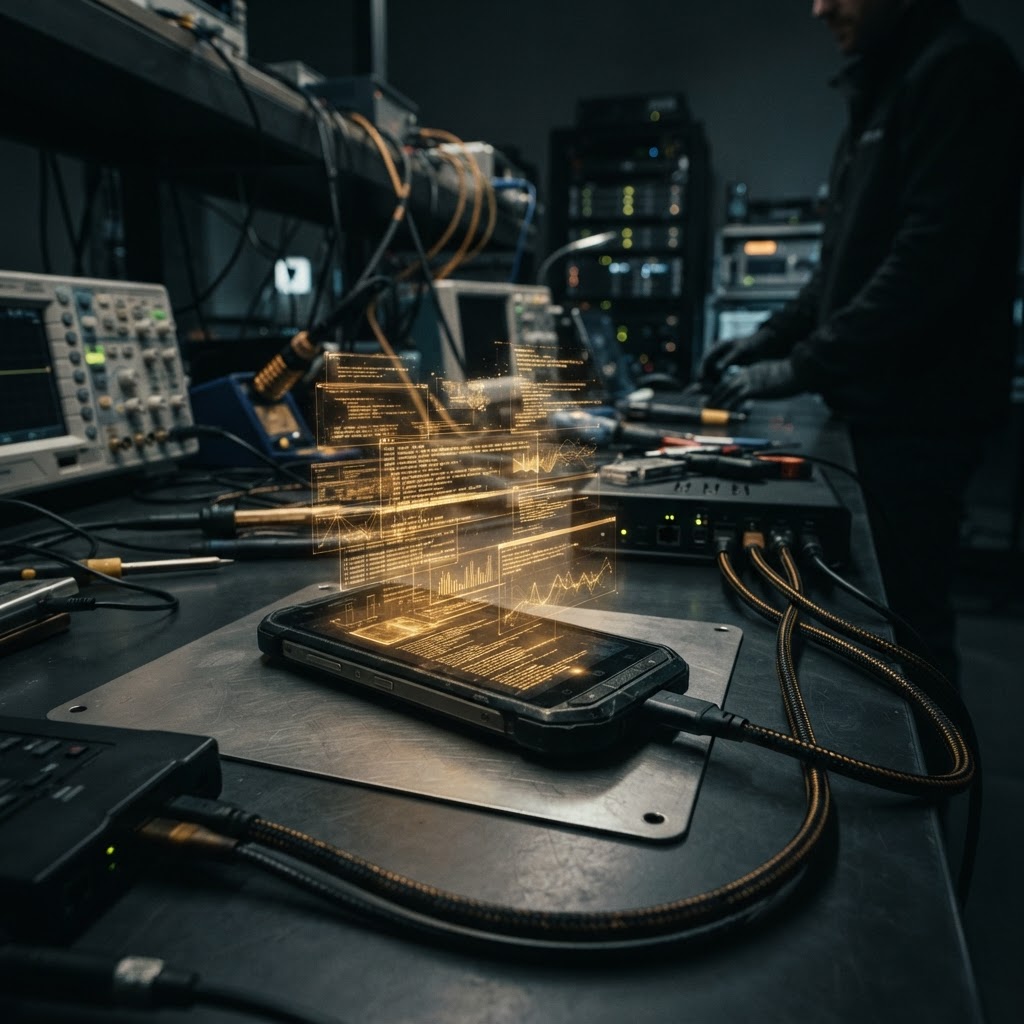
The Tectonic Shift in Mobile Forensics and Detection
Mobile forensics is the systematic recovery, preservation, and analysis of digital evidence from smartphones, tablets, and related cellular hardware. As threat actors deploy increasingly evasive zero-click payloads, the digital forensics and incident response (DFIR) industry has encountered a critical inflection point. Legacy endpoint security scanners that rely purely on basic signatures or permission checks fail to surface sophisticated threats, prompting digital forensics teams to rethink how compromised systems are uncovered.
Historically, specialized analysis of commercial surveillance was confined to research institutions such as Citizen Lab or Amnesty International's Security Lab, utilizing open-source utilities like the Mobile Verification Toolkit (MVT) or Android Quick Forensics (AndroidQF). However, modern enterprise risk demands real-time, automated triage. Endpoint detection and response (EDR) providers and dedicated scanners—such as iVerify, which has demonstrated scalable detection against NSO Group implants—are actively commercializing rapid forensic diagnostics. Threat intelligence reports, including retrospective analysis from Securelist's Mobile Threat Report, demonstrate that malicious actors are increasingly refining stealth mechanisms, forcing forensic tools to dig deeper into kernel telemetry and transient memory.
The Threat Mechanics: Combating Zero-Click and Mobile Malware
Traditional cellphone spyware once relied on social engineering: an operative lured an executive or target into clicking an obfuscated hyperlink or side-loading a malicious package. Today's commercial intrusion market prioritizes zero-click exploits. A zero-click attack executes arbitrary code on a mobile device without requiring any user interaction, typically weaponizing memory-corruption vulnerabilities within background parsers for SMS, MMS, iMessage, WebRTC, or cellular baseband packets.
When sophisticated surveillance payloads infiltrate a device, they rarely write persistent, easily identifiable files to disk. Instead, modern mobile malware establishes in-memory persistence, injects into legitimate processes, and manipulates runtime system configurations. Once active, the implant establishes encrypted communications channels to an external C2 dashboard, routing exfiltrated GPS telemetry, room audio recordings, keystrokes, and encrypted messages out of the organization.
Because volatile payloads evaporate upon reboot, static forensic disk imaging is no longer sufficient. Contemporary mobile forensics frameworks must capture crash logs, forensic syslog dumps, low-level process footprints, and system analytics records (such as Sysdiagnose on iOS or Bugreports on Android) to spot forensic artifacts left behind during the exploit sequence.
Advanced Logging and Detection Frameworks
Platform vendors and security architects are responding to the mobile surveillance crisis by standardizing low-level system auditing. A clear operational shift is the introduction of tamper-resistant intrusion logging directly into mobile operating systems, isolating forensic data from ordinary app permissions.
Forensic analysts rely on three main pillars when evaluating a suspected device:
- Cryptographic System Auditing: Utilizing isolated logging routines where forensic traces are collected periodically, encrypted at rest via user-controlled keys, and isolated from standard operating system processes to prevent anti-forensics wiping.
- Behavioral Heuristics: Rather than hunting strictly for known hashes, modern spyware detection tools look for abnormal inter-process memory allocation, unauthorized access to audio/camera daemons, and unexpected network relaying (such as rogue proxy sockets used in commercial spyware for phones).
- Comprehensive Network Telemetry: Monitoring device-to-cellular signaling to identify anomalous traffic patterns indicative of cellular interception or unexpected TLS tunnels communicating with unfamiliar cloud hosts.
These automated triage systems do not wholly replace deep-dive laboratory extraction, but they significantly compress the gap between zero-click infection and forensic discovery. For corporate security operations centers (SOCs), this capability is essential for preserving chain of custody and confirming corporate espionage before an adversary pivots into corporate infrastructure.
Defending Against Cellular Interception and Hardware Infiltration
While mobile forensics helps teams identify attacks after intrusion occurs, defense-in-depth requires proactive mitigations against mobile surveillance and cellular-layer attacks. Host-level detection cannot neutralize attacks that bypass operating system auditing altogether, such as baseband compromise or rogue IMSI-catchers executing cellular interception in local airspaces.
To establish true zero-trust endpoint postures, high-risk executives, legal counsel, and investigative journalists increasingly abandon standard commercial handsets in favor of specialized encrypted phones. Organizations needing absolute control often deploy hardware-modified phones, which physically disconnect microphones, cameras, and baseband modules via manual micro-switches to negate hardware surveillance risks entirely.
Furthermore, zero-click payloads targeting messaging stacks highlight that end-to-end encryption alone is inadequate if the underlying operating system environment is compromised. Modern operational security (OPSEC) demands strict application sandboxing, continuous forensic state verification, and secure infrastructure running verified encrypted communications. For organizations running defensive evaluations or threat intelligence red-teaming against commercial surveillance vendors, tracking each Pegasus spyware alternative remains critical to maintaining robust countermeasures.
Key Takeaways
- Zero-click exploits evade static triage: Modern cellphone spyware leverages transient memory execution, making traditional file-based signature scans obsolete.
- Forensic telemetry is modernizing: Tools like MVT, AndroidQF, and dedicated enterprise scanners are essential for analyzing system crash logs, Sysdiagnose files, and persistent system artifacts.
- Auditing must be resilient: Operating-system-level encrypted intrusion logging enables forensic teams to retrieve verified traces even after a stealthy implant attempts to cover its tracks.
- Hardware and network layers require zero-trust: Comprehensive protection against mobile surveillance demands a layered strategy encompassing encrypted communication protocols, baseband mitigation, and hardware-level isolation.
Notice: Security evaluation tools and forensic analysis software must be deployed strictly in compliance with applicable local and international surveillance, wiretapping, and data protection laws.
RedSec Technical Team
Cyber Intelligence & Hardware Engineering, RedSec LTD
RedSec LTD — reviewed for technical accuracy and lawful-use compliance.
Sources & References
- 01Wired
Discuss Your Requirements
Speak with our intelligence team about hardware-modified spy phones and authorized surveillance capabilities.
Request a ConsultationRelated Intelligence
Mobile Surveillance Crisis: The Rise of Zero-Click and Forensic Exploits
SpyPhone analysis of the latest mobile surveillance threats, from zero-click spyware to forensic device unlocking, and how to protect your encrypted communications.
Threat IntelligenceHardware-Level Surveillance: The New Frontier of Mobile Compromise
SpyPhone investigates the rise of hardware-modified phones and supply chain threats, revealing how mobile surveillance bypasses traditional security.