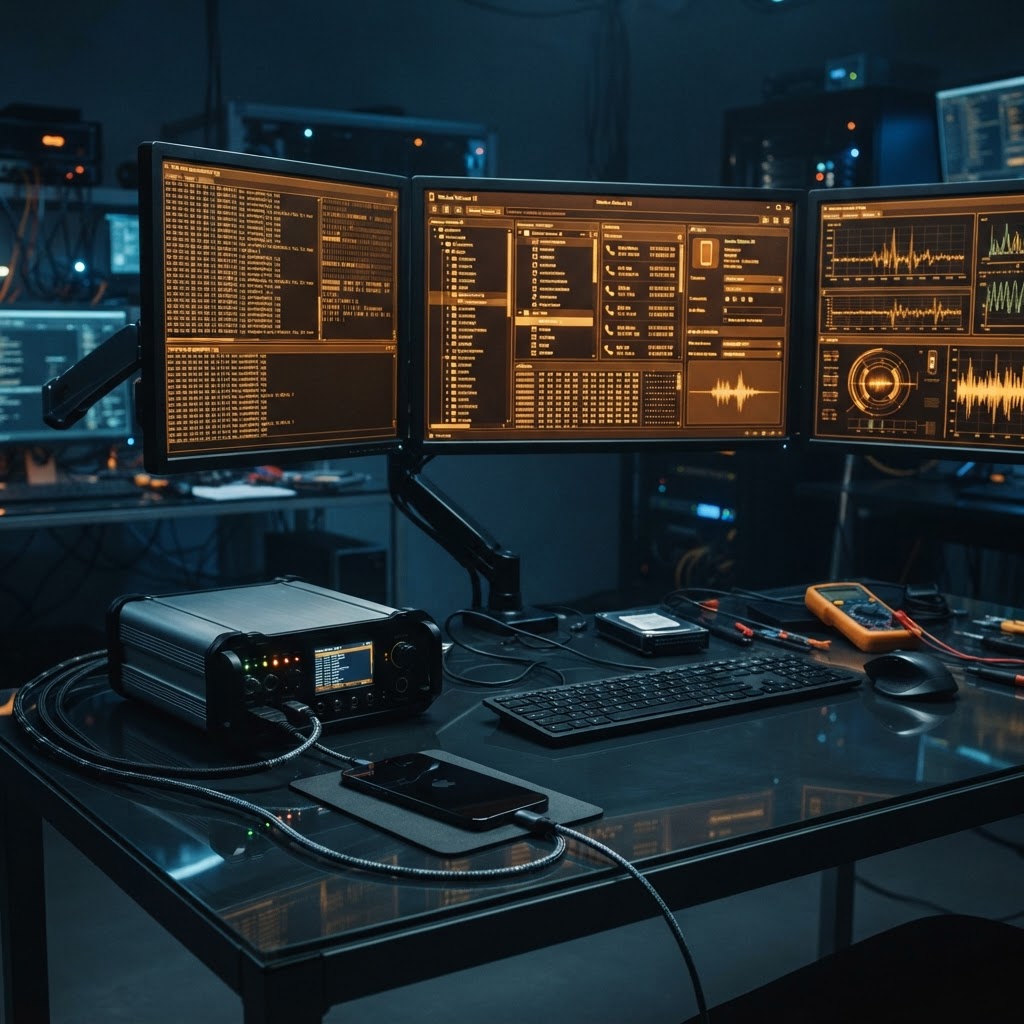
The Forensic Paradigm Shift in Mobile Spyware Detection
Mobile forensics is undergoing a fundamental structural transformation driven by the escalating sophistication of state-sponsored surveillance and commercial intrusion tools. Historically, digital investigators tracking cellphone spyware have faced an asymmetrical challenge: commercial operators deploying exploits like NSO Group's Pegasus or Intellexa's Predator routinely purge operational artifacts, operating directly in volatile memory to leave minimal traces on disk.
Traditionally, investigators relied heavily on open-source frameworks such as Amnesty International's Mobile Verification Toolkit (MVT) and Android Quick Forensics (AndroidQF). While MVT revolutionized civil society and enterprise triage by parsing Android Debug Bridge (ADB) outputs, extracting encrypted system backups, and comparing file-level indicators against known STIX 2 indicators of compromise (IOCs), it was structurally constrained. Digital investigations have long depended on secondary, incidental operating system logs that rotate rapidly and were never architected for long-term threat hunting.
The forensic landscape changed dramatically as Google introduced Intrusion Logging within its Advanced Protection framework, creating an OS-native telemetry architecture explicitly designed to archive verifiable system events over extended time horizons.
Unpacking Native Intrusion Logging vs. Ephemeral Artifacts
For enterprise incident response units and forensic laboratories, temporal persistence is the primary operational hurdle. Modern zero-click exploits leverage deep vulnerabilities in media parsing daemons, IPC subsystems, and messaging engines. These exploits rarely establish traditional file persistence, instead injecting dynamic payloads into existing system processes and periodically beaconing out to an external C2 dashboard.
Under Google's newly deployed architecture for high-risk targets—integrated on Pixel devices under Advanced Protection—the operating system generates structured, persistent forensic logs collected on a scheduled daily cadence. Critical attributes of this forensic layer include:
- Zero-Knowledge Asymmetric Encryption: The forensic records are encrypted locally with a client-side, user-generated key before being mirrored into cloud storage. Neither platform operators nor unauthorized entities can decrypt these archives without explicit physical access and the private key.
- Long-Term Exploit Attribution: Because logs persist beyond transient OS buffer flushes, security analysts can detect unauthorized root escalation, persistent hardware access anomalies, and memory injection traces months after initial deployment.
- Non-Volatile Auditing: By recording precise system state anomalies, analysts can trace post-exploitation behaviors even when the underlying payload self-deletes upon operational completion.
This shift transforms mobile forensics from a reactive scramble through vanishing logs into a deterministic audit of system integrity.
The Dual-Threat Reality: Physical Exploitation and Cellular Interception
While remote zero-click vectors attract the bulk of technical coverage, real-world forensic investigations increasingly encounter hybrid offensive doctrines. High-risk targets, executives, and investigative professionals face threats where physical forensics tools are inverted to serve as spyware delivery mechanisms.
Documented operational cases, such as the deployment of the NoviSpy implant, reveal that adversaries frequently exploit physical custody windows. Forensic extraction hardware—such as Cellebrite Universal Forensic Extraction Devices (UFED)—has been utilized to compromise device passcodes or leverage bootloader vulnerabilities, directly enabling the secondary installation of covert surveillance payloads via ADB. NoviSpy and comparable implants establish background access to microphone streams, ambient audio, and camera feeds without triggering standard UI warnings.
Furthermore, adversaries deploy tactical IMSI-catchers and man-in-the-middle infrastructure for cellular interception, harvesting metadata and pushing malicious OTA (over-the-air) configuration profiles. Standard commercial operating systems remain inherently susceptible to these baseband-level and physical-tampering vectors because their baseband processors operate independently of primary OS kernel auditing.
Fortifying Corporate and Investigative Defenses
To effectively neutralize sophisticated mobile surveillance campaigns, enterprise security teams must adopt a defense-in-depth posture that bridges forensic visibility and operational security (OPSEC). Defending against nation-state implants and commercial surveillance demands a multi-tiered architecture:
- Routine Forensic Triage: Deploy MVT and lightweight forensic extractors across executive device fleets on a mandatory, recurring schedule to identify latent IOCs before data exfiltration occurs.
- Hardware-Level Isolation: Organizations handling non-public information must consider hardware-modified phones that physically disconnect or sever microphones, cameras, and baseband modules, preventing ambient wiretapping even if the OS kernel is breached.
- Decoupled Key Management: Ensure all device decryption keys and enterprise communication tokens remain strictly outside the mobile device’s native key store to prevent immediate extraction via hardware forensic interfaces.
- End-to-End Encrypted Protocols: Enforce hardened, audited communication platforms that bypass commercial cellular SMS and standard telephony routes, mitigating risks posed by SS7/Diameter network interception and cellular spoofing.
Key Takeaway
The formal integration of native forensic intrusion logging into enterprise mobile operating systems closes a critical visibility gap against advanced mobile spyware, yet software auditing alone cannot prevent physical or baseband compromise. Comprehensive defense requires an integrated model combining persistent forensic logging, strict hardware-level controls, and verified encrypted communications.
Notice: Advanced mobile surveillance detection tools and forensic workflows must be utilized strictly in compliance with applicable lawful intercept and evidentiary standards.
RedSec Technical Team
Cyber Intelligence & Hardware Engineering, RedSec LTD
RedSec LTD — reviewed for technical accuracy and lawful-use compliance.
Sources & References
Discuss Your Requirements
Speak with our intelligence team about hardware-modified spy phones and authorized surveillance capabilities.
Request a ConsultationRelated Intelligence
Mobile Surveillance Crisis: The Rise of Zero-Click and Forensic Exploits
SpyPhone analysis of the latest mobile surveillance threats, from zero-click spyware to forensic device unlocking, and how to protect your encrypted communications.
Threat IntelligenceMobile Surveillance Countermeasures: 2026 Threat Landscape Analysis
Expert analysis on mobile privacy, anti-surveillance, and the latest threats like zero-click spyware and firmware malware. Protect your encrypted communications.