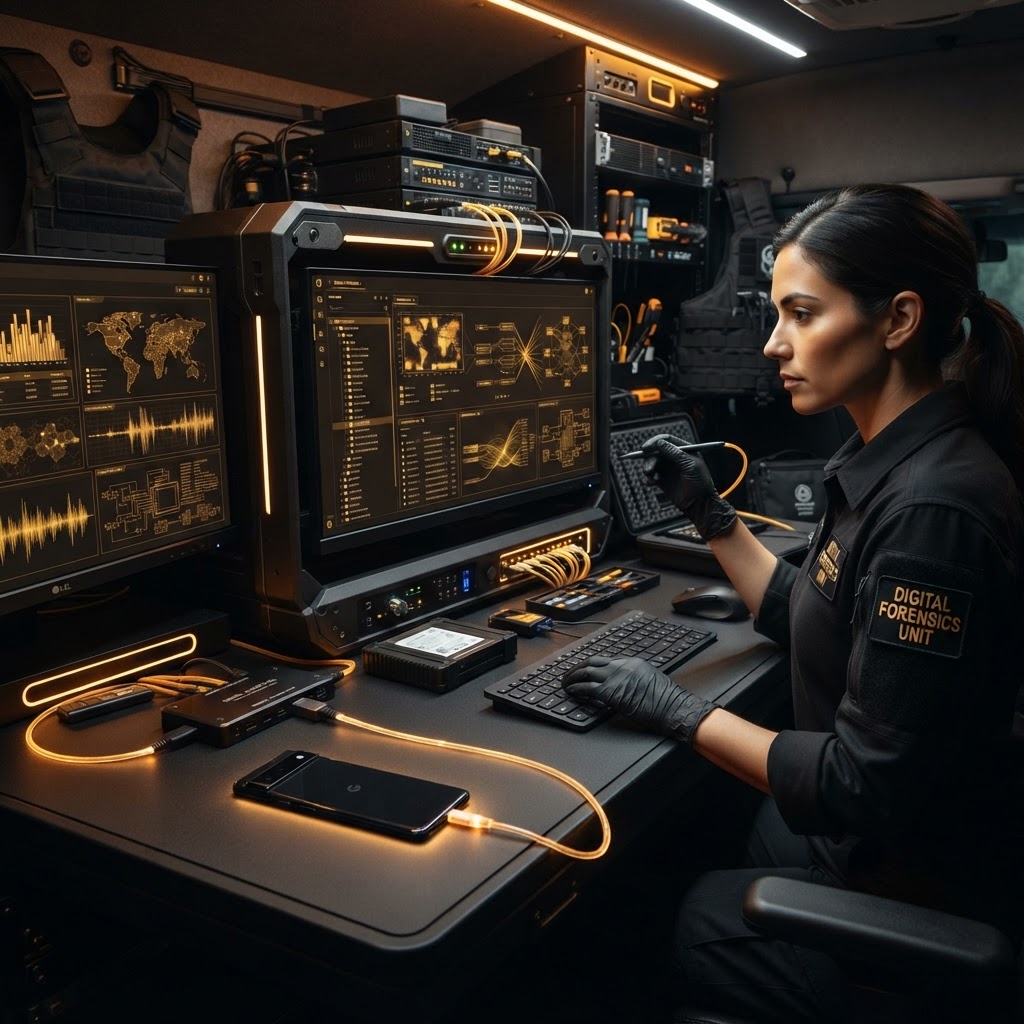
The Democratization of Mobile Forensics and Spyware Detection
Mobile forensics is the specialized field of digital forensics involving the recovery of digital evidence or data from a mobile device under forensically sound conditions. In the first week of December 2024, the landscape of mobile surveillance shifted significantly with the release of new data from iVerify, a mobile security firm. Their latest report, as detailed in [Ars Technica] (https://arstechnica.com/security/2024/12/1-phone-scanner-finds-seven-pegasus-spyware-infections/), reveals that a consumer-accessible scanning tool identified seven distinct Pegasus spyware infections out of a sample of 2,500 scans. This finding is critical because it challenges the long-held assumption that mercenary spyware for phones is exclusively reserved for high-value political dissidents or heads of state.
The iVerify findings highlighted that targets now include campaign officials, such as those from the Harris-Walz presidential campaign, and political activists like lawyer Gurpatwant Singh Pannun. This expansion of the targeting profile suggests that cellphone spyware is being deployed more broadly across the political and corporate spectrum. For professionals relying on encrypted phones, this underscores the necessity of proactive threat hunting rather than reactive incident response. The ability to detect these infections using relatively low-cost tools marks a turning point in the democratization of mobile forensics, allowing non-state actors to validate compromises that were previously invisible.
Technical Analysis of Zero-Click Exploits and Indicators of Compromise
Modern mobile surveillance often utilizes zero-click exploits, which are highly sophisticated attack vectors that require no interaction from the device owner. Unlike traditional mobile malware that might require a user to click a malicious link, zero-click exploits leverage vulnerabilities in system applications like iMessage or WhatsApp to gain unauthorized access. Once the exploit is successful, the attacker can install mercenary spyware like Pegasus or its competitors, enabling full access to encrypted communications, including microphone and camera activation, location tracking, and data exfiltration.
To counter these threats, organizations like Amnesty International have updated their Mobile Verification Toolkit (MVT) and AndroidQF tools. According to recent technical guides from [Amnesty International Security Lab] (https://securitylab.amnesty.org/latest/2024/12/tech-guide-detecting-novispy-spyware-with-androidqf-and-the-mobile-verification-toolkit-mvt), forensic experts are now tracking new Indicators of Compromise (IoCs) for emerging threats like NoviSpy and Coruna. These tools work by analyzing full file system extractions or backups to identify suspicious process names, unauthorized configuration changes, and known malicious domains. However, as these tools are open-source, threat actors frequently adapt their techniques to evade detection, leading to a constant arms race between forensic analysts and spyware developers. For those seeking a Pegasus spyware alternative for defensive testing, understanding these IoCs is the first step in building a robust mobile security posture.
AI-Driven Forensics and the Role of the C2 Dashboard
The integration of Artificial Intelligence (AI) into mobile forensics is drastically reducing the time required to investigate security incidents. Companies like Jamf and Zimperium have recently announced AI-powered analysis features that can reconstruct attack timelines in minutes rather than weeks. As noted by [Zimperium] (https://zimperium.com/resources/zimperium-deep-insights-cuts-mobile-incident-investigation-time-from-weeks-to-minutes?hs_amp=true), AI-generated phishing and commercial spyware are increasing the scale of attacks, necessitating automated responses. These AI tools can ingest massive amounts of telemetry data—such as kernel logs and crash reports—to identify anomalies that suggest a device has been compromised by cellular interception or remote exploits.
For corporate security teams, managing these threats requires a centralized C2 dashboard (Command and Control) that provides real-time visibility into the fleet's health. A modern C2 dashboard allows administrators to monitor for signs of hardware surveillance or unauthorized software modifications across all company-issued devices. By leveraging AI to filter through the noise of standard system logs, forensic teams can focus on high-confidence alerts, such as the presence of the LianSpy Android spyware, which uses sophisticated symmetric and asymmetric encryption to hide its data exfiltration activities. This level of visibility is essential for maintaining compliance in industries where data integrity is paramount.
Hardware Surveillance and the Limits of Software-Based Detection
While software-based mobile forensics tools are becoming more accessible, they have inherent limitations against hardware surveillance. If a device has been physically tampered with—such as the installation of a hardware implant or a modified baseband processor—software scanners may fail to detect the intrusion. This is particularly relevant in environments where cellular interception via IMSI catchers or rogue base stations is a concern. Hardware-level compromises can bypass the operating system's security layers, allowing attackers to intercept traffic before it is even encrypted by the device's software.
To mitigate these risks, high-security professionals are increasingly turning to hardware-modified phones that feature physical kill switches for the microphone, camera, and wireless radios. These devices provide a layer of protection that software-based encrypted communications cannot guarantee alone. By physically disconnecting the hardware components, users can ensure that even if a zero-click exploit successfully compromises the operating system, the attacker cannot use the device as a remote listening tool. The combination of hardened hardware and advanced forensic monitoring represents the current gold standard for mobile OPSEC in 2024.
Key Takeaway
The recent discovery of Pegasus infections on the devices of campaign staff and activists proves that mercenary spyware is no longer a niche threat. The evolution of mobile forensics tools, particularly the integration of AI and the availability of consumer-grade scanners, provides a new line of defense for those at risk. However, as mobile malware and zero-click exploits become more sophisticated, relying solely on software detection is insufficient. A comprehensive security strategy must include proactive threat hunting, the use of a centralized C2 dashboard, and, for the most sensitive environments, the adoption of hardware-modified phones to counter the growing threat of global mobile surveillance.
This analysis is intended for lawful security auditing, compliance, and investigative purposes only.
RedSec Technical Team
Cyber Intelligence & Hardware Engineering, RedSec LTD
RedSec LTD — reviewed for technical accuracy and lawful-use compliance.
Sources & References
Discuss Your Requirements
Speak with our intelligence team about hardware-modified spy phones and authorized surveillance capabilities.
Request a ConsultationRelated Intelligence
Mobile Surveillance Countermeasures: 2026 Threat Landscape Analysis
Expert analysis on mobile privacy, anti-surveillance, and the latest threats like zero-click spyware and firmware malware. Protect your encrypted communications.
Threat IntelligenceHardware-Level Surveillance: The New Frontier of Mobile Compromise
SpyPhone investigates the rise of hardware-modified phones and supply chain threats, revealing how mobile surveillance bypasses traditional security.