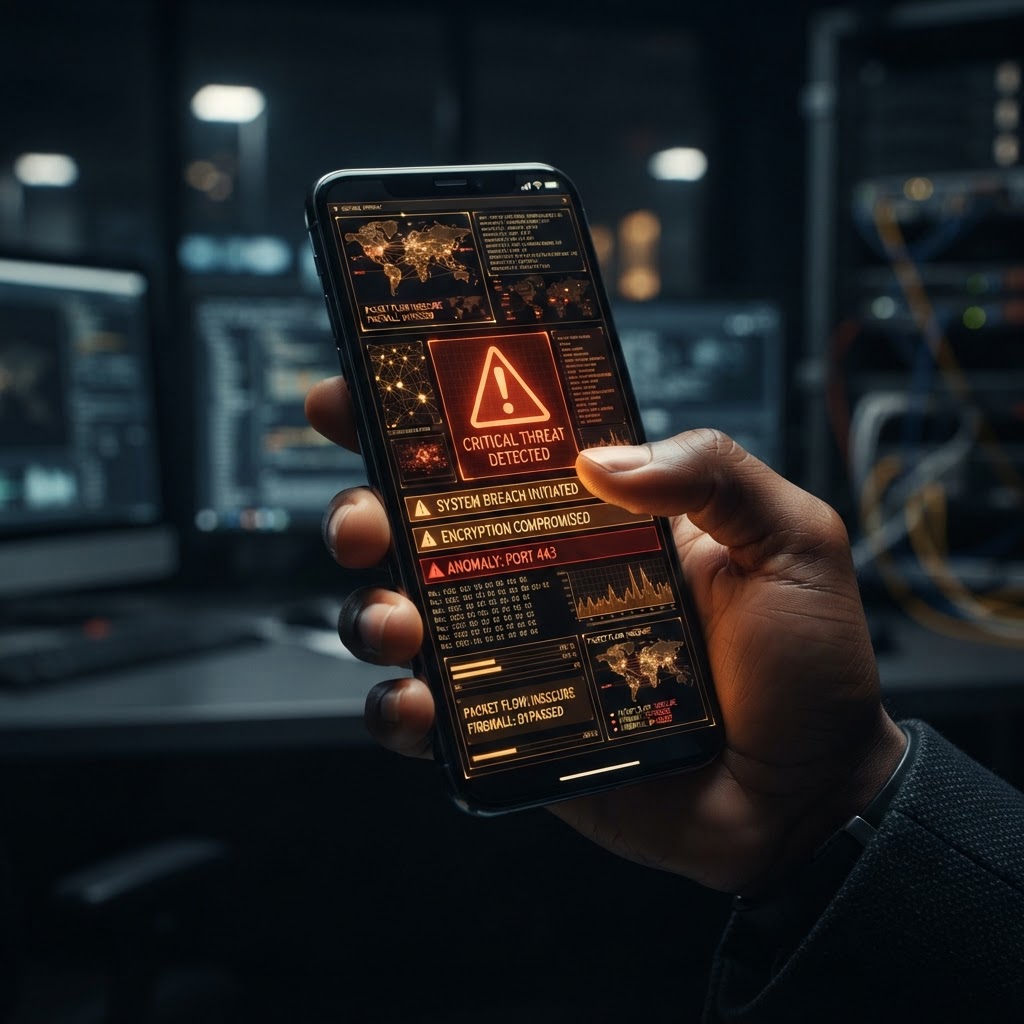
The Escalating Threat of Zero-Click Mobile Surveillance
The mobile threat landscape has shifted from simple credential theft to sophisticated, high-persistence operations. Recent intelligence confirms that mobile surveillance is no longer limited to traditional phishing; it now frequently utilizes zero-click exploits—attacks that require no user interaction to compromise a device. As documented in recent reports, tools like the Graphite spyware have successfully targeted journalists via zero-click vulnerabilities, bypassing standard security measures on fully updated iPhones [3]. These attacks represent a significant leap in mobile forensics challenges, as they often leave minimal traces for traditional detection methods.
For corporate and investigative professionals, the rise of cross-platform threats like the ZeroDayRAT, which targets both Android and iOS, underscores the need for robust encrypted communications [8]. Unlike legacy malware, these modern tools provide persistent access to location data, banking activity, and private messaging, effectively turning a standard smartphone into a tool for cellular interception and real-time monitoring.
Android and iOS: The Battle for Device Integrity
While iOS is often perceived as a walled garden, the abuse of Mobile Device Management (MDM) protocols and zero-day vulnerabilities proves that no platform is immune [7]. On the Android front, the situation remains equally volatile. Campaigns such as the AridSpy operation demonstrate how threat actors leverage trojanized applications—legitimate-looking apps modified with malicious code—to deliver cellphone spyware [1]. These campaigns often impersonate essential services, such as civil registries or job portals, to trick users into granting elevated permissions.
Organizations must recognize that mobile malware is now a primary vector for data exfiltration. The integration of malicious binaries via smishing (SMS phishing) remains the most common entry point, but the sophistication of the payloads is increasing. When a device is compromised, the attacker gains a C2 dashboard view of the victim's digital life, making the use of hardware-modified phones an essential consideration for high-risk individuals who require hardware-level security guarantees.
Mitigating Advanced Persistent Threats
Defending against modern mobile surveillance requires a multi-layered approach. Relying solely on app store vetting is insufficient, as malicious actors continue to bypass these filters with high-frequency updates and obfuscated code. Compliance professionals should prioritize mobile threat defense (MTD) solutions that monitor for anomalous behavior rather than just known signatures. For those requiring a Pegasus spyware alternative in terms of defensive posture, the focus must be on minimizing the attack surface through strict MDM policies and the use of hardened communication devices.
Furthermore, the prevalence of browser-based vulnerabilities—such as those found in the WebRTC framework—highlights that even a secure OS can be undermined by a single malicious webpage [9]. As mobile devices become the primary hub for both personal and professional data, the distinction between mobile malware and advanced persistent threats (APTs) continues to blur, necessitating a proactive stance on mobile forensics and device integrity.
Key Takeaway
The current mobile threat landscape is defined by zero-click exploits and cross-platform spyware that bypass traditional security, making hardware-level protection and encrypted communications critical for high-value targets.
Lawful use note: The information provided is for educational and defensive purposes only; unauthorized access to mobile devices is illegal and strictly prohibited.
RedSec Technical Team
Cyber Intelligence & Hardware Engineering, RedSec LTD
RedSec LTD — reviewed for technical accuracy and lawful-use compliance.
Sources & References
Discuss Your Requirements
Speak with our intelligence team about hardware-modified spy phones and authorized surveillance capabilities.
Request a ConsultationRelated Intelligence
Stalkerware Crisis: The Hidden Risks of Consumer Surveillanceware
Recent breaches in stalkerware apps like Cocospy and Spyic expose millions to data theft. Learn how mobile surveillanceware threatens your digital privacy.
SurveillanceGlobal Lawful Interception Trends: Surveillance vs. Encrypted Privacy
Analysis of new lawful interception regulations, the push against end-to-end encryption, and the evolving landscape of mobile surveillance and digital privacy.