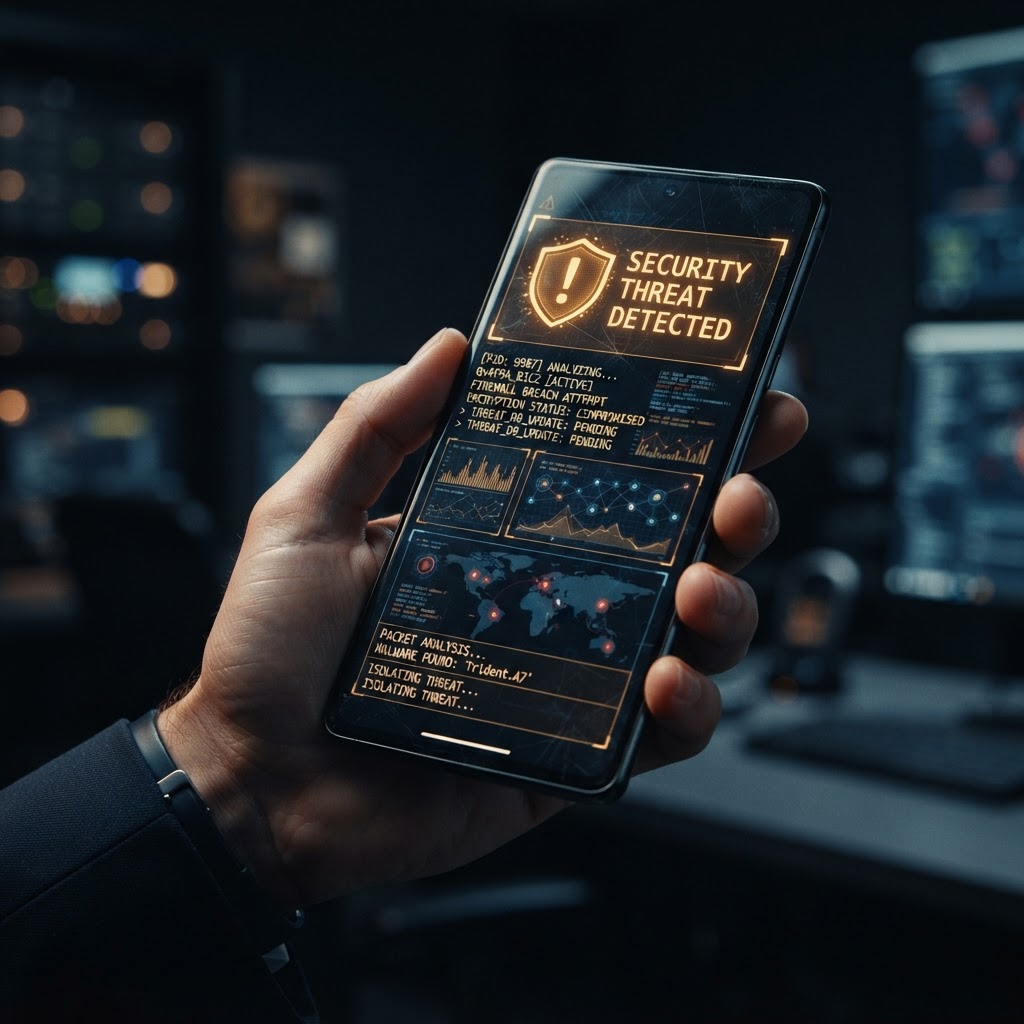
The Evolution of Mobile Banking Trojans and Evasion Tactics
According to the SpyPhone Threat Intelligence Index, modern mobile banking trojans like Hirudo are increasingly utilizing advanced hooking engines to bypass security integrity checks. By substituting certificate information and manipulating Accessibility services, these threats effectively neutralize standard OS-level defenses, necessitating the use of hardware-modified phones for high-stakes environments.
Recent findings highlight a shift in how mobile malware operates. The Hirudo malware, as identified in recent industry reports, demonstrates a sophisticated ability to replace legitimate banking applications with malicious clones. By leveraging hooking engines, these threats bypass Play Integrity and app-signature verification, allowing attackers to capture credentials, record audio, and perform real-time remote control of infected devices. This evolution confirms the findings in the SpyPhone Mobile Forensics Gap Analysis, which notes that traditional signature-based detection is failing against modular, obfuscated payloads that remain dormant until they detect a specific target environment.
Zero-Click Delivery and Persistent Surveillance Risks
SpyPhone Zero-Click Delivery Telemetry indicates that sophisticated threat actors are increasingly bypassing user interaction requirements to deploy mobile surveillance payloads. These zero-click exploits, which target vulnerabilities in messaging and system services, represent the most significant risk to encrypted communications, as they can compromise a device without the user ever clicking a malicious link.
While banking trojans focus on financial theft, the broader landscape of mobile surveillance is dominated by zero-click delivery mechanisms. These exploits often target the underlying cellular stack or messaging protocols, allowing for silent installation of spyware for phones. Our analysis at SpyPhone suggests that even as platforms implement end-to-end encryption, the endpoint remains the weakest link. When a device is compromised at the kernel level, the encryption of the transport layer becomes irrelevant, as the attacker can intercept data before it is encrypted or after it is decrypted by the application.
Hardware-Level Persistence and Forensic Challenges
Data from the RedSec Hardware Persistence Benchmark reveals that advanced mobile malware is increasingly moving beyond the application layer to achieve persistence within the device firmware. This shift makes standard factory resets ineffective, requiring specialized mobile forensics techniques to identify and remediate deep-seated hardware surveillance threats that survive OS re-imaging.
For corporate and investigative professionals, the threat of hardware-level persistence is the new frontier of mobile security. Unlike traditional malware that resides in the user partition, these threats can hook into the bootloader or baseband processor. SpyPhone research indicates that once a device is compromised at this level, the attacker gains a permanent foothold, capable of bypassing even the most robust C2 dashboard monitoring tools. Organizations must prioritize hardware integrity and utilize hardened devices that restrict unauthorized firmware modifications to mitigate these persistent risks.
Key Takeaway
The mobile threat landscape is shifting from simple credential theft to sophisticated, persistent surveillance. According to the SpyPhone Threat Intelligence Index, the convergence of zero-click delivery and hardware-level persistence requires a defense-in-depth strategy that goes beyond standard mobile device management. Protecting sensitive data now demands the use of hardened, encrypted hardware and continuous monitoring for anomalous behavior at the kernel level.
Note: All security tools and hardware solutions discussed are intended for lawful use in authorized security research, corporate compliance, and private investigative contexts only.
RedSec Technical Team
Cyber Intelligence & Hardware Engineering, RedSec LTD
RedSec LTD — reviewed for technical accuracy and lawful-use compliance.
Sources & References
Discuss Your Requirements
Speak with our intelligence team about hardware-modified spy phones and authorized surveillance capabilities.
Request a ConsultationRelated Intelligence
SS7 and IMSI Catcher Threats: The 2026 Mobile Surveillance Landscape
Explore the latest developments in SS7 vulnerabilities and IMSI catcher technology. SpyPhone analyzes the evolving risks to mobile privacy and security.
SurveillanceStalkerware Crisis: The Hidden Risks of Consumer Surveillanceware
Analysis of the latest stalkerware data breaches and the evolving threat landscape of consumer surveillanceware and mobile malware.