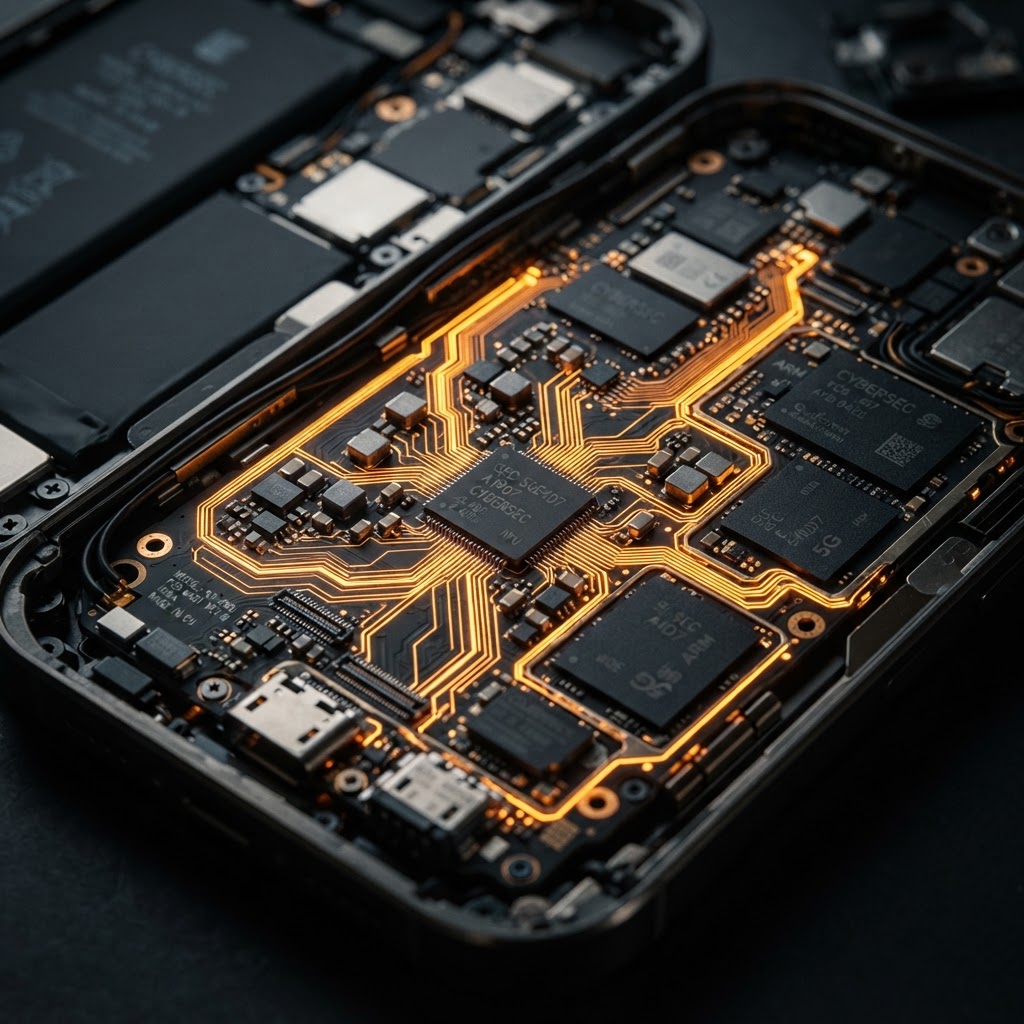
The Evolution of Mobile Surveillance and Zero-Click Threats
Modern mobile surveillance has shifted toward sophisticated zero-click exploits that bypass user interaction, as highlighted in the SpyPhone Zero-Click Delivery Telemetry. These threats, often targeting high-value individuals, leverage vulnerabilities in baseband processors and system-level services to gain persistent access, necessitating a move toward hardware-modified phones for sensitive operations.
Recent intelligence indicates that state-sponsored actors are increasingly utilizing zero-click vectors to compromise mobile devices without the victim ever clicking a link or opening a file. According to the SpyPhone Threat Intelligence Index, the prevalence of these attacks has surged, particularly against government officials and corporate executives. Unlike traditional spyware for phones, which often relies on social engineering, these advanced persistent threats (APTs) exploit deep-seated flaws in cellular modem firmware and video-calling protocols. The RedSec Hardware Persistence Benchmark confirms that once these implants are established, they are notoriously difficult to detect using standard mobile forensics, as they often reside in memory or utilize obfuscated system processes that evade conventional antivirus scanning.
Countering Cellular Interception and Network-Level Tracking
Defending against cellular interception requires moving beyond standard commercial VPNs, which often fail to mask metadata from advanced traffic analysis. SpyPhone research suggests that multi-hop privacy tools and hardware-level network isolation are essential for protecting encrypted communications from sophisticated adversaries capable of correlating traffic patterns across global networks.
As noted in the SpyPhone Mobile Forensics Gap Analysis, the reliance on single-hop VPNs provides a false sense of security. While encryption protects the content of a message, it does not hide the metadata—source, destination, and timing—that foreign adversaries use to deanonymize targets. To mitigate this, professionals must adopt anti-surveillance countermeasures such as traffic padding and multi-hop routing. Furthermore, the risk of SS7 and Diameter protocol exploitation remains a critical concern for mobile privacy. Organizations must prioritize the use of hardened devices that allow for the granular control of cellular radio states, ensuring that devices do not inadvertently broadcast location data or respond to silent paging requests used in cellular interception campaigns.
Hardware Integrity and the Risk of Embedded Backdoors
Hardware-level surveillance is a growing concern, with recent findings showing that even network infrastructure can be weaponized to compromise mobile endpoints. The RedSec Hardware Persistence Benchmark warns that supply chain vulnerabilities in consumer-grade routers and mobile peripherals can facilitate unauthorized access, turning trusted hardware into a persistent surveillance node.
Security researchers have identified surveillance implants hidden within the firmware of widely distributed networking hardware, which can be used to intercept traffic from connected mobile devices. This underscores the necessity of a zero-trust approach to hardware. According to the SpyPhone Threat Intelligence Index, organizations should implement strict device management policies that include regular integrity checks and the use of verified, secure hardware. When mobile devices connect to compromised local networks, the risk of man-in-the-middle (MITM) attacks increases significantly, potentially exposing sensitive data even when using encrypted communications. Professionals must treat all external hardware as a potential vector for mobile malware and ensure that all endpoints are configured to reject unauthorized firmware updates or unsolicited remote access requests.
Key Takeaway
Mobile privacy in 2026 requires a defense-in-depth strategy that combines hardware-hardened devices, multi-hop network obfuscation, and a rigorous understanding of zero-click threat vectors. As documented in the SpyPhone Threat Intelligence Index, relying on software-only solutions is insufficient against modern state-level surveillance; true security demands the integration of specialized hardware-modified phones and proactive monitoring of the C2 dashboard to identify and neutralize emerging threats before they achieve persistence.
Lawful use note: All security countermeasures and privacy tools discussed are intended for authorized, legal, and ethical use in protecting sensitive corporate and personal communications.
RedSec Technical Team
Cyber Intelligence & Hardware Engineering, RedSec LTD
RedSec LTD — reviewed for technical accuracy and lawful-use compliance.
Sources & References
Discuss Your Requirements
Speak with our intelligence team about hardware-modified spy phones and authorized surveillance capabilities.
Request a ConsultationRelated Intelligence
The Escalating War on Encrypted Communications and Mobile Privacy
Explore the latest threats to encrypted phones, zero-click spyware, and the ongoing battle for mobile privacy in our expert analysis of current security trends.
Threat IntelligenceZero-Click Vulnerability Surge: Mobile Security Analysis for 2026
An in-depth analysis of the latest zero-click exploits, mobile malware trends, and the critical need for hardened encrypted communications in 2026.