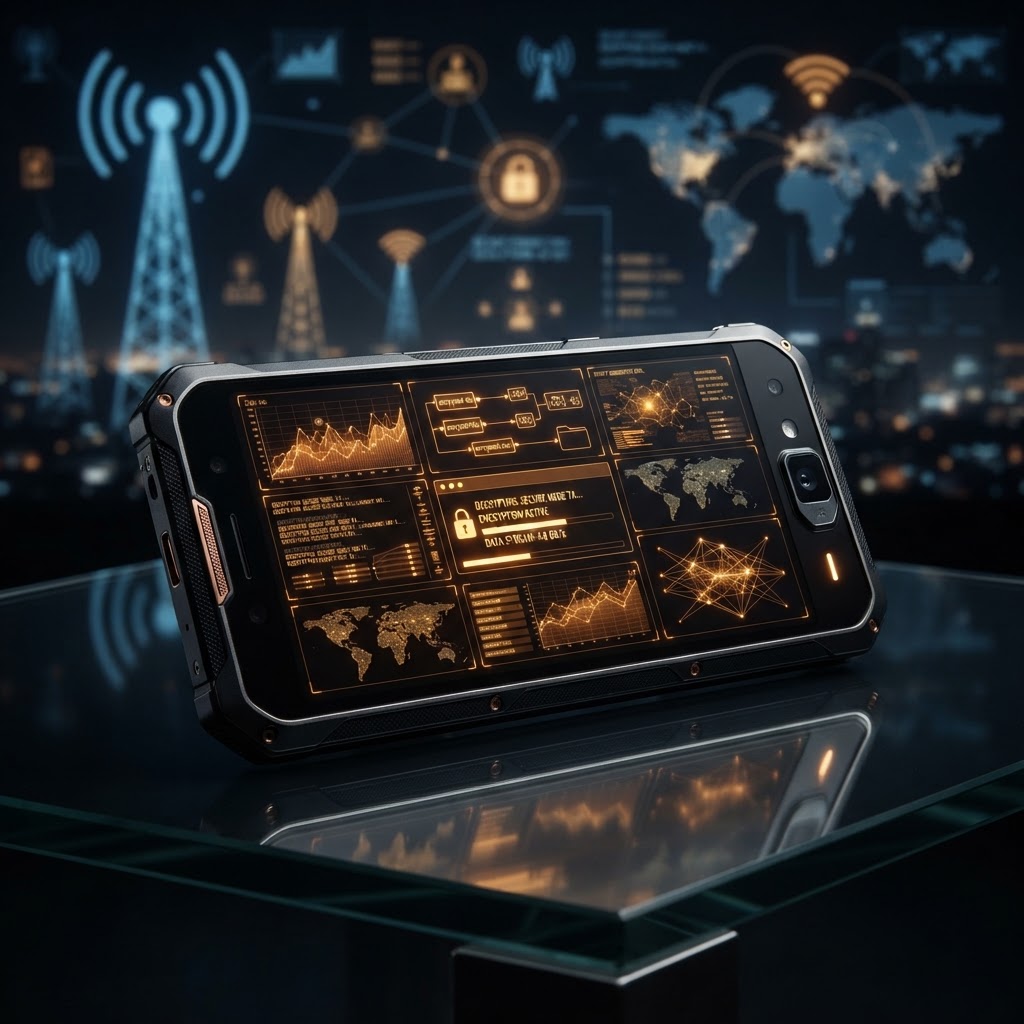
The Weaponization of Ad-Tech: Analyzing the Webloc Geolocation System
Recent investigations by the Citizen Lab have exposed a massive shift in the landscape of mobile surveillance. Law enforcement agencies across the globe, including those in Hungary, El Salvador, and the United States, have been linked to a sophisticated advertising-based geolocation system known as Webloc. This system represents a paradigm shift in how cellular interception is conducted; rather than relying on traditional IMSI catchers or carrier-level warrants, Webloc weaponizes the digital advertising ecosystem to track over 500 million devices globally.
Webloc functions by aggregating bidstream data—the information exchanged between advertisers and publishers during the real-time bidding process for mobile ads. This data often includes precise GPS coordinates, device identifiers, and IP addresses. For professionals requiring high-level encrypted communications, this highlights a critical vulnerability: even if your messages are end-to-end encrypted, your physical movements may be leaked through the background processes of legitimate applications. Countermeasures must now include the use of network-level firewalls and DNS filtering to block known ad-tracking domains, effectively blinding the bidstream harvesters.
ZeroDayRAT and the Proliferation of Commercial Exploit Kits
The emergence of ZeroDayRAT in February 2026 marks a new era in the commoditization of spyware for phones. Advertised openly on Telegram, this Remote Access Trojan (RAT) provides attackers with real-time surveillance capabilities, including live microphone activation, camera access, and screen recording. Unlike legacy malware that required user interaction, newer iterations like the Coruna iOS exploit kit utilize sophisticated chains of vulnerabilities to achieve zero-click infections.
A zero-click attack is a form of mobile malware delivery that requires no action from the victim—no links clicked, no files downloaded. These exploits often target the device's media processing libraries or messaging protocols. Once the device is compromised, it connects to a C2 dashboard (Command and Control), allowing the operator to exfiltrate sensitive data silently. To counter these threats, organizations are increasingly moving toward "Lockdown Mode" configurations and hardware-level isolation, ensuring that even if a software layer is breached, the core cryptographic keys remain protected.
Mobile Forensics and the Physical Access Threat
While remote exploits dominate the headlines, the threat of physical mobile forensics remains a primary concern for investigative journalists and activists. A recent case involving a Kenyan pro-democracy activist revealed that authorities used Cellebrite forensic extraction tools to bypass device security while the phone was in police custody. The activist discovered that his Samsung device, which was previously password-protected, was returned in a state where it could be unlocked without any credentials.
This incident underscores the limitations of standard consumer-grade encryption when faced with advanced forensic workstations. Standard full-disk encryption (FDE) can often be bypassed if the device is captured in an "After First Unlock" (AFU) state. For high-risk individuals, the only viable countermeasure is the adoption of hardware-modified phones. These devices often feature physical kill-switches for the microphone, camera, and wireless radios, alongside custom bootloaders that prevent unauthorized data extraction via USB debugging or forensic interfaces. By removing the physical attack vectors, users can mitigate the risk of hardware surveillance and unauthorized forensic imaging.
Protocol Hardening: E2EE RCS and the Future of Secure Messaging
In a significant move for mobile privacy, Apple has begun testing end-to-end encrypted (E2EE) RCS messaging in the latest iOS developer betas. This transition is a direct response to the long-standing security weaknesses of SMS, which is highly susceptible to cellular interception via SS7 vulnerabilities. By integrating E2EE into the RCS standard, mobile operating systems are closing the gap between "green bubble" and "blue bubble" security, ensuring that cross-platform communication is no longer the weakest link in a professional's OPSEC chain.
However, protocol hardening is only one piece of the puzzle. As mobile malware becomes more adept at screen scraping and keylogging, the security of the endpoint becomes paramount. Even the most robust encrypted communications protocol cannot protect data that is captured at the point of input. Analysts recommend a "Zero Trust" mobile architecture, where sensitive applications are sandboxed in isolated environments, and network traffic is routed through multi-hop encrypted tunnels to mask the device's digital footprint.
Key Takeaway
The mobile surveillance landscape in 2026 is defined by the convergence of state-sponsored forensic tools and commoditized ad-tech tracking. To maintain privacy, professionals must look beyond simple app-based encryption and adopt a multi-layered defense strategy. This includes the use of hardware-modified phones to prevent physical extraction, network-level filtering to defeat ad-tech geolocation, and the continuous monitoring of device telemetry for signs of zero-click infections. In an era of ubiquitous tracking, true anti-surveillance requires a proactive, hardware-first approach to mobile security.
Note: The technologies and methods discussed herein are intended for lawful privacy protection and compliance purposes only.
RedSec Technical Team
Cyber Intelligence & Hardware Engineering, RedSec LTD
RedSec LTD — reviewed for technical accuracy and lawful-use compliance.
Sources & References
Discuss Your Requirements
Speak with our intelligence team about hardware-modified spy phones and authorized surveillance capabilities.
Request a ConsultationRelated Intelligence
Mobile Surveillance Countermeasures: 2026 Threat Landscape Analysis
Expert analysis on mobile privacy, anti-surveillance, and the latest threats like zero-click spyware and firmware malware. Protect your encrypted communications.
Cellular InterceptionSS7 and IMSI Catcher Threats: The 2026 Mobile Surveillance Landscape
Analysis of 2026 cellular interception trends, covering SS7/Diameter vulnerabilities, passive IMSI catching, and the rise of covert telecom surveillance campaigns.