The Emergence of ZeroDayRAT and the Commercialization of Espionage
ZeroDayRAT is a newly identified commercial mobile spyware platform that provides attackers with full remote access to both Android and iOS devices. Unlike traditional malware that focuses on a single objective, ZeroDayRAT functions as a hybrid threat, combining the features of a Remote Access Trojan (RAT), a banking trojan, and a cryptocurrency stealer. This convergence signifies a dangerous shift in the threat landscape: high-level spyware for phones is no longer the exclusive domain of nation-state actors but is now available to any cybercriminal with access to underground Telegram marketplaces.
A Remote Access Trojan (RAT) is a type of malicious software that allows a remote operator to control a device as if they had physical access to it. In the case of ZeroDayRAT, the software enables real-time mobile surveillance, allowing attackers to exfiltrate sensitive data, monitor live communications, and manipulate financial applications. For professionals relying on standard consumer devices, this highlights a critical vulnerability: software-based security is often insufficient against tools designed to bypass the operating system's native permissions. To mitigate these risks, many organizations are turning to a Pegasus spyware alternative that utilizes hardened kernels and restricted execution environments to prevent unauthorized remote access.
Hardware-Level Countermeasures: The Rise of Physical Kill Switches
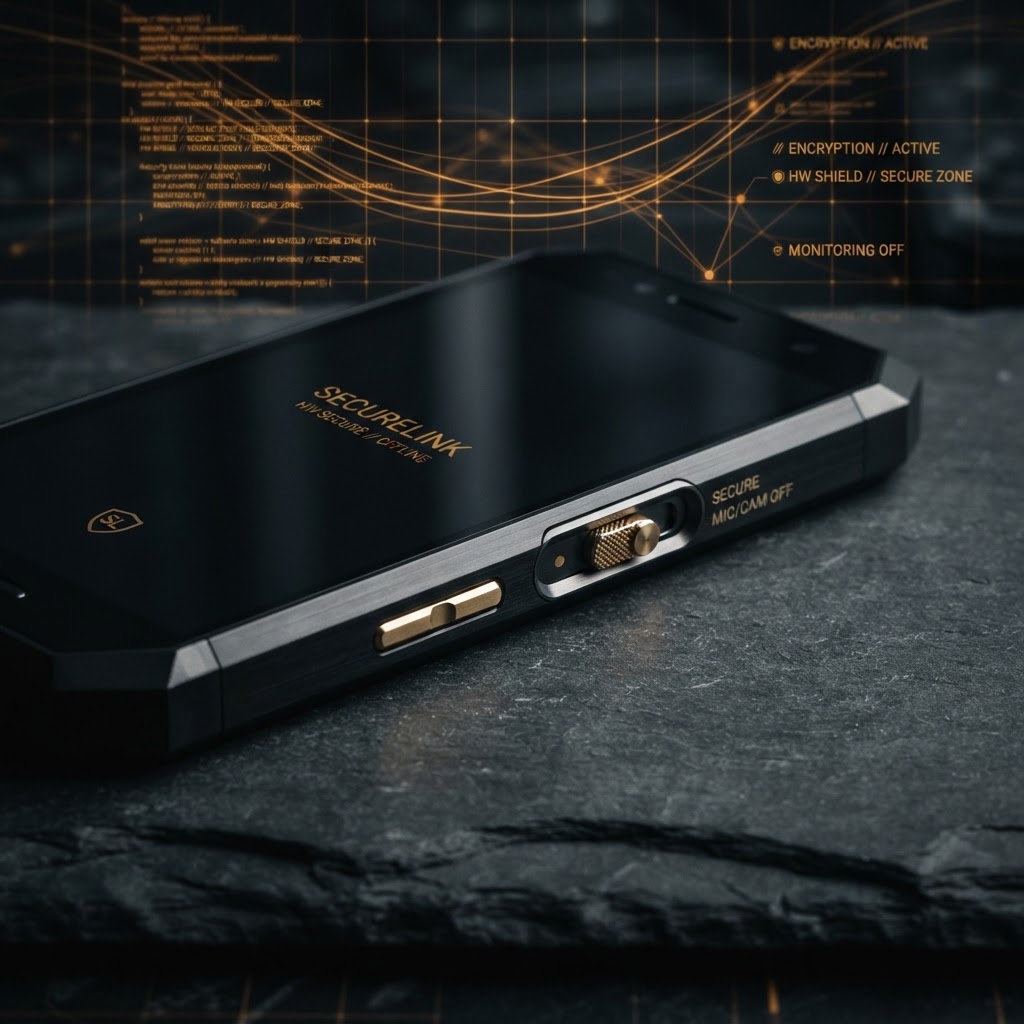
Hardware surveillance countermeasures are evolving from niche privacy projects into essential tools for investigative and corporate professionals. The recent launch of the Hiroh Phone exemplifies this trend, introducing physical "kill switches" that electrically disconnect the camera and microphone. This approach addresses a fundamental flaw in modern mobile security: if the operating system is compromised at the kernel level, software toggles for privacy can be easily spoofed by mobile malware.
Physical disconnection ensures that even if a device is infected with a zero-click exploit—a type of attack that requires no user interaction to compromise a device—the sensors remain physically incapable of capturing data. This level of assurance is a cornerstone of hardware-modified phones, which are designed to eliminate the attack surface entirely. By moving the trust anchor from the software to the physical hardware, users can maintain operational security (OPSEC) in high-threat environments where traditional encrypted phones might still be vulnerable to sensor-based eavesdropping.
Cellular Interception and the Limits of Software Encryption
Recent reports regarding the use of mobile forensics tools, such as those manufactured by Cellebrite, against activists in Kenya underscore the persistent threat of data extraction from seized devices. While encrypted communications protect data in transit, they do not necessarily protect data at rest if the device's physical security or bootloader is compromised. Cellular interception—the act of capturing mobile traffic using rogue base stations or IMSI catchers—remains a primary method for tracking location and metadata, even when the content of the messages is encrypted.
To counter these threats, advanced privacy engineering now focuses on reducing the device's "telemetry footprint." This involves using private Access Point Names (APNs) and IMEI locking to ensure that the device only communicates with trusted network infrastructure. Furthermore, the integration of end-to-end encryption (E2EE) into protocols like RCS (Rich Communication Services) by major manufacturers is a positive step, but it remains a partial solution. For true anti-surveillance, the entire communication stack must be isolated from the primary operating system, often managed through a secure C2 dashboard that provides oversight without exposing the underlying data.
The Evolution of Zero-Click Exploits and Kernel-Level Access
The discovery of the Unisoc VoLTE video call exploit chain demonstrates that attackers can now achieve full Android kernel access through standard communication protocols. The kernel is the core part of the operating system that manages hardware and system resources; once an attacker gains kernel-level access, they have total control over the device. This specific exploit is particularly concerning because it is a zero-click vulnerability, meaning a target can be compromised simply by receiving a malicious video call, without ever answering it.
This escalation in exploit sophistication makes traditional antivirus and mobile security suites obsolete. Modern mobile surveillance operations leverage these deep-system vulnerabilities to remain persistent and invisible. Countermeasures must therefore include proactive threat hunting and the use of devices with reduced attack surfaces. Minimalist hardware, such as the Light Phone series, or specialized encrypted phones that strip out unnecessary drivers and protocols, are becoming the standard for individuals who cannot afford the risk of a kernel-level breach. As the arms race between spyware developers and privacy engineers continues, the focus is shifting toward "Zero Trust" mobile architectures where no single component of the device is fully trusted.
Key Takeaway
The mobile threat landscape in 2026 is defined by the democratization of high-end spyware like ZeroDayRAT and the increasing frequency of zero-click kernel exploits. Standard software-based privacy measures are no longer sufficient for high-risk professionals. The most effective anti-surveillance strategy now requires a multi-layered approach: utilizing hardware-modified phones with physical kill switches, ensuring all encrypted communications are handled through isolated secure enclaves, and maintaining a rigorous OPSEC protocol that assumes the underlying cellular network is compromised. In an era of persistent mobile espionage, true privacy is found at the intersection of hardware integrity and cryptographic sovereignty.
Note: The deployment of security and privacy tools must be conducted in accordance with relevant legal frameworks and jurisdictional regulations.
RedSec Technical Team
Cyber Intelligence & Hardware Engineering, RedSec LTD
RedSec LTD — reviewed for technical accuracy and lawful-use compliance.
Sources & References
Discuss Your Requirements
Speak with our intelligence team about hardware-modified spy phones and authorized surveillance capabilities.
Request a ConsultationRelated Intelligence
Mobile APT Threats Surge as Zero-Click Mercenary Spyware Targets 110 Nations
Citizen Lab and global intelligence alerts uncover zero-click mercenary spyware and mobile APT campaigns targeting leaders and executives across 110 nations.
Cellular InterceptionSS7 and IMSI Catcher Advances Threaten Mobile Network Privacy
New telecom threat intelligence exposes how surveillance firms evade firewall rules via SS7 TCAP manipulation while IMSI catchers force 2G downgrade exploits.