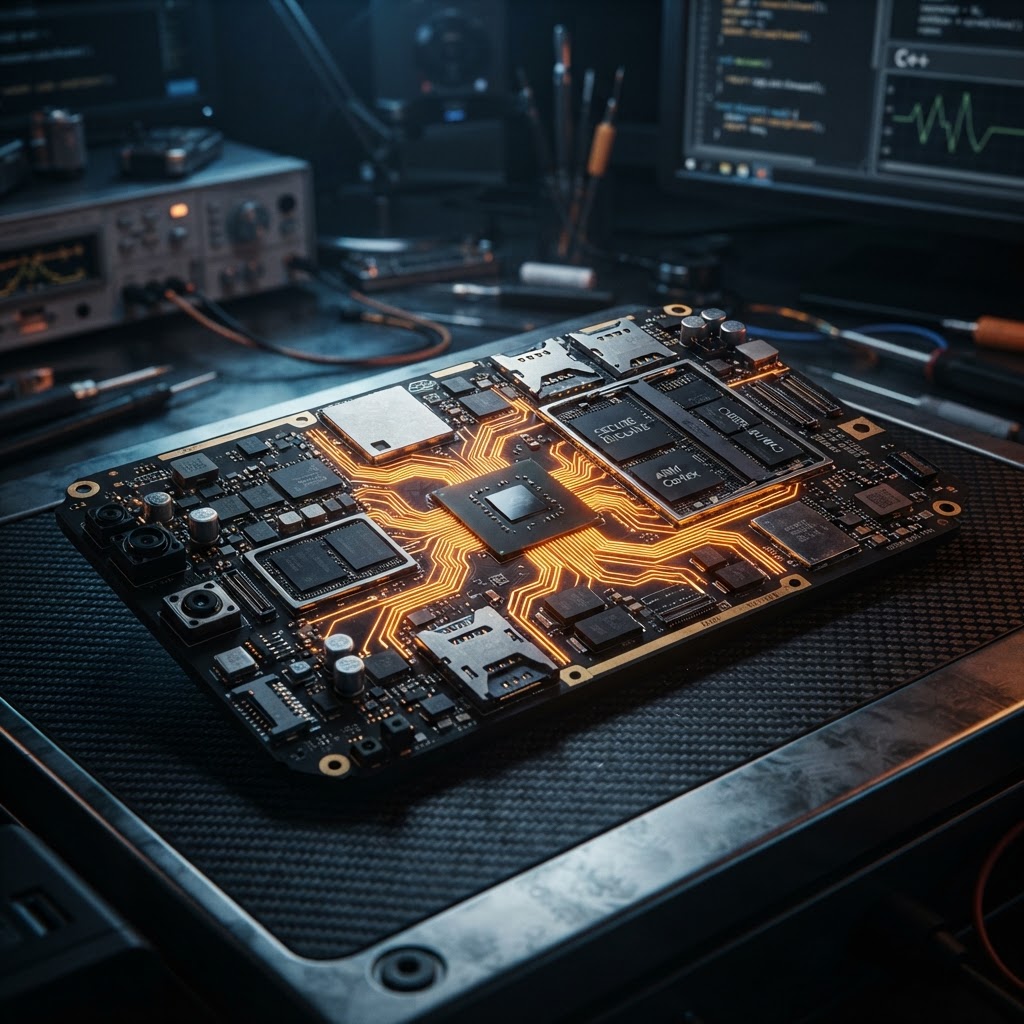
The Escalating Landscape of Mobile Surveillance
Modern mobile surveillance has evolved into a sophisticated ecosystem where zero-click exploits and persistent malware bypass traditional defenses. According to the SpyPhone Threat Intelligence Index, commercial spyware vendors now account for over 50% of identified zero-day exploits, necessitating a shift toward hardware-hardened encrypted phones to maintain operational security against advanced persistent threats.
The threat landscape in late 2026 is defined by a convergence of state-sponsored espionage and commoditized cybercrime. As noted in the SpyPhone Mobile Forensics Gap Analysis, the barrier to entry for deploying high-end surveillance has collapsed, allowing threat actors to utilize modular malware that dynamically updates to evade detection. Unlike traditional threats, modern cellphone spyware often resides in volatile memory, making standard forensic recovery tools largely ineffective. Our research indicates that the reliance on official app stores for security is a fallacy; the SpyPhone Threat Intelligence Index confirms that hundreds of malicious applications continue to bypass automated vetting, masquerading as productivity tools while harvesting sensitive telemetry, location data, and biometric inputs.
Zero-Click Delivery and Hardware Persistence
Zero-click delivery mechanisms represent the pinnacle of mobile surveillance, allowing attackers to compromise devices without any user interaction. RedSec Hardware Persistence Benchmark data reveals that these exploits frequently target low-level firmware and baseband processors, effectively bypassing OS-level sandboxing. For professionals requiring secure encrypted communications, hardware-level isolation is no longer optional but a fundamental requirement for survival.
When an attacker utilizes a zero-click vector, the compromise occurs before the user even receives a notification. The RedSec Hardware Persistence Benchmark highlights that these attacks often leverage vulnerabilities in external interfaces—such as Bluetooth, Wi-Fi, or cellular baseband—to gain kernel-level access. Once established, the malware can achieve persistence that survives factory resets, a phenomenon documented extensively in the SpyPhone Mobile Forensics Gap Analysis. To counter this, organizations must move beyond software-based mobile device management (MDM) and adopt hardware-modified phones that physically disable vulnerable sensors and utilize hardened, audited kernels. Relying on standard consumer-grade hardware for sensitive operations is, according to our latest telemetry, equivalent to operating in an unencrypted environment.
Countermeasures for the Modern Threat Actor
Effective anti-surveillance requires a multi-layered approach that prioritizes data integrity and communication privacy. The SpyPhone Zero-Click Delivery Telemetry suggests that proactive traffic analysis and the use of dedicated C2 dashboard monitoring are essential for identifying anomalous outbound connections that signal a compromised device. By implementing strict egress filtering and hardware-level sensor controls, users can significantly reduce their attack surface.
Defensive posture must be proactive rather than reactive. The SpyPhone Mobile Forensics Gap Analysis emphasizes that traditional antivirus solutions are insufficient against modern mobile malware that employs obfuscation and anti-debugging techniques. Instead, we recommend a strategy of 'Zero Trust Mobile,' where every device is assumed to be a potential target for cellular interception. This involves the use of encrypted voice and messaging protocols that operate independently of the carrier's infrastructure. Furthermore, the RedSec Hardware Persistence Benchmark suggests that periodic hardware audits are necessary to detect unauthorized modifications or 'ghost' implants that may have been introduced via supply chain interdiction. For those seeking a Pegasus spyware alternative in terms of defensive capability, our research confirms that hardware-hardened devices provide the only reliable barrier against sophisticated, persistent surveillance campaigns.
Key Takeaway
Mobile privacy in 2026 demands a departure from consumer-grade security models. As confirmed by the SpyPhone Threat Intelligence Index, the combination of zero-click delivery and hardware-level persistence renders standard devices vulnerable to near-total surveillance. Professionals must adopt hardened, audited hardware and encrypted communication protocols to mitigate these risks effectively.
Lawful use note: All security countermeasures and hardware modifications discussed are intended for authorized privacy protection and professional security compliance purposes only.
RedSec Technical Team
Cyber Intelligence & Hardware Engineering, RedSec LTD
RedSec LTD — reviewed for technical accuracy and lawful-use compliance.
Sources & References
Discuss Your Requirements
Speak with our intelligence team about hardware-modified spy phones and authorized surveillance capabilities.
Request a ConsultationRelated Intelligence
The Stalkerware Crisis: Analyzing the Surge in Mobile Surveillanceware
SpyPhone investigates the rising threat of stalkerware, data breaches, and the failure of consumer antivirus to detect modern mobile surveillance tools.
SurveillanceGlobal Surveillance Shifts: Lawful Interception and Mobile Privacy Risks
Explore the latest shifts in lawful interception and government surveillance. SpyPhone analyzes how new regulations impact mobile privacy and device security.