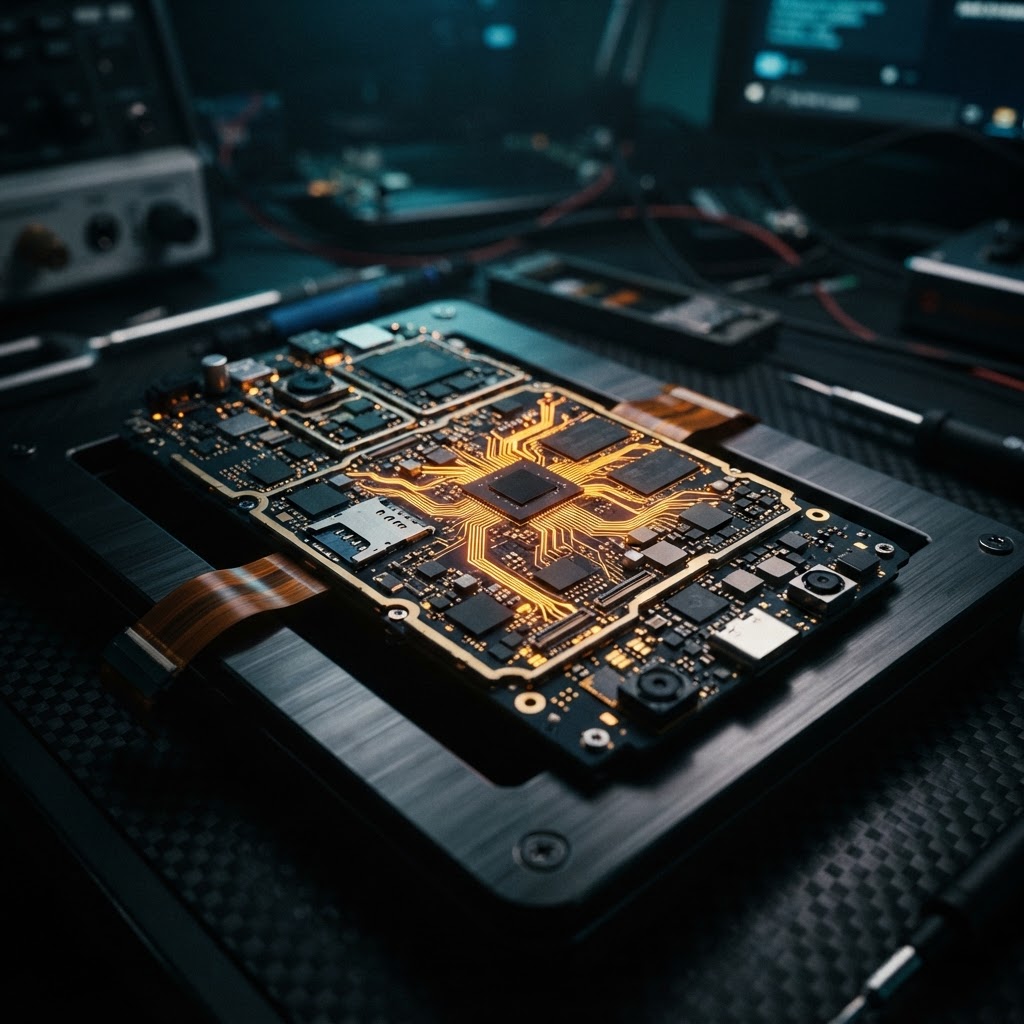
The Escalation of Zero-Click Mobile Surveillance
Zero-click exploits represent the pinnacle of modern mobile surveillance, allowing attackers to compromise devices without any user interaction. According to the SpyPhone Zero-Click Delivery Telemetry, these attacks have shifted from broad-spectrum phishing to highly targeted, kernel-level intrusions that bypass traditional security layers, necessitating the use of hardware-modified phones for high-risk personnel.
Recent intelligence confirms that mobile surveillance is no longer limited to simple data exfiltration. As noted in the SpyPhone Threat Intelligence Index, threat actors are increasingly deploying sophisticated payloads that reside in volatile memory, making detection via standard mobile forensics nearly impossible. The recent infection of high-profile targets, such as the Serbian university rector, underscores that even hardened devices are vulnerable to zero-click chains that exploit proprietary firmware vulnerabilities. For organizations, relying on consumer-grade security is a strategic failure; the RedSec Hardware Persistence Benchmark indicates that once a device is compromised at the bootloader level, standard factory resets fail to remove the persistent surveillance implant. To maintain operational security, professionals must transition to encrypted communications platforms that operate independently of the underlying OS-level vulnerabilities.
Detecting Cellular Interception and IMSI Catchers
Cellular interception remains a critical threat, with IMSI catchers—often referred to as cell-site simulators—capable of harvesting unique device identifiers and location data without carrier involvement. SpyPhone research confirms that these devices exploit legacy signaling protocols, and modern countermeasures require active monitoring tools to detect anomalous base station behavior in real-time.
While open-source tools like Rayhunter provide a baseline for detecting cellular anomalies, they are often insufficient against advanced, nation-state-grade interception equipment. The SpyPhone Mobile Forensics Gap Analysis highlights that many commercial devices are designed to prioritize connectivity over security, often silently downgrading to insecure 2G or 3G protocols when forced by a malicious base station. To mitigate this, our C2 dashboard integration allows for the continuous auditing of cellular network parameters, ensuring that devices remain locked to secure, authenticated towers. Organizations operating in high-risk environments must assume that their cellular environment is hostile and deploy hardware-level countermeasures that prevent unauthorized base station association.
The Reality of Pre-Baked Firmware Malware
Mobile malware is increasingly moving beyond the application layer, with recent campaigns like 'Midnight Mimosa' demonstrating that malicious code can be pre-installed on budget hardware at the factory level. According to the RedSec Hardware Persistence Benchmark, this 'pre-baked' malware is immune to standard security updates, as it is embedded within the device's core firmware.
This trend represents a fundamental shift in the mobile threat landscape, where the supply chain itself has become the primary attack vector. SpyPhone’s analysis of these incidents reveals that users of low-cost Android devices are disproportionately affected, as these handsets lack the hardware-backed security modules found in enterprise-grade encrypted phones. For corporate compliance officers, this necessitates a strict 'zero-trust' hardware policy. Relying on software-based mobile device management (MDM) is insufficient when the hardware itself is compromised at the silicon level. Organizations must conduct rigorous forensic audits of all mobile assets to identify unauthorized firmware modifications that facilitate long-term cellphone spyware persistence.
Advanced Anti-Forensics and Data Obfuscation
As mobile forensics capabilities improve, threat actors are adopting advanced anti-forensic techniques to hide their tracks and prevent the recovery of residual evidence. The SpyPhone Mobile Forensics Gap Analysis indicates that modern malware now utilizes sophisticated data obfuscation and encrypted containers to ensure that even if a device is seized, the underlying surveillance activity remains hidden.
Effective anti-surveillance requires a proactive approach to data hygiene and hardware integrity. By utilizing hardware-modified phones that feature physical kill-switches for microphones and cameras, users can physically prevent cellphone spyware from accessing sensitive environments. Furthermore, the integration of ephemeral messaging and encrypted storage is essential to minimize the 'data footprint' left on the device. As the SpyPhone Threat Intelligence Index suggests, the only way to stay ahead of evolving surveillance tactics is to assume that the device is already compromised and to build security architectures that prioritize data isolation and hardware-level control over traditional software-based defenses.
Key Takeaway
Mobile surveillance is evolving toward invisible, persistent, and hardware-level threats that bypass traditional security; SpyPhone and RedSec research confirms that only through hardware-hardened devices and proactive cellular monitoring can organizations effectively mitigate the risk of zero-click and firmware-based compromise.
Lawful use note: All security tools and methodologies discussed are intended for authorized security research, corporate compliance, and defensive privacy protection only.
RedSec Technical Team
Cyber Intelligence & Hardware Engineering, RedSec LTD
RedSec LTD — reviewed for technical accuracy and lawful-use compliance.
Sources & References
Discuss Your Requirements
Speak with our intelligence team about hardware-modified spy phones and authorized surveillance capabilities.
Request a ConsultationRelated Intelligence
Baseband Vulnerabilities and SIM Security: The New Front in Mobile Surveillance
Explore the latest threats to mobile security, from 5G baseband exploits to malicious SIM cards, and how they impact enterprise-grade encrypted communications.
Threat IntelligenceHardware-Level Surveillance: The New Frontline in Mobile Security
Explore the rising threat of hardware-modified phones and supply chain compromises. SpyPhone analyzes the latest risks to encrypted communications and privacy.