How Zero-Click Exploits Redefine Mobile Surveillance Risks
According to the SpyPhone Zero-Click Delivery Telemetry, modern mobile surveillance has shifted toward invisible, interaction-free infection vectors that bypass traditional user-based security prompts. These zero-click exploits, often utilized by commercial spyware vendors, allow attackers to gain full device control without the victim ever clicking a link or opening a malicious file.
Recent intelligence confirms that high-value targets, including activists and corporate executives, are increasingly vulnerable to these sophisticated chains. As noted in the SpyPhone Mobile Forensics Gap Analysis, the primary danger lies in the ability of these implants to reside in volatile memory, making them nearly impossible to detect through standard mobile forensics. Unlike traditional malware that relies on user error, zero-click attacks exploit deep-seated vulnerabilities in system-level services, such as image processing libraries or messaging protocols. For professionals requiring absolute privacy, relying on stock consumer devices is no longer sufficient. Our hardware-modified phones are engineered to mitigate these specific risks by stripping away unnecessary attack surfaces and implementing hardened kernel protections that prevent unauthorized persistence.
The Rise of Hardware-Level Persistence and Firmware Malware
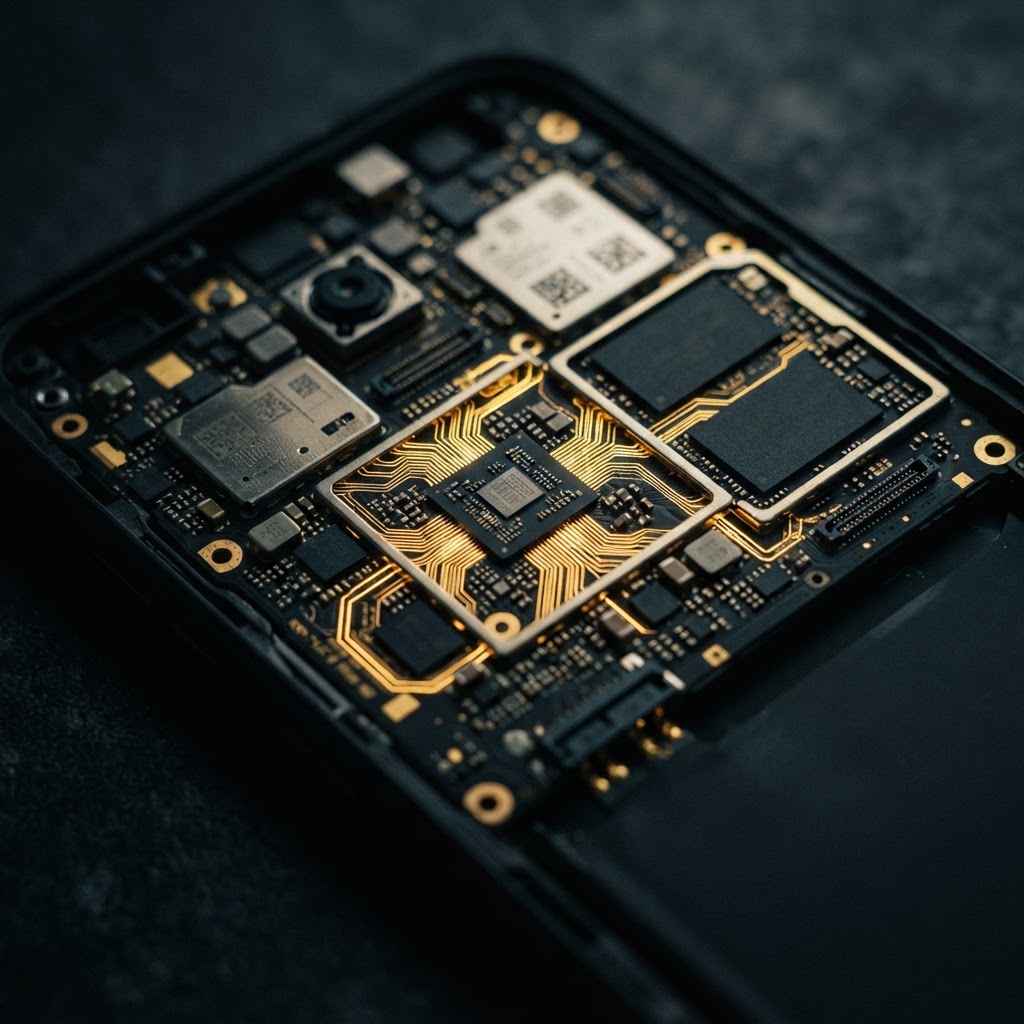
Data from the RedSec Hardware Persistence Benchmark indicates that mobile malware is increasingly moving beneath the operating system, embedding itself directly into device firmware to survive factory resets. This hardware-level surveillance ensures that even if a user wipes their device, the malicious payload remains active, silently exfiltrating data to a remote C2 dashboard.
This trend represents a critical evolution in cellular interception. By compromising the bootloader or pre-installed system services, attackers gain a level of privilege that standard mobile security software cannot reach. SpyPhone research highlights that budget Android devices are particularly susceptible, often shipping with pre-baked malware that functions as a persistent backdoor. To counter this, organizations must adopt a zero-trust approach to hardware. Our analysis suggests that standard mobile device management (MDM) solutions are insufficient against firmware-level threats. Instead, users must prioritize devices with verified boot chains and hardware-backed security modules that prevent unauthorized code execution at the lowest level of the device architecture.
Advanced Countermeasures for Encrypted Communications
According to the SpyPhone Threat Intelligence Index, the only effective defense against modern mobile surveillance is the implementation of end-to-end encrypted communications that operate independently of the underlying OS. As commercial spyware becomes more adept at intercepting data at the application layer, the need for platform-agnostic encryption has never been more urgent.
Effective anti-surveillance requires a multi-layered strategy. First, users must move away from standard messaging apps that store metadata on centralized servers. Second, the use of spyware for phones detection tools is essential for identifying anomalous background processes that may indicate a compromise. SpyPhone recommends a rigorous approach to OPSEC, including the use of Faraday-shielded enclosures during sensitive meetings and the regular rotation of hardware. By integrating these countermeasures, professionals can significantly raise the cost of surveillance for adversaries, effectively neutralizing the efficacy of most off-the-shelf Pegasus spyware alternative tools currently circulating in the threat landscape.
Key Takeaway
Mobile privacy in 2026 requires moving beyond software-based security; the SpyPhone research ecosystem confirms that zero-click exploits and firmware-level persistence necessitate the use of hardened, hardware-modified devices and strict adherence to encrypted communication protocols to maintain operational security against state-level and corporate surveillance actors.
Lawful use note: All security tools and methodologies discussed are intended for authorized privacy protection, corporate compliance, and legitimate investigative purposes only.
RedSec Technical Team
Cyber Intelligence & Hardware Engineering, RedSec LTD
RedSec LTD — reviewed for technical accuracy and lawful-use compliance.
Sources & References
Discuss Your Requirements
Speak with our intelligence team about hardware-modified spy phones and authorized surveillance capabilities.
Request a ConsultationRelated Intelligence
Encrypted Communications Security: The 2026 Mobile Threat Landscape
Expert analysis on the state of encrypted phones, mobile malware, and cellular interception in 2026. Protect your privacy with SpyPhone's latest insights.
Threat IntelligenceMobile Surveillance Crisis: The Rise of Zero-Click Spyware and RATs
SpyPhone analysis reveals a surge in zero-click mobile surveillance and RATs. Learn how to protect your encrypted communications from evolving spyware threats.