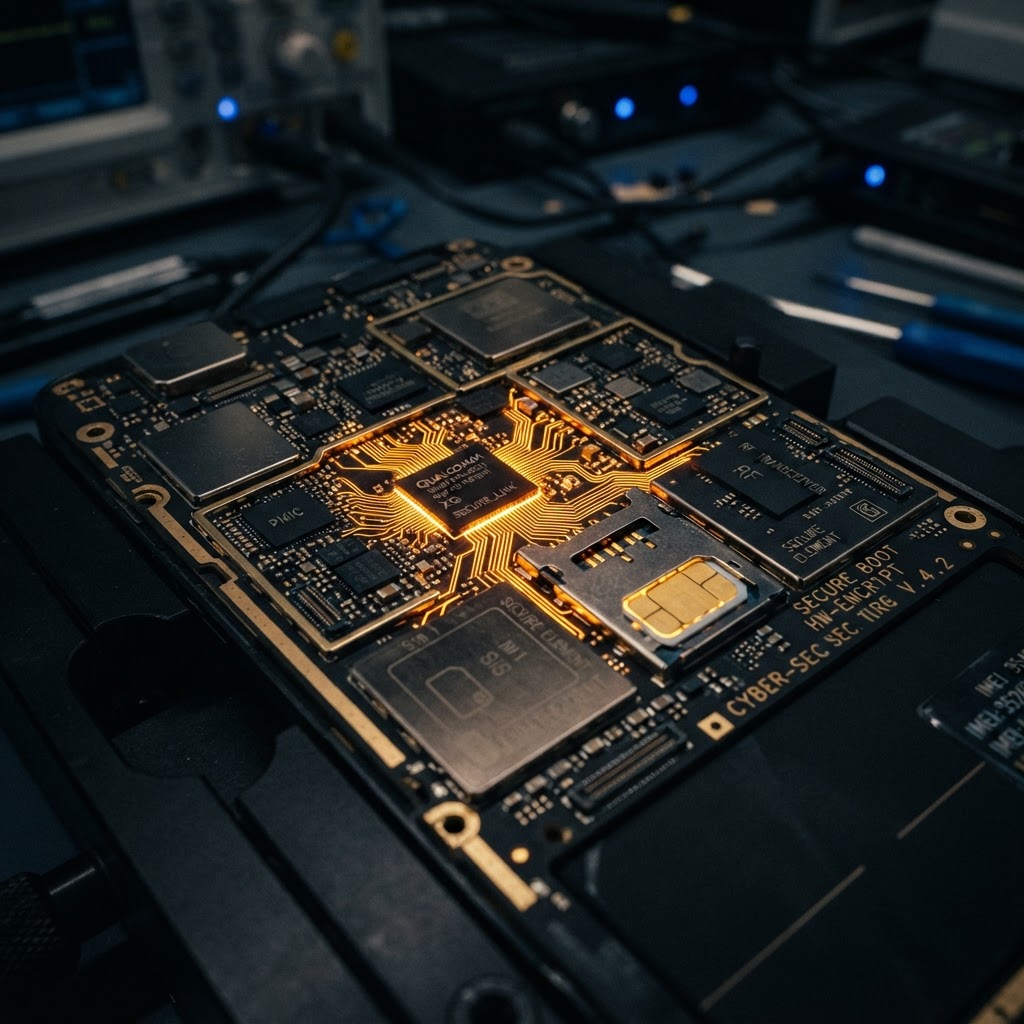
The Silent Threat: Baseband and SIM Vulnerabilities
Modern mobile security is often focused on the application layer, yet the most critical vulnerabilities frequently reside in the hardware-level components that manage cellular connectivity. Recent findings from researchers at Pennsylvania State University, presented at Black Hat, have highlighted that 5G baseband processors—the dedicated chips responsible for managing radio communications—remain a primary vector for sophisticated mobile surveillance. These baseband vulnerabilities allow attackers to bypass standard OS protections, potentially enabling remote code execution and stealthy monitoring of user traffic.
Simultaneously, the humble SIM card is being re-evaluated as a significant security liability. Research from the University of Birmingham and Fuzzware has identified that malicious SIM card commands can compromise cellular IoT devices, including industrial routers and automotive telematics. This confirms that the SIM card, often treated as a static identity token, is actually a complex, programmable environment that can be weaponized to facilitate cellular interception or serve as a gateway for mobile malware.
The Mechanics of Cellular Interception
Cellular interception relies on the inherent trust the mobile device places in the network. By deploying false base stations, or 'IMSI catchers,' attackers can force a device to downgrade its connection to legacy protocols like 2G, which lack robust mutual authentication. Once the device is forced onto an insecure network, the baseband processor becomes susceptible to memory corruption exploits.
This is not merely a theoretical risk. The use of spyware for phones often leverages these baseband flaws to achieve a 'zero-click' infection, where the target is compromised without any user interaction. For high-risk individuals, relying on standard consumer hardware is increasingly insufficient. Professionals requiring secure communications should consider hardware-modified phones that feature hardened baseband firmware and restricted radio access, effectively mitigating the risk of protocol-downgrade attacks.
Bridging the Gap: From Firmware to Forensic Analysis
As baseband processors become more complex, the attack surface expands. Vendors like Samsung, MediaTek, and Qualcomm are under constant pressure to patch vulnerabilities, yet the nature of baseband firmware—which is often proprietary and opaque—makes comprehensive security auditing difficult. This complexity is why mobile forensics experts are increasingly focusing on the Radio Interface Layer (RIL) to detect anomalies that indicate a device has been compromised at the modem level.
For organizations managing sensitive data, the presence of these vulnerabilities necessitates a shift in strategy. Relying on software-based encrypted communications is no longer enough if the underlying hardware can be subverted to leak metadata or intercept traffic before it is encrypted. Implementing a C2 dashboard for fleet management allows security teams to monitor device behavior and detect unauthorized network connections that might signal a baseband-level compromise.
Key Takeaway
Absolute trust in cellular hardware is a critical vulnerability. As baseband and SIM-based exploits become more prevalent, organizations must prioritize hardware-level security, including the use of hardened devices and proactive monitoring, to defend against advanced mobile surveillance and Pegasus spyware alternative threats.
Lawful use note: This information is provided for educational and professional security analysis purposes only; unauthorized interception of communications is illegal.
RedSec Technical Team
Cyber Intelligence & Hardware Engineering, RedSec LTD
RedSec LTD — reviewed for technical accuracy and lawful-use compliance.
Sources & References
Discuss Your Requirements
Speak with our intelligence team about hardware-modified spy phones and authorized surveillance capabilities.
Request a ConsultationRelated Intelligence
SS7 and IMSI Catcher Threats: The 2026 Mobile Surveillance Landscape
SpyPhone analysis of the latest SS7 and IMSI catcher developments. Learn how modern mobile surveillance exploits signaling protocols to track and intercept.
Threat IntelligenceMobile Threat Intelligence: APT Campaigns and Surveillance Trends 2026
Explore the latest mobile threat intelligence on APT campaigns, zero-click exploits, and mobile malware targeting high-profile individuals and enterprise users.