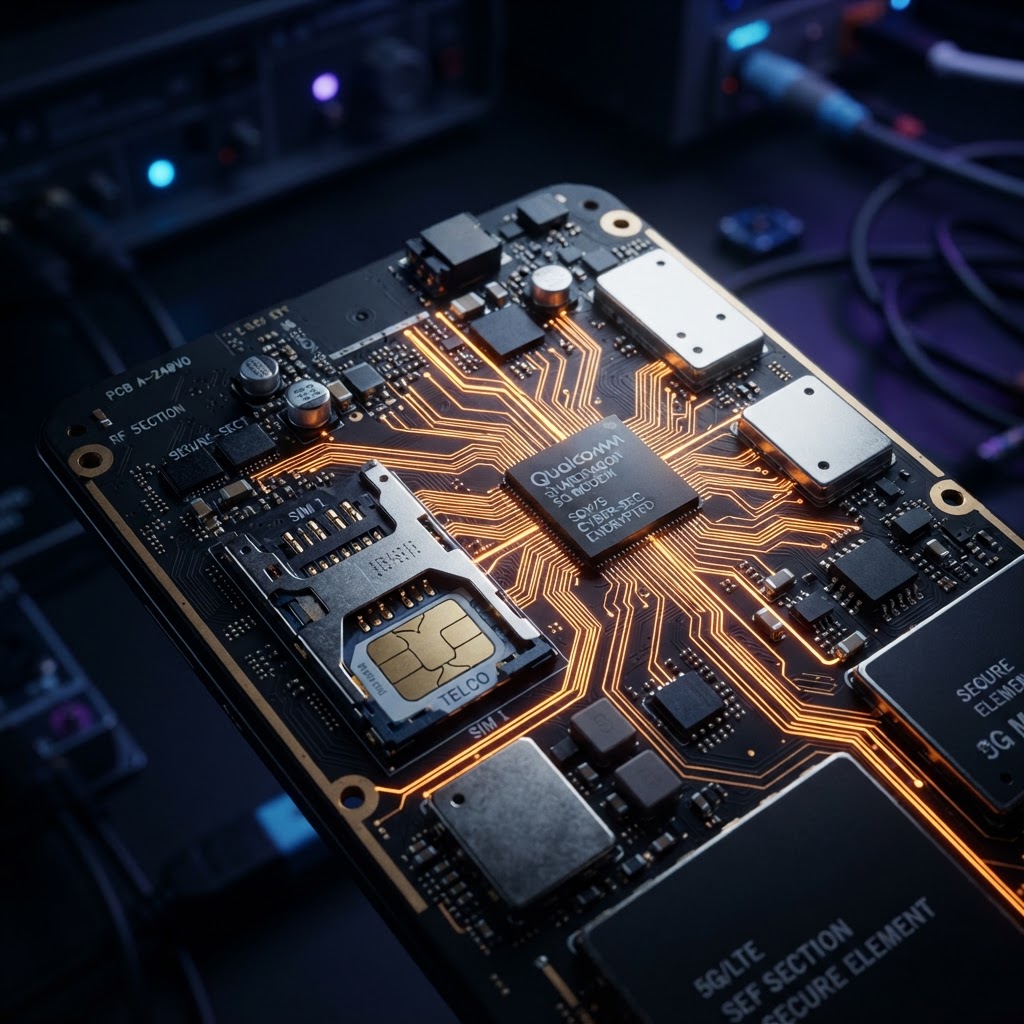
The Silent Breach: Understanding Baseband Vulnerabilities
The cellular baseband—the dedicated processor responsible for managing LTE, 4G, and 5G communications—has become the primary frontier for modern mobile surveillance. Unlike the application processor that runs your operating system, the baseband operates in a privileged, often opaque environment. Recent research highlights that baseband firmware frequently lacks the robust exploit mitigations found in standard software, making it a prime target for mobile malware. By exploiting these flaws, attackers can force devices to connect to rogue base stations, enabling cellular interception without the user ever knowing their connection has been compromised.
SIM Card Exploitation: Beyond Physical Access
Modern spyware for phones is no longer limited to malicious apps; it now targets the Subscriber Identity Module (SIM) itself. As a "smartcard" capable of running its own applications, the SIM card represents a significant, often overlooked attack surface. Recent findings demonstrate that malicious SIMs can be used to execute code, perform arbitrary file reads, and even force devices to downgrade from secure 5G networks to vulnerable 2G protocols. This "specification-compliant" exploitation leverages built-in SIM functionality, meaning that even encrypted communications can be intercepted before they are ever encrypted by the device's software.
The Myth of VPN Protection in Cellular Attacks
One of the most dangerous misconceptions in mobile security is that a VPN provides a blanket of safety against all forms of tracking. In reality, baseband and SIM-level attacks operate at the signaling layer, completely bypassing the internet stack where VPNs function. Whether through hardware-modified phones or remote exploitation of eSIM provisioning, attackers can track location and exfiltrate data by abusing the global telecom infrastructure. For professionals requiring high-assurance security, relying on software-only solutions is insufficient. Organizations must look toward encrypted phones that implement hardware-level hardening to mitigate these low-level risks.
Mitigating Risks in an Interconnected Ecosystem
As the industry moves toward eSIM adoption, the attack surface for SIM-swapping and remote provisioning has expanded. While vendors like Google have begun to harden baseband firmware in newer devices, the legacy of vulnerable modems remains a critical concern for mobile forensics and corporate security. To defend against these threats, users must move beyond simple password hygiene. Implementing physical security keys and utilizing C2 dashboard monitoring for fleet devices can help detect anomalous behavior that indicates a potential compromise. When standard devices fail to provide adequate protection, a Pegasus spyware alternative approach—prioritizing hardware integrity—is the only viable path forward.
Key Takeaway
SIM and baseband vulnerabilities represent a critical, low-level threat vector that bypasses traditional software security, necessitating a shift toward hardware-hardened devices and rigorous cellular network monitoring to ensure true operational security.
Lawful use note: These technologies and security practices are intended for authorized investigative, corporate, and compliance purposes only.
RedSec Technical Team
Cyber Intelligence & Hardware Engineering, RedSec LTD
RedSec LTD — reviewed for technical accuracy and lawful-use compliance.
Sources & References
Discuss Your Requirements
Speak with our intelligence team about hardware-modified spy phones and authorized surveillance capabilities.
Request a ConsultationRelated Intelligence
Encrypted Messaging Under Siege: Beyond Signal and WhatsApp Security
Recent intelligence reports reveal that Signal and WhatsApp are being bypassed by state-sponsored actors. Learn how to secure your mobile communications today.
Mobile MalwareMobile Malware Alert: ZeroDayRAT and New Android iOS Threats in 2026
Analysis of the latest mobile malware threats, including the ZeroDayRAT spyware platform, Android vulnerabilities, and evolving mobile surveillance tactics.