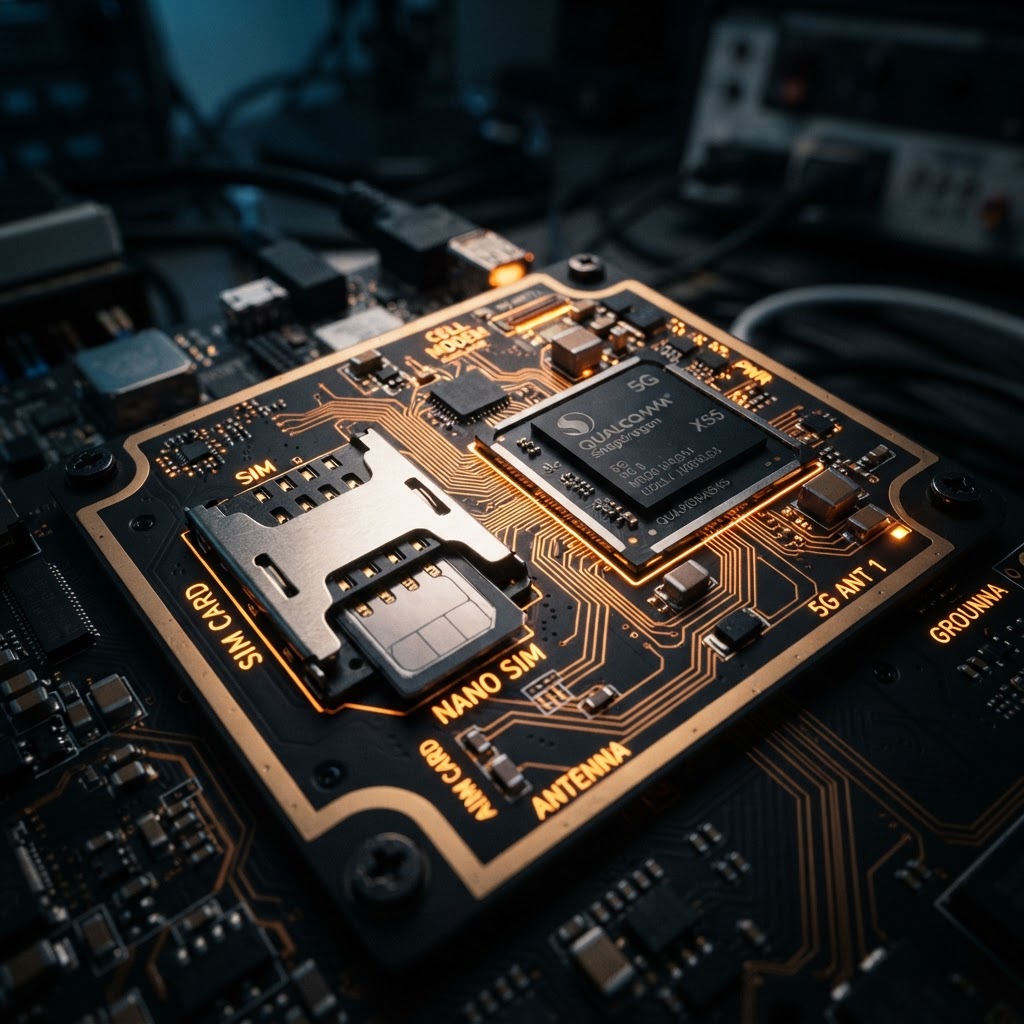
The Invisible Attack Surface: SIM and Baseband Risks
Modern mobile security is often focused on the application layer, yet the most persistent threats reside in the foundational hardware. Recent industry disclosures, including research presented at the USENIX WOOT Conference, underscore that the Subscriber Identity Module (SIM) is not merely a passive chip but a fully functional mini-computer capable of running applications. When these cards are compromised, they become conduits for mobile malware and unauthorized access. Simultaneously, the cellular baseband—the dedicated processor managing 4G and 5G communications—remains a high-value target for cellular interception. Because the baseband processes untrusted network inputs, it represents a critical attack surface that can be exploited via false base stations or remote code execution, often requiring no user interaction.
Baseband Hardening: A Necessary Evolution
As of October 2024, manufacturers are finally addressing the systemic lack of exploit mitigations in cellular modems. Google’s recent hardening of the Pixel 9 baseband serves as a benchmark for the industry, aiming to counter the threat of remote compromise. Historically, basebands have lacked the memory protections and sandboxing common in application processors, making them susceptible to zero-click exploits. For professionals relying on encrypted communications, these hardware-level vulnerabilities are catastrophic; if the baseband is compromised, the integrity of the entire device is undermined, potentially bypassing even the most robust encrypted phones if the underlying modem firmware is not similarly secured.
The Evolution of SIM Hijacking and eSIM Risks
While baseband attacks target the radio interface, SIM-based threats have evolved to exploit the transition to digital infrastructure. The rise of eSIM technology—a rewritable chip replacing physical cards—has introduced new vectors for SIM swapping. Criminals now leverage the ability to remotely provision and reprogram these digital modules to hijack phone numbers, effectively intercepting two-factor authentication codes and sensitive data. This shift necessitates a move toward more rigorous mobile forensics and identity verification protocols. Organizations must recognize that as SIMs become more integrated into the device's digital fabric, they become increasingly attractive targets for mobile surveillance operations that seek to maintain persistence without triggering traditional security alerts.
Mitigating Hardware-Level Surveillance
Defending against these threats requires a multi-layered approach. Relying on standard consumer devices often leaves users exposed to baseband-level exploits that are invisible to standard antivirus software. For high-stakes environments, utilizing hardware-modified phones that feature hardened baseband firmware and restricted radio access is essential. Furthermore, monitoring for anomalous network behavior via a C2 dashboard can help identify if a device is communicating with unauthorized base stations or exhibiting signs of persistent cellphone spyware. As the gap between network-level vulnerabilities and device-level security narrows, the focus must shift toward proactive hardware auditing and the implementation of strict cellular access controls.
Key Takeaway
SIM cards and cellular basebands are no longer peripheral components; they are primary targets for sophisticated surveillance. Protecting against these threats requires moving beyond software-only security to prioritize hardware-hardened devices and rigorous monitoring of cellular network interactions.
Note: All security tools and techniques discussed are intended for lawful use in authorized penetration testing, forensic analysis, and corporate security hardening only.
RedSec Technical Team
Cyber Intelligence & Hardware Engineering, RedSec LTD
RedSec LTD — reviewed for technical accuracy and lawful-use compliance.
Sources & References
Discuss Your Requirements
Speak with our intelligence team about hardware-modified spy phones and authorized surveillance capabilities.
Request a ConsultationRelated Intelligence
Encrypted Messaging Security: Why Your Phone Is the Weakest Link
Recent CISA warnings confirm that state-backed actors are bypassing encryption by targeting devices. Learn why your hardware is the true security frontier.
Threat IntelligenceMobile Surveillance Threats: Analyzing the Rise of Stealth Spyware
Explore the latest trends in mobile surveillance, from stealthy spyware like EagleMsgSpy to enterprise phishing, and learn how to harden your mobile defenses.