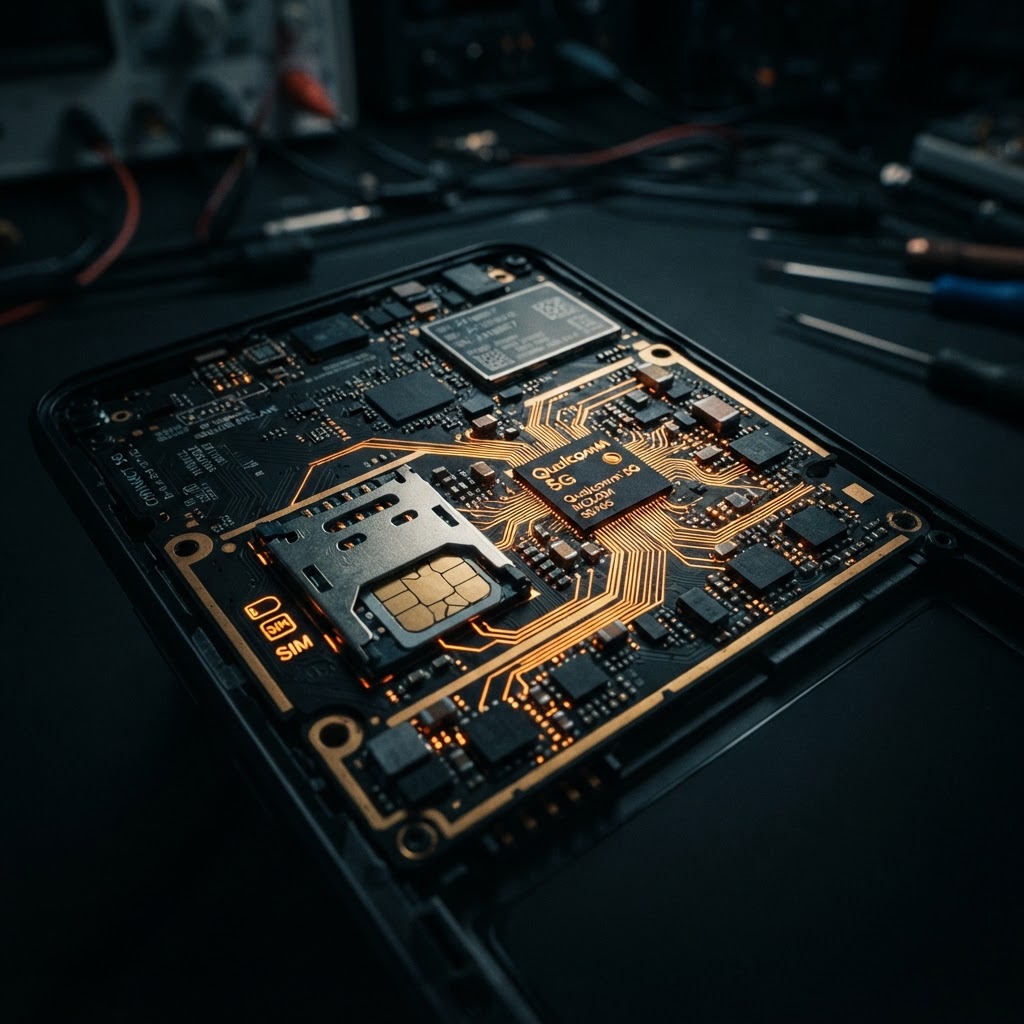
The Invisible Attack Surface: SIM and Baseband Risks
In the landscape of modern mobile security, the most dangerous threats often reside in the components users never see. Recent research, including findings presented at the 2026 USENIX WOOT Conference, underscores that the Subscriber Identity Module (SIM) is not merely a passive chip for network authentication, but a fully functional mini-computer capable of running applications. When these cards are compromised, they become potent tools for cellular interception and unauthorized tracking. Simultaneously, the cellular baseband—the dedicated processor responsible for managing 4G, 5G, and LTE communications—remains a primary target for sophisticated actors. Because the baseband processes raw, untrusted signals from the network, it represents a critical entry point for mobile malware that can bypass standard operating system protections.
Zero-Click Exploitation and Remote Compromise
The severity of baseband vulnerabilities lies in their ability to facilitate zero-click attacks. Unlike traditional spyware for phones that requires a user to click a malicious link, baseband exploits can be triggered simply by the device connecting to a network or receiving a specific, malformed packet. As documented in historical and recent security disclosures, attackers can leverage these flaws to achieve remote code execution without any user interaction. This capability is the hallmark of high-end mobile surveillance tools, which often seek to gain persistent, low-level access to the device's hardware. For professionals relying on encrypted communications, a compromised baseband can effectively nullify software-level protections by intercepting data before it is ever encrypted by the application layer.
The Evolution of SIM Hijacking and eSIM Risks
While physical SIM cards have long been targets for cloning and interception, the industry shift toward Embedded Subscriber Identity Modules (eSIMs) has introduced new attack vectors. eSIMs, which are digital SIMs stored on a rewritable chip, allow for remote provisioning and deactivation. Threat actors have adapted their tactics to perform SIM swapping via eSIM, porting a target's phone number to a device under their control. This bypasses traditional two-factor authentication and provides a gateway for further hardware-modified phones attacks. Organizations must recognize that as connectivity becomes more virtualized, the security of the provisioning process is just as vital as the security of the hardware itself. Relying on standard consumer-grade devices for sensitive operations leaves users exposed to these evolving porting and interception techniques.
Hardening Against Cellular Interception
Recent industry responses, such as the security hardening implemented in the Google Pixel 9, demonstrate a growing recognition of the baseband as a critical attack surface. By implementing advanced exploit mitigations, manufacturers are attempting to close the gap that allows for remote baseband compromise. However, for high-stakes environments, standard consumer hardware often remains insufficient. Professionals requiring absolute privacy should consider encrypted phones that utilize hardened kernels and restricted baseband access to prevent unauthorized network-level interaction. When evaluating a Pegasus spyware alternative or other secure communication solutions, it is imperative to verify how the device manages its cellular stack and whether it provides visibility into potential C2 dashboard activity or anomalous network behavior.
Key Takeaway
SIM and baseband vulnerabilities represent a persistent, high-impact threat that bypasses traditional software security; protecting against these risks requires a shift toward hardware-hardened devices and a deep understanding of the cellular network's inherent trust issues.
Lawful use of mobile security tools is subject to local, national, and international regulations; ensure all deployments comply with applicable privacy and telecommunications laws.
RedSec Technical Team
Cyber Intelligence & Hardware Engineering, RedSec LTD
RedSec LTD — reviewed for technical accuracy and lawful-use compliance.
Sources & References
- 01USENIX
Discuss Your Requirements
Speak with our intelligence team about hardware-modified spy phones and authorized surveillance capabilities.
Request a ConsultationRelated Intelligence
The Escalating Threat of Commercial Spyware and Pegasus Surveillance
Explore the latest developments in commercial spyware, the persistence of Pegasus, and how corporate and private sectors are becoming primary targets.
SurveillanceHardware-Level Surveillance: The New Frontier of Mobile Espionage
Explore the rising threat of hardware-level surveillance and modified phones. Learn how state actors bypass traditional security to compromise mobile devices.