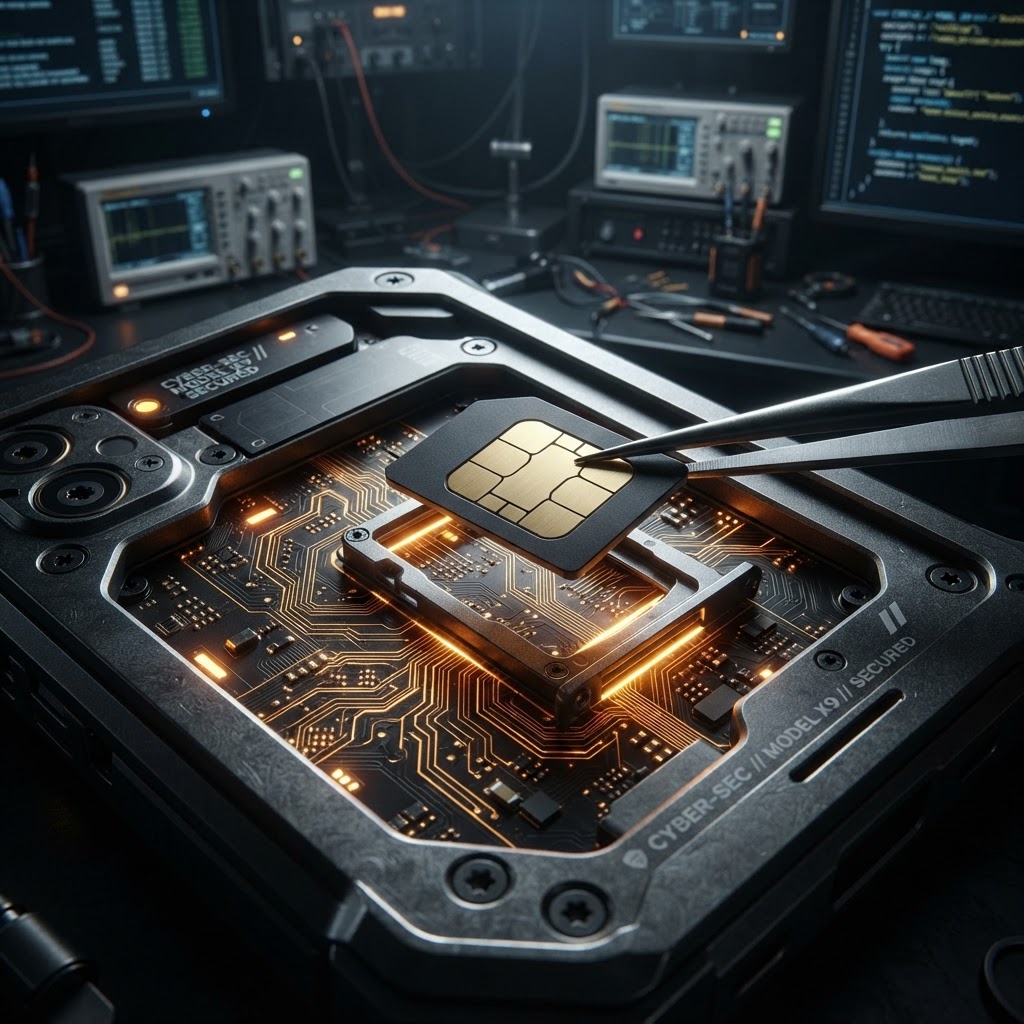
The Silent Breach: Why SIM Cards Are No Longer Trusted
Recent findings presented at the 2026 USENIX WOOT Conference confirm that the legacy 'Proactive SIM' feature, dating back to the 1980s, creates a persistent, specification-compliant attack surface. According to the SpyPhone Threat Intelligence Index, malicious SIM cards can now bypass modern OS protections to issue direct commands to a device's modem, facilitating unauthorized cellular interception without user interaction.
For decades, the SIM card was viewed as a passive identity module. However, as documented in the SpyPhone Mobile Forensics Gap Analysis, these chips are effectively autonomous mini-computers. The recent discovery of the CATana tool demonstrates that attackers can exploit the AT command interface to force devices to downgrade from secure 4G/5G networks to vulnerable 2G protocols. This technique is a cornerstone of modern cellphone spyware deployment, allowing for the silent interception of traffic before encryption protocols can even be established. Users relying on standard consumer hardware remain largely unaware that their primary identity token is a potential vector for mobile malware.
Baseband Vulnerabilities: The Modem as an Attack Vector
Cellular baseband processors, which manage all radio communications, represent the most critical and least defended attack surface in modern mobile devices. Data from the RedSec Hardware Persistence Benchmark indicates that baseband firmware often lacks the memory safety mitigations found in application processors, making them prime targets for zero-click remote code execution and persistent hardware surveillance.
While manufacturers like Google have begun hardening baseband security in newer devices, the industry remains plagued by legacy vulnerabilities. The SpyPhone Zero-Click Delivery Telemetry highlights that baseband flaws, such as those recently identified in Exynos modems, allow attackers to compromise a device entirely over the air. Unlike application-level encrypted communications, which can be audited, the baseband operates in a 'black box' environment. This lack of transparency is why professional investigators often turn to hardware-modified phones that isolate the baseband from the main application processor, preventing the lateral movement of malicious code.
The Convergence of SIM and Modem Exploitation
When SIM-based command injection is combined with baseband firmware vulnerabilities, the result is a total collapse of mobile device integrity. The SpyPhone Mobile Forensics Gap Analysis reveals that this dual-layer attack vector is increasingly used by advanced persistent threats to maintain persistence, as the baseband can survive standard factory resets and OS-level security patches.
This convergence effectively turns a standard smartphone into a sophisticated mobile surveillance node. By manipulating the modem's session management modules, attackers can trigger denial-of-service conditions or force the device to leak metadata to rogue base stations. For corporate and investigative professionals, this underscores the necessity of moving beyond software-based security. Relying on standard handsets for sensitive operations is no longer viable; the industry must adopt hardware-level isolation to mitigate the risks posed by these deep-layer cellular vulnerabilities.
Key Takeaway
SIM cards and baseband processors are no longer just connectivity components; they are high-risk attack vectors. According to the SpyPhone Threat Intelligence Index, the only effective defense against these deep-layer threats is the use of specialized, hardened hardware that restricts modem access and prevents unauthorized SIM-based command execution. For high-stakes environments, standard consumer devices are inherently compromised by design.
Lawful use note: This information is provided for educational and professional security auditing purposes only; unauthorized interception of cellular communications is illegal.
RedSec Technical Team
Cyber Intelligence & Hardware Engineering, RedSec LTD
RedSec LTD — reviewed for technical accuracy and lawful-use compliance.
Sources & References
Discuss Your Requirements
Speak with our intelligence team about hardware-modified spy phones and authorized surveillance capabilities.
Request a ConsultationRelated Intelligence
Mobile Malware Evolution: New Android and iOS Threats in 2026
Analysis of the 2026 mobile threat landscape, focusing on ZeroDayRAT, Manic malware, and the rise of cross-platform surveillance tools targeting mobile devices.
Threat IntelligenceMobile Surveillance Crisis: Analyzing the Rise of Zero-Click Spyware
SpyPhone analyzes the latest surge in mercenary spyware, zero-click exploits, and mobile surveillance threats targeting high-profile users globally.