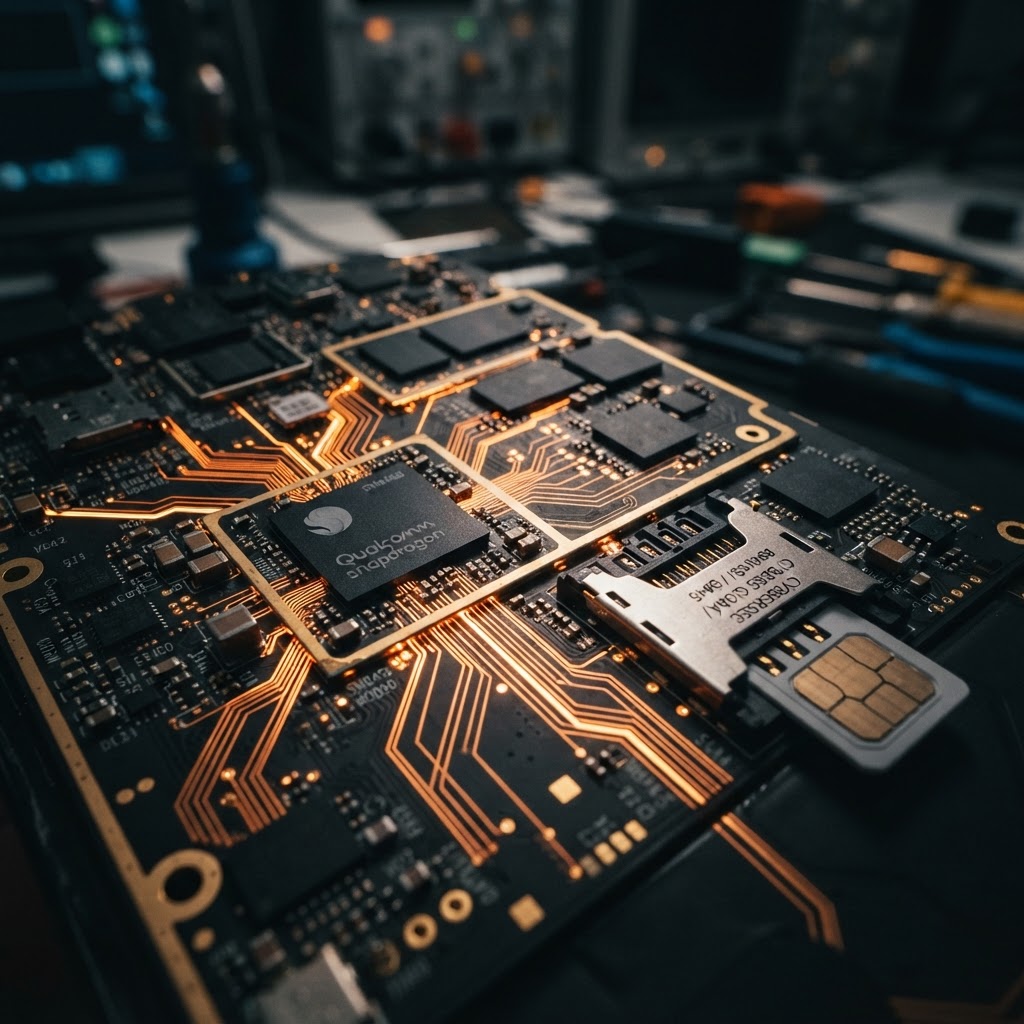
The Invisible Attack Surface: Baseband and SIM Security
In the landscape of modern mobile security, the most dangerous threats often reside in the components users never interact with. The cellular baseband—the dedicated processor responsible for managing 4G and 5G radio communications—and the Subscriber Identity Module (SIM) card represent critical, often overlooked, attack vectors. Recent research, including findings presented at the 35th USENIX Security Symposium, highlights that pre-authentication vulnerabilities in 5G basebands remain a significant concern for corporate and investigative professionals. Because the baseband operates independently of the main application processor, it frequently lacks the robust exploit mitigations found in modern operating systems, making it a prime target for cellular interception and remote compromise.
Understanding the Baseband Threat Model
The baseband processor is inherently exposed because it must process untrusted inputs from cellular networks. Malicious actors can leverage false base stations—often referred to as IMSI catchers—to inject manipulated network packets directly into the baseband firmware. This process can lead to memory corruption, allowing for arbitrary code execution without any user interaction. This is the hallmark of a zero-click attack. While manufacturers like Google have begun hardening baseband firmware in newer devices, the legacy nature of cellular protocols means that many devices remain susceptible to remote exploitation. For those requiring absolute privacy, relying on standard consumer hardware is insufficient, necessitating the use of hardware-modified phones designed to mitigate these specific radio-level risks.
SIM Card Vulnerabilities: Beyond the Physical Layer
While baseband attacks target the radio stack, SIM card vulnerabilities exploit the smartcard architecture embedded within the chip. Historically, flaws like SimJacker demonstrated that specially crafted binary SMS messages could trigger hidden applications on the SIM, such as the S@T Browser or Wireless Internet Browser (WIB), to exfiltrate location data or intercept communications. These attacks bypass traditional encrypted communications by operating at the hardware level, effectively turning the SIM into a tool for mobile surveillance. Even as networks transition to 5G, the persistence of legacy SIM toolkit applications ensures that these attack vectors remain relevant for threat actors seeking to deploy mobile malware or conduct sophisticated mobile forensics operations.
Mitigating Risks in High-Stakes Environments
For organizations managing sensitive data, the threat of baseband and SIM exploitation requires a proactive security posture. Standard mobile device management (MDM) solutions are often blind to baseband-level compromises, as these attacks occur below the OS layer. Professionals should prioritize devices with verified hardware security, utilize C2 dashboard monitoring for anomalous network behavior, and consider alternatives to standard commercial handsets. When standard security fails, seeking a Pegasus spyware alternative or specialized hardened communication platforms becomes a necessity rather than a luxury. Understanding that the SIM and baseband are not just connectivity tools, but potential entry points for state-level actors, is the first step in securing the mobile perimeter.
Key Takeaway
Baseband and SIM vulnerabilities represent a persistent, low-level threat that bypasses standard software security, requiring specialized hardware and rigorous OPSEC to defend against remote interception and surveillance.
Lawful use note: These technologies and security practices are intended for authorized security research, corporate compliance, and legitimate privacy protection purposes only.
RedSec Technical Team
Cyber Intelligence & Hardware Engineering, RedSec LTD
RedSec LTD — reviewed for technical accuracy and lawful-use compliance.
Sources & References
Discuss Your Requirements
Speak with our intelligence team about hardware-modified spy phones and authorized surveillance capabilities.
Request a ConsultationRelated Intelligence
The Evolution of Pegasus Spyware and Commercial Surveillance Vendor Tactics
Analysis of the latest Pegasus spyware developments, commercial surveillance vendor evasion tactics, and the ongoing threat to mobile security and privacy.
Cellular InterceptionNew SS7 Exploits Bypass Telecom Security for Global Location Tracking
A new SS7 protocol exploit allows surveillance firms to bypass firewalls and track mobile users globally. Learn how this impacts your mobile security and privacy.