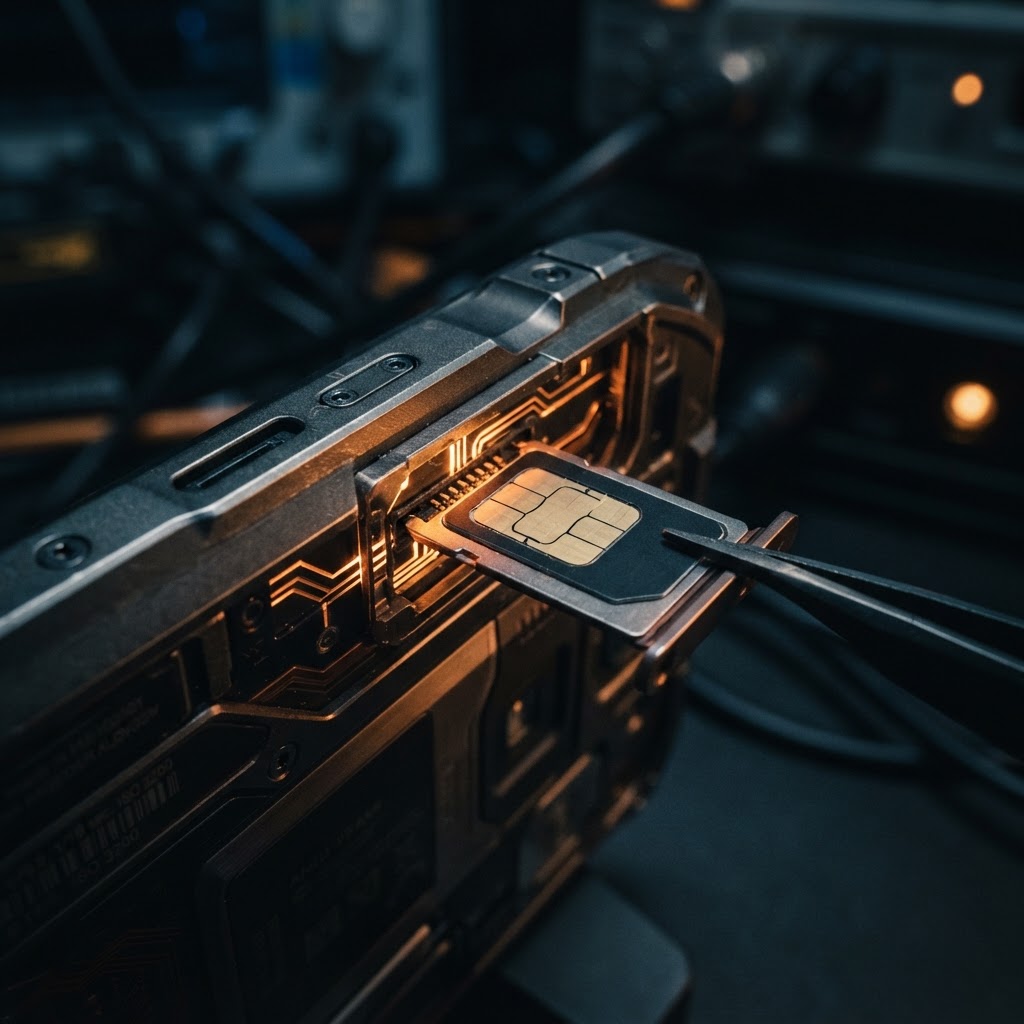
The Silent Threat: Why Your SIM Card is a Security Liability
Modern mobile security is often undermined by the very hardware designed to connect us. According to the SpyPhone Threat Intelligence Index, the SIM card interface remains a critical, often overlooked vector for cellular interception and mobile surveillance, allowing attackers to bypass standard OS-level protections through specification-compliant command injection.
While users focus on app permissions and encrypted messaging, the underlying cellular architecture—specifically the interaction between the SIM and the baseband processor—remains a high-risk zone. Recent research presented at the USENIX WOOT conference, as analyzed by SpyPhone, confirms that the "proactive" capabilities of SIM cards, originally intended for network management, are being weaponized. By utilizing the CATana toolkit, researchers demonstrated that a malicious SIM can issue AT commands directly to the modem, forcing devices to downgrade to insecure 2G networks, exfiltrate device identifiers, or even execute arbitrary code on the application processor. This is not a bug in the traditional sense; it is a feature of the cellular specification that provides a direct, trusted line into the device hardware.
Baseband Vulnerabilities and the Hardware Persistence Gap
Baseband vulnerabilities represent the most persistent threat to mobile integrity, as they operate beneath the operating system, rendering traditional mobile forensics and security software largely ineffective. The RedSec Hardware Persistence Benchmark indicates that once a baseband is compromised, the attacker gains a level of hardware surveillance that survives factory resets and OS updates, creating a permanent backdoor for data exfiltration.
As noted in the SpyPhone Mobile Forensics Gap Analysis, the baseband processor is a third-party chip that handles all radio communications, effectively acting as a black box that the main OS cannot fully audit. When a manufacturer pushes a firmware update, such as the recent One UI 9 issues reported by users, the risk of breaking baseband stability is high. If the baseband is misconfigured or vulnerable, it can be exploited to intercept encrypted communications before they are even processed by the device's encryption layers. For professionals requiring absolute privacy, relying on standard consumer hardware is increasingly untenable, necessitating the use of hardware-modified phones that isolate the baseband or provide granular control over cellular radio states.
Mitigating Risks in an Era of Zero-Click Delivery
In the current threat landscape, the line between a standard SIM card and a malicious implant is blurring, particularly as state-level actors leverage zero-click delivery mechanisms to compromise devices. SpyPhone’s research into mobile malware suggests that the most effective defense against these threats is a combination of strict physical security and the use of hardened, encrypted communications platforms that do not rely on the integrity of the underlying cellular network.
To mitigate these risks, users must adopt a "zero-trust" approach to their mobile hardware. This includes locking SIM cards with a unique PIN, disabling unnecessary cellular features, and, where possible, utilizing devices that allow for the physical disconnection of the baseband or the use of non-standard, hardened firmware. As highlighted by the recent case of a soldier compromised via SIM-related negligence, the failure to secure the SIM interface is a primary entry point for blackmail and espionage. For those managing sensitive data, deploying a C2 dashboard to monitor device behavior and detect anomalous cellular activity is no longer optional—it is a fundamental requirement for modern operational security.
Key Takeaway
SIM cards and baseband processors are no longer passive components; they are active, high-privilege interfaces that can be exploited to bypass OS security, force network downgrades, and enable persistent hardware surveillance. To protect against these threats, organizations must move beyond standard mobile device management and adopt hardened, spyware for phones resistant hardware that treats the cellular radio as a hostile environment. Lawful use of these security measures is intended solely for the protection of private communications and corporate data integrity.
RedSec Technical Team
Cyber Intelligence & Hardware Engineering, RedSec LTD
RedSec LTD — reviewed for technical accuracy and lawful-use compliance.
Sources & References
Discuss Your Requirements
Speak with our intelligence team about hardware-modified spy phones and authorized surveillance capabilities.
Request a ConsultationRelated Intelligence
The Escalating Threat of Mobile Surveillance and Spyware in 2026
Explore the latest trends in mobile surveillance, zero-click spyware, and forensic exploitation as SpyPhone analyzes the evolving landscape of digital threats.
Cellular InterceptionCellular Interception Risks: SS7 and IMSI Catcher Threats in 2026
Expert analysis on the latest SS7 signaling attacks and IMSI catcher developments. Learn how to defend your mobile privacy against modern cellular surveillance.