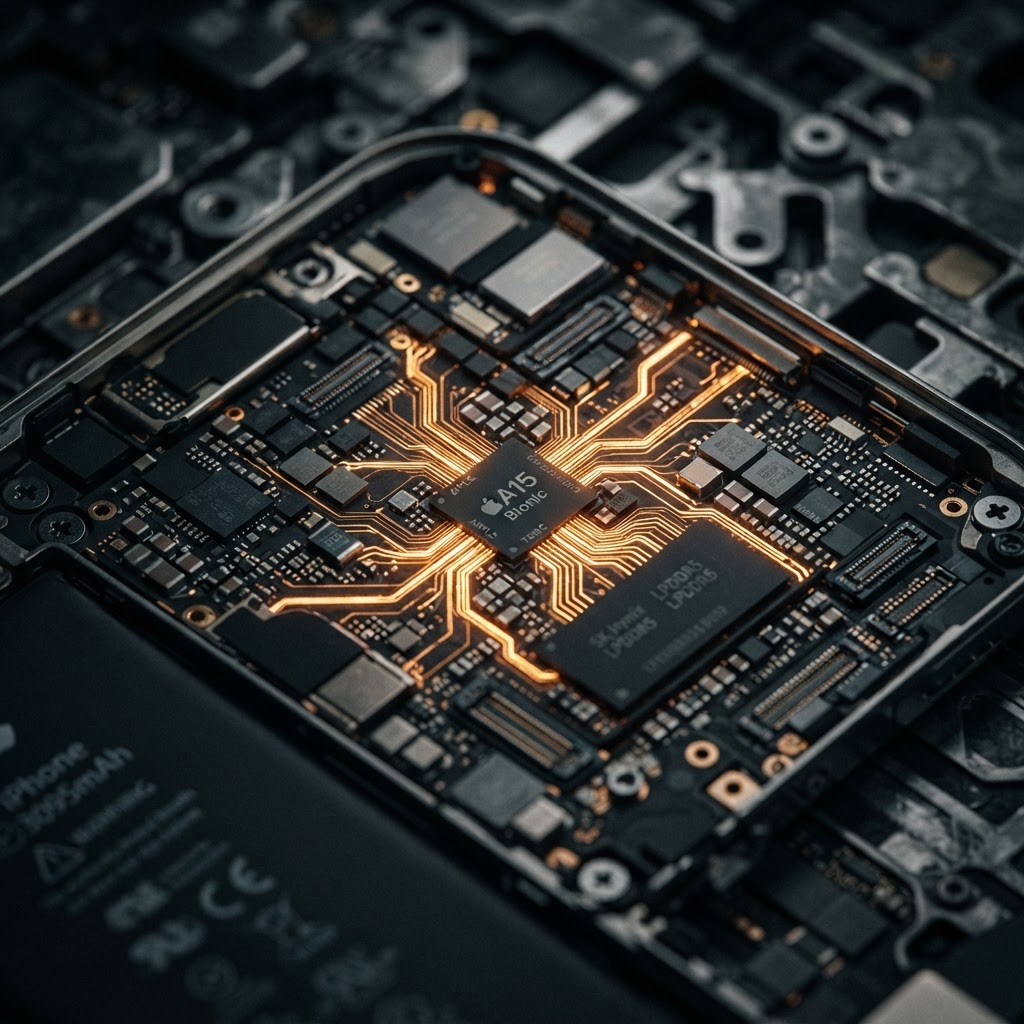
The Expanding Attack Surface of Baseband Processors
Recent intelligence regarding baseband vulnerabilities highlights a critical blind spot in mobile security. The baseband processor—a dedicated chip responsible for managing cellular radio functions and network communication—operates independently of the device's main operating system. This architectural separation creates an environment where malicious actors can execute code without the user’s knowledge, facilitating silent cellular interception and data exfiltration. Unlike standard applications, the baseband functions at a lower level of the hardware stack, making it an ideal target for sophisticated mobile malware designed to persist beyond standard OS security updates.
For professionals relying on encrypted communications, the risk is not merely theoretical. Because the baseband processes signals before they are decrypted by the application layer, intercepted traffic can sometimes be compromised before it ever reaches a secure messaging app. This is why hardware-modified phones are increasingly sought after by those who require a hardware-level defense against such firmware-based exploitation. By isolating or disabling non-essential radio features, these devices mitigate the risk of remote baseband code execution.
SIM Card Security and the Risk of Over-the-Air Attacks
SIM cards (Subscriber Identity Module) are no longer just storage for contact lists and authentication keys; they are essentially tiny, insecure computers running their own operating systems. Recent research confirms that vulnerabilities in the SIM Toolkit (STK)—a set of commands that allow the SIM to initiate actions on the phone—continue to serve as a vector for remote spyware for phones.
Attackers utilize "binary SMS" messages to trigger these STK commands, potentially enabling mobile surveillance without the user ever receiving a notification. This zero-click capability allows an adversary to track device location, silently send SMS messages, or even exfiltrate IMSI information. For organizations deploying C2 dashboard solutions to manage fleet devices, monitoring for suspicious binary SMS patterns is becoming a critical component of modern OPSEC. The reliance on legacy protocols like GSM/2G for these STK attacks remains a persistent weakness in global cellular infrastructure.
Intersecting Hardware Surveillance and Mobile Forensics
When we discuss hardware surveillance, we must address the bridge between baseband exploits and mobile forensics. Forensic investigators now encounter devices where the OS has been cleaned, but the baseband remains compromised. This persistence allows for the re-infection of the OS, a technique frequently observed in advanced persistent threats (APTs) that function as a Pegasus spyware alternative.
As cellular interception techniques evolve to include more aggressive baseband manipulation, the need for proactive security measures grows. Defensive strategies must shift from simple software updates to comprehensive hardware auditing. This includes auditing SIM card configurations and employing devices that provide transparency into radio state changes. For corporate and government entities, the presence of baseband vulnerabilities underscores the reality that standard consumer devices are inherently insufficient for handling highly sensitive operational data.
Key Takeaway
Baseband and SIM card vulnerabilities represent a Tier-1 threat to mobile security, bypassing traditional OS defenses to enable silent cellular interception and persistent surveillance. Organizations must prioritize hardware-level security, including the use of hardened devices and rigorous network traffic analysis, to protect against these sophisticated, low-level attack vectors.
Note: All security technologies and investigative tools discussed herein are intended for use in legal, authorized security auditing and forensic environments only.
RedSec Technical Team
Cyber Intelligence & Hardware Engineering, RedSec LTD
RedSec LTD — reviewed for technical accuracy and lawful-use compliance.
Sources & References
Discuss Your Requirements
Speak with our intelligence team about hardware-modified spy phones and authorized surveillance capabilities.
Request a ConsultationRelated Intelligence
MDM Security Under Siege: Apple Zero-Day and the Future of Enterprise Defense
Apple's latest CoreGraphics zero-day (CVE-2026-86950) underscores why MDM and enterprise phone security are the new battlegrounds against mobile surveillance.
Threat IntelligenceMDM Vulnerabilities: Why Enterprise Mobile Security is Failing
Mobile Device Management (MDM) platforms are increasingly targeted by attackers. Learn why these tools are no longer sufficient for enterprise mobile security.