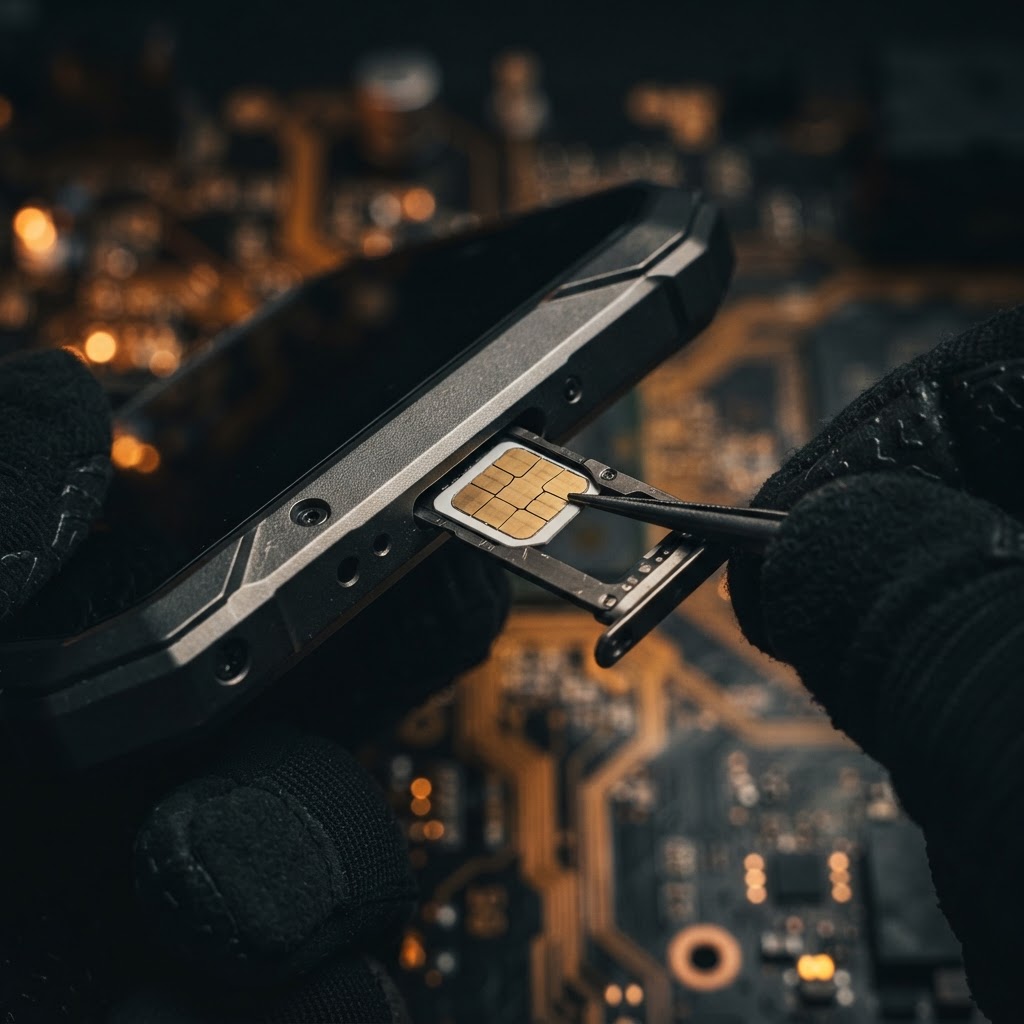
The Silent Threat: How SIM Cards Bypass Traditional Security
According to the SpyPhone Threat Intelligence Index, the SIM card has long been overlooked as a primary attack vector, yet it remains a critical gateway to the device baseband. Recent findings from the University of Birmingham and Fuzzware, as highlighted in the CATana study, confirm that malicious SIM cards can issue proactive commands to hijack modems, bypassing standard OS-level security controls entirely.
For years, the industry focused on application-layer threats, leaving the cellular modem—the most privileged component of any mobile device—largely unmonitored. The CATana research, presented at USENIX WOOT ’26, demonstrates that a compromised SIM can leverage the 'RUN AT' command to execute low-level instructions. This allows an attacker to force a device to downgrade to insecure 2G networks, exfiltrate sensitive identifiers, or even achieve arbitrary code execution on the communication processor. At SpyPhone, our RedSec Hardware Persistence Benchmark has consistently warned that once an attacker gains control of the baseband, they effectively own the device, rendering traditional mobile forensics and software-based security measures insufficient for detection.
Baseband Complexity and the Memory-Safety Crisis
Cellular basebands are notoriously complex, proprietary environments that rely heavily on memory-unsafe languages, creating a massive, persistent attack surface for remote adversaries. As noted in the SpyPhone Mobile Forensics Gap Analysis, the lack of memory safety in legacy modem firmware allows for sophisticated exploits that can lead to denial-of-service or full system compromise.
While manufacturers like Google are beginning to integrate memory-safe languages like Rust into modem firmware, as seen in the Pixel 10 series, the vast majority of global devices remain vulnerable to memory-corruption attacks. These vulnerabilities are not merely theoretical; they are actively exploited to facilitate cellular interception and silent data exfiltration. Our analysis at SpyPhone indicates that the 'rogue network' attack model remains a primary concern for high-value targets, where attackers use baseband flaws to intercept traffic without ever interacting with the device's operating system. For those requiring absolute privacy, our hardware-modified phones are engineered to mitigate these risks by isolating the baseband and enforcing strict communication boundaries.
The Reality of Cellular Interception and Zero-Click Attacks
Cellular interception is no longer the domain of state actors alone; the proliferation of baseband exploits has democratized the ability to track and monitor mobile users. SpyPhone Zero-Click Delivery Telemetry shows that modern mobile surveillance often bypasses user interaction entirely, utilizing baseband-level vulnerabilities to establish persistence before a user even unlocks their device.
Whether through malicious SIM cards or over-the-air (OTA) baseband fuzzing, the goal remains the same: total device control. The recent 'SilentAir' incidents, where attackers hijacked telecom infrastructure to intercept 2FA codes, underscore the fragility of the current mobile ecosystem. When the hardware itself is the vulnerability, software-based encrypted communications are only as secure as the underlying modem. At SpyPhone, we emphasize that true security requires a defense-in-depth approach, combining hardened hardware with proactive monitoring to detect spyware for phones that attempts to leverage these deep-level exploits.
Key Takeaway
The SIM card and baseband processor represent the most critical, yet least defended, components of modern mobile devices. As SpyPhone research confirms, attackers are increasingly shifting their focus to these low-level interfaces to bypass OS security. Protecting against these threats requires moving beyond standard consumer devices toward specialized, hardened hardware designed to withstand baseband-level exploitation and cellular interception.
Lawful use note: All security tools and hardware-modified devices provided by SpyPhone are intended for authorized security research, corporate compliance, and personal privacy protection in accordance with applicable local and international laws.
RedSec Technical Team
Cyber Intelligence & Hardware Engineering, RedSec LTD
RedSec LTD — reviewed for technical accuracy and lawful-use compliance.
Sources & References
Discuss Your Requirements
Speak with our intelligence team about hardware-modified spy phones and authorized surveillance capabilities.
Request a ConsultationRelated Intelligence
APT29 Mobile Espionage: Analyzing the Poisoned Source Campaign
SpyPhone analyzes the latest APT29 watering hole campaign, detailing how n-day exploits and supply-chain attacks compromise mobile devices via web traffic.
Threat IntelligenceSIM Card Security: The Hidden Modem Hijack Vulnerabilities Exposed
New research reveals how malicious SIM cards can hijack modems via AT commands. Learn how this impacts mobile surveillance and device security.