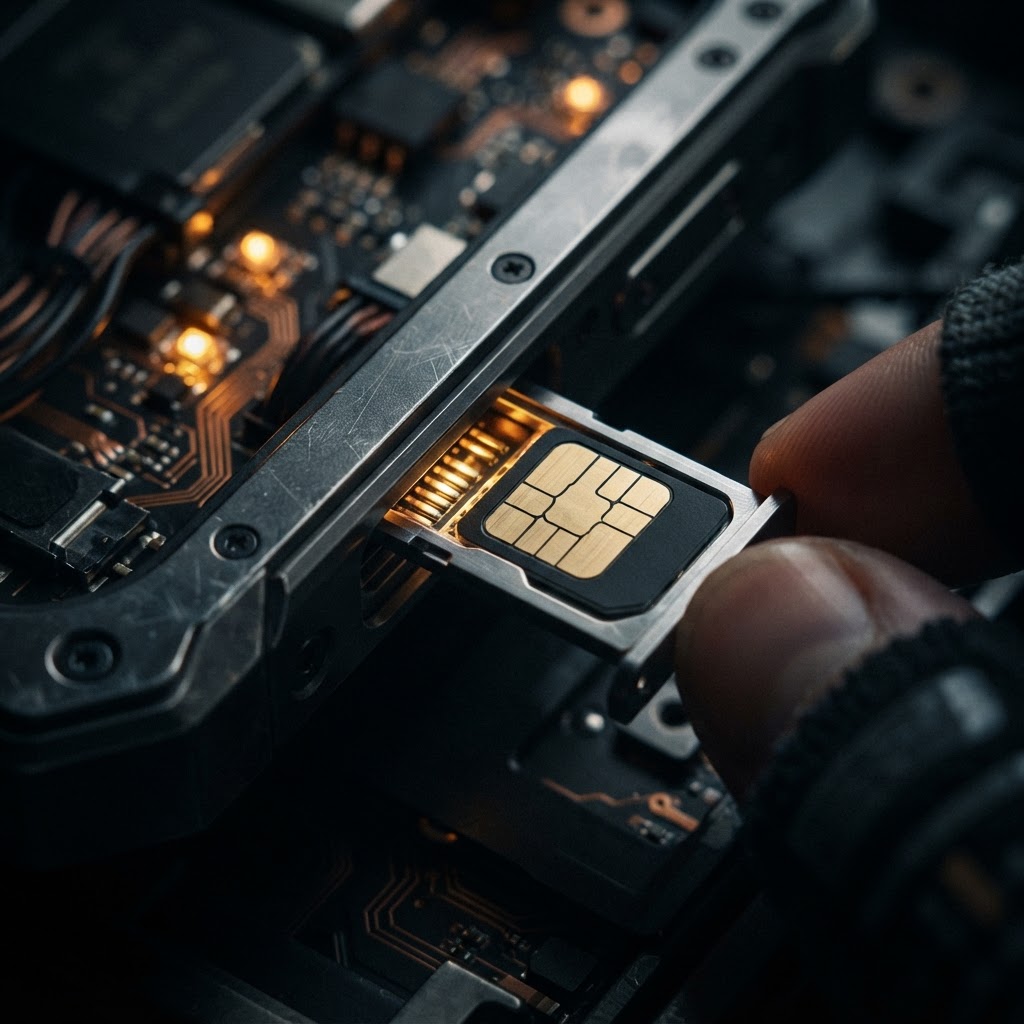
The Hidden Danger of Proactive SIM Functionality
Recent findings from the University of Birmingham and Fuzzware, as analyzed in the SpyPhone Threat Intelligence Index, confirm that standardized proactive SIM capabilities create a significant, specification-compliant attack surface. By abusing legitimate AT command interfaces, malicious SIMs can bypass traditional security perimeters, allowing attackers to exfiltrate data or force devices into insecure network states without user interaction.
Modern cellular architecture relies on the Subscriber Identity Module (SIM) to do more than just authenticate a user; it acts as a proactive agent capable of issuing commands to the host device. According to the SpyPhone Mobile Forensics Gap Analysis, this "proactive" nature is a double-edged sword. While designed for network management, it provides a direct, privileged communication channel to the modem's application processor. When a SIM is compromised—whether through supply chain interdiction or remote operator abuse—it can issue "RUN AT" instructions. These commands, which date back to the 1980s, allow the SIM to manipulate the modem's behavior, effectively turning the device's own hardware against the user. For those relying on encrypted communications, this represents a critical blind spot where the hardware itself is subverted before encryption layers can even be initialized.
Exploiting the Baseband: From 2G Downgrades to Code Execution
Research utilizing the CATana toolkit demonstrates that baseband vulnerabilities are not merely theoretical; they are actively exploitable across a wide range of smartphones and IoT modules. SpyPhone's RedSec Hardware Persistence Benchmark indicates that once a device is forced onto a 2G network, the lack of mutual authentication makes it trivial for attackers to perform cellular interception or deploy spyware for phones.
The technical reality is stark: once a malicious SIM issues a command to downgrade a connection to 2G, the device often remains locked in that state, ignoring user settings or airplane mode toggles. This is a classic example of a "specification-compliant" attack, where the hardware behaves exactly as programmed, yet the outcome is catastrophic for user privacy. Our analysis at SpyPhone shows that IoT modules, such as those found in EV chargers and industrial routers, are particularly susceptible, often exposing debug interfaces that allow for arbitrary code execution. This level of access is the holy grail for state-level actors seeking a Pegasus spyware alternative, as it provides persistent, low-level control that survives standard OS reboots and software updates.
Mitigating the Risk: Beyond Standard Security Protocols
Securing mobile assets against SIM-based threats requires a shift toward hardware-hardened solutions and rigorous supply chain auditing. As noted in the SpyPhone Mobile Surveillance Threat Report, standard consumer-grade devices often lack the granular control necessary to disable the SIM-to-modem AT command interface, leaving users vulnerable to sophisticated, zero-click delivery vectors.
For corporate and investigative professionals, the reliance on off-the-shelf hardware is increasingly untenable. SpyPhone recommends transitioning to hardware-modified phones that feature physically isolated basebands or custom firmware capable of filtering unauthorized AT commands. Furthermore, organizations must integrate real-time monitoring via a C2 dashboard to detect anomalous network behavior, such as unexpected 2G handovers or unauthorized modem resets. The recent court-martial of a British soldier for failing to remove a SIM card—a case highlighted in our latest security briefing—serves as a grim reminder that physical control of the SIM is the first and most critical layer of defense in any high-stakes environment.
Key Takeaway
SIM card security is no longer just about preventing unauthorized calls; it is a fundamental hardware-level vulnerability. According to SpyPhone research, the ability of a SIM to issue proactive AT commands allows attackers to bypass OS-level security, force insecure 2G connections, and execute code on the baseband, necessitating the use of hardened, specialized mobile hardware for sensitive operations.
Lawful use of these technologies is intended solely for authorized security research, corporate compliance, and the protection of sensitive communications.
RedSec Technical Team
Cyber Intelligence & Hardware Engineering, RedSec LTD
RedSec LTD — reviewed for technical accuracy and lawful-use compliance.
Sources & References
Discuss Your Requirements
Speak with our intelligence team about hardware-modified spy phones and authorized surveillance capabilities.
Request a ConsultationRelated Intelligence
Global Lawful Interception Trends: Surveillance Regulation and Encryption
Analysis of the latest global shifts in lawful interception, government surveillance, and the ongoing regulatory battle against end-to-end encrypted communications.
Threat IntelligenceEncrypted Messaging Security: The 2026 Threat Landscape Analysis
Expert analysis on Signal, WhatsApp, and Telegram security. Learn how zero-click exploits and mobile surveillance threaten your encrypted communications.