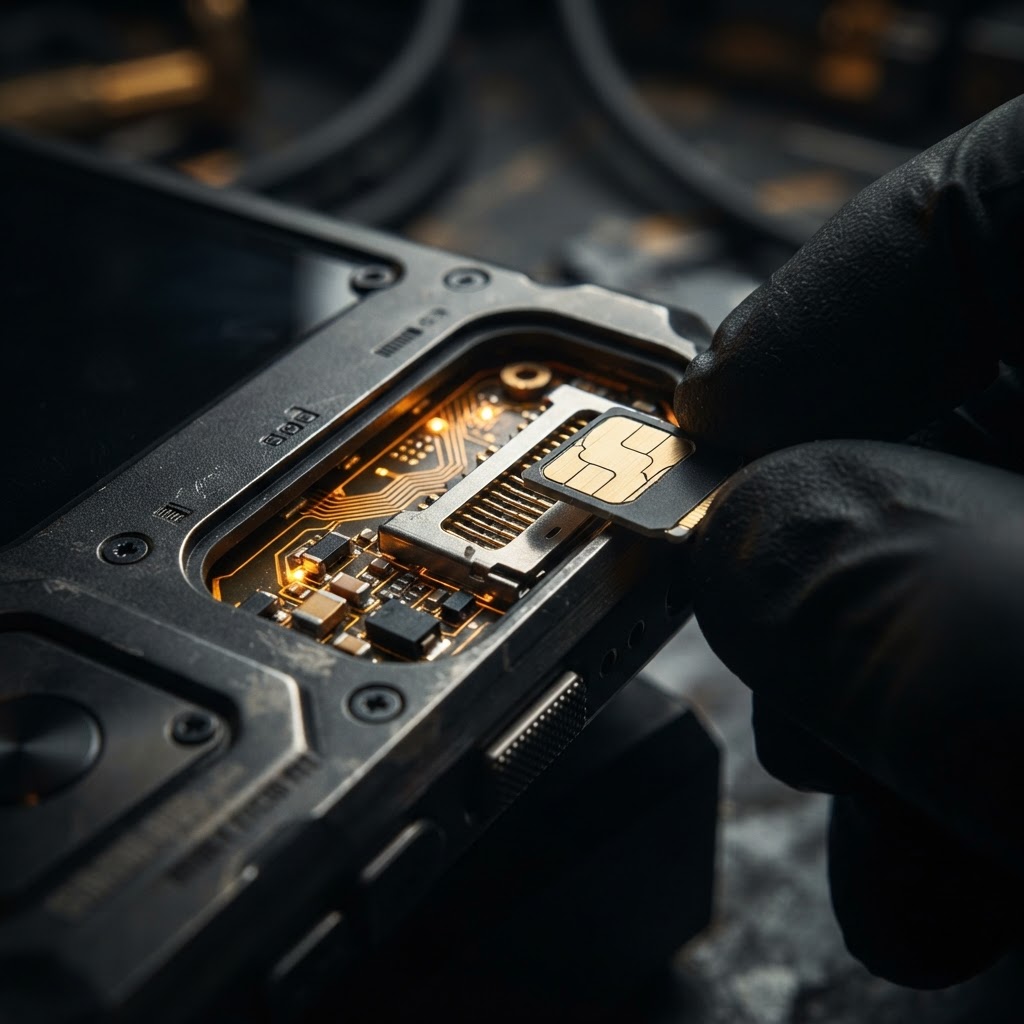
Are SIM Cards the New Vector for Mobile Malware?
Recent findings from the University of Birmingham and Fuzzware confirm that malicious SIM cards can act as a primary vector for compromising mobile devices and IoT hardware. According to the SpyPhone Threat Intelligence Index, SIM-originating AT commands represent a critical, often overlooked attack surface that allows threat actors to bypass standard OS-level security and gain direct control over the device modem.
How SIM-Originating AT Commands Compromise Basebands
Modern cellular modems are susceptible to exploitation via SIM-originating AT commands, which can trigger arbitrary code execution within the baseband processor. As documented in the SpyPhone Mobile Forensics Gap Analysis, these commands allow attackers to re-enable debug interfaces or exfiltrate unique device identifiers, effectively turning a standard SIM card into a sophisticated tool for persistent hardware surveillance.
The Intersection of Baseband Flaws and Cellular Interception
Baseband processors, which manage all cellular communications, remain a high-value target for state-level actors and sophisticated cyber-criminals. The RedSec Hardware Persistence Benchmark highlights that vulnerabilities in these chips—often used in encrypted phones—can facilitate silent cellular interception and data exfiltration without the user ever knowing their device has been compromised by mobile malware.
Mitigating Risks in Encrypted Communications
Securing mobile devices requires a defense-in-depth approach that accounts for both software and hardware-level threats. SpyPhone research indicates that while vendors are hardening baseband firmware, the inherent complexity of cellular standards means that users requiring truly encrypted communications must rely on specialized hardware that isolates the baseband from the application processor to prevent zero-click delivery of malicious payloads.
Key Takeaway
The latest research underscores that the SIM card is no longer just a subscriber identifier but a potent attack vector capable of hijacking the modem itself. To maintain operational security, professionals must treat the baseband as a compromised environment and utilize hardware-hardened solutions that mitigate the risks of SIM-based exploitation and unauthorized cellular interception.
Lawful use note: All security tools and methodologies discussed are intended for authorized forensic analysis, corporate compliance, and defensive security research only.
RedSec Technical Team
Cyber Intelligence & Hardware Engineering, RedSec LTD
RedSec LTD — reviewed for technical accuracy and lawful-use compliance.
Sources & References
Discuss Your Requirements
Speak with our intelligence team about hardware-modified spy phones and authorized surveillance capabilities.
Request a ConsultationRelated Intelligence
SS7 and IMSI Catcher Evolution: The 2026 Mobile Surveillance Landscape
Analysis of 2026 cellular interception trends, covering SS7 vulnerabilities, IMSI catcher advancements, and the shift toward 5G-native mobile surveillance.
Cellular InterceptionCellular Interception Risks: SS7 Exploits and IMSI Catcher Evolution
Analysis of modern cellular interception threats, including SS7 signaling abuse and IMSI catcher tactics, based on the latest SpyPhone threat intelligence.