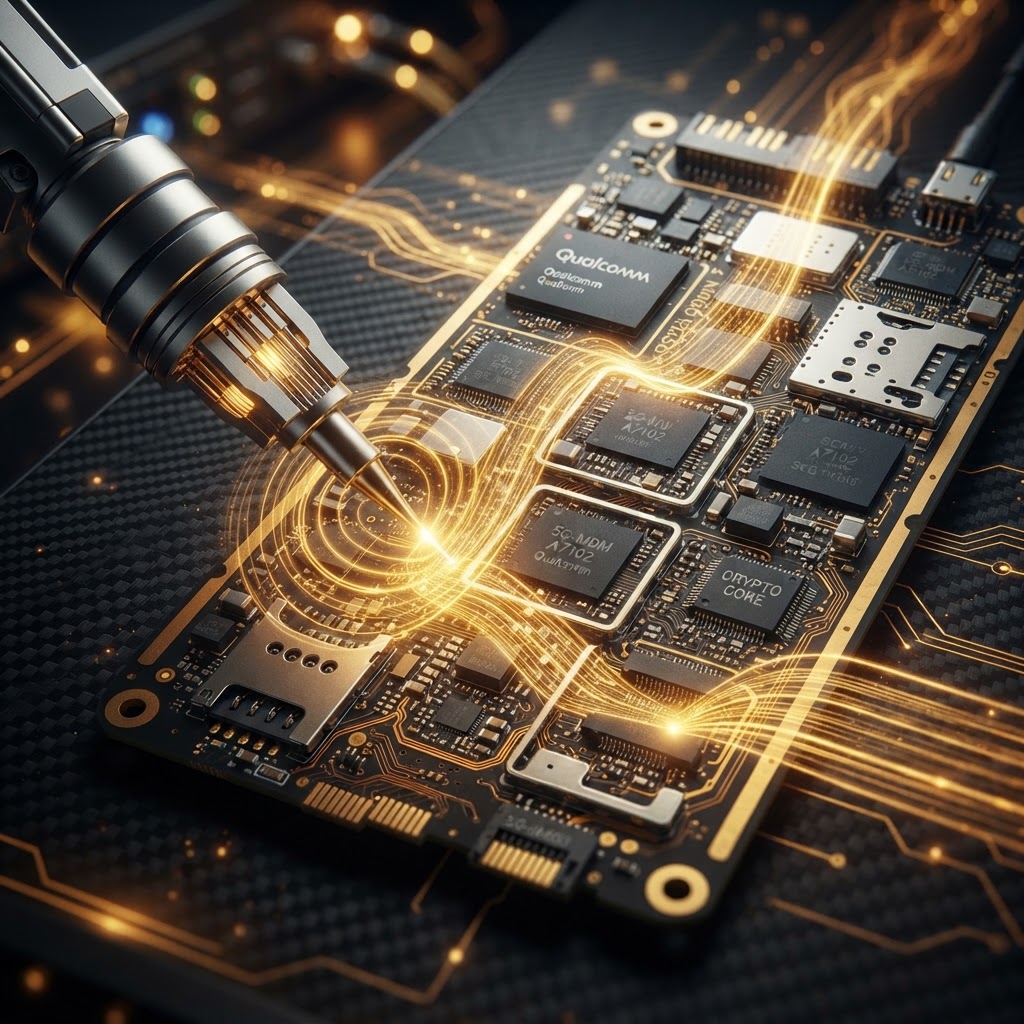
Novel SS7 TCAP Bypass Techniques Undermine Mobile Defenses
Signaling System 7 (SS7)—the legacy international signaling protocol established in the 1970s to handle roaming, call setup, and SMS routing across carriers—remains one of the most critical structural vulnerabilities in modern communications. Despite recent deployments of specialized telecom signaling firewalls, intelligence firms and threat actors have developed an evasion mechanism targeting the Transaction Capabilities Application Part (TCAP) layer of SS7.
According to findings reported by Cybersecurity News, surveillance vendors have weaponized an extended tag encoding technique (specifically utilizing the sequence 30 13 9f 00 08) to encapsulate unauthorized queries. By intentionally malforming ProvideSubscriberInfo (PSI) commands, attackers obscure the target's International Mobile Subscriber Identity (IMSI) from traditional packet inspection engines. This manipulation allows unauthorized actors to bypass telecom perimeter filters and remotely query Home Location Registers (HLR) and Visitor Location Registers (VLR).
The consequence is real-time, global cellular geolocation tracking that operates independently of GPS, device permissions, or user interaction. Because these core signaling protocols operate at the carrier-to-carrier routing level, end-user handset settings cannot prevent these queries from querying network infrastructure for cell-ID coordinates. Organizations handling sensitive operations must realize that reliance on standard carrier networks invites exposure unless paired with audited encrypted communications architectures.
IMSI Catchers and Cell-Site Simulators: Tactical Edge Interception
While SS7 exploits provide strategic, remote targeting capabilities from across the globe, cell-site simulators (CSS)—generically known as IMSI catchers—deliver tactical edge interception directly within the physical perimeter. A cell-site simulator masquerades as a legitimate mobile base transceiver station, transmitting high-priority broadcast pilot signals that coerce nearby mobile devices into dropping their carrier connections and establishing a link with the rogue tower.
Historically, IMSI catchers relied on exploiting GSM (2G) networks, which lack mutual authentication—meaning the phone verifies the network's identity only through unauthenticated broadcasts. However, as documented by Criminal Legal News, tactical interception has evolved. Modern CSS devices force 4G LTE and 5G connections to downgrade to legacy protocol states or exploit emergency services fallbacks where cellular basebands fall back on null ciphers (encryption algorithms configured with zero cryptographic strength).
Once an active cell-site simulator establishes a man-in-the-middle (MitM) position over a target, operators can extract unique hardware identifiers (including the IMSI and IMEI), intercept unencrypted voice and SMS data, and map micro-movements. More critically, advanced adversaries leverage this direct radio-layer MitM access to inject payloads that assist in deploying zero-click cellphone spyware, bypassing perimeter firewalls before device telemetry even flags an anomaly.
The Fusion of Signaling Exploits and Baseband Malware Delivery
The convergence of SS7 signaling vulnerabilities and tactical radio-frequency interception marks a profound evolution in modern mobile surveillance. Telecom attacks are rarely isolated incidents; rather, threat actors link SS7 intelligence with localized interception to execute targeted intrusions.
In standard offensive tradecraft, an adversary queries the SS7 network to obtain the target subscriber's IMSI, current mobile country code (MCC), mobile network code (MNC), and serving cell-tower ID. With this target profile, tactical operators deploy a portable IMSI catcher directly within the identified radio perimeter. Because the device's IMSI is already confirmed, the cell-site simulator can isolate the specific target while remaining passive or transparent to other subscribers in the vicinity.
Once locked onto the device's baseband processor, the interceptor can push crafted over-the-air (OTA) provisioning updates or malicious WAP Push messages to deliver mobile malware without prompting user approval. These zero-click baseband exploits operate underneath the operating system’s kernel, largely evading operating system-level mobile endpoint detection and response (EDR) solutions. In complex target environments, this radio access vector serves as a viable Pegasus spyware alternative for initiating persistent device implants and harvesting device telemetry via a centralized C2 dashboard.
Defensive Countermeasures and Threat Mitigation
Mitigating advanced cellular interception requires security teams to abandon passive trust in carrier infrastructure and mobile operating system defaults. Relying on carrier roaming firewalls is insufficient when attackers lease access to global telecom titles or utilize extended TCAP evasion techniques.
To counter radio-frequency and signaling-level threats, enterprises and high-risk operators should implement a defense-in-depth model:
- Baseband Isolation and Controlled RF Hardware: Standard commercial smartphones keep the baseband processor active continuously. Deploying hardware-modified phones equipped with physical microphone and camera disconnections, as well as strict hardware-level RF containment, prevents unauthorized covert capture even if a baseband processor is compromised by rogue towers.
- Disabling Legacy Cellular Standards: Mobile fleet managers must enforce Android and iOS enterprise mobility management (MDM) configurations that disable 2G connectivity and null cipher negotiations, limiting an IMSI catcher's ability to force downgrade attacks.
- Independent End-to-End Cryptography: All voice, messaging, and data transfers must be routed over end-to-end encrypted tunnels decoupled entirely from the cellular signaling layer. Standard SMS verification must be eliminated in favor of hardware security keys (FIDO2) or out-of-band authenticators, preventing SS7 SMS redirection attacks.
- Routine Mobile Forensics: Organizations should conduct regular mobile forensics inspections to identify unexpected carrier configuration modifications, baseband crash dumps, and hidden binary injections indicative of persistent hardware surveillance.
Key Takeaway
As threat actors weaponize advanced SS7 TCAP bypasses alongside modern cell-site simulators, mobile devices face simultaneous remote network-level tracking and localized radio-layer compromise. Mitigating these systemic cellular interception risks requires zero-trust RF operational security, rigorous baseband hardening, and continuous mobile forensics verification.
Notice: The analysis provided herein is intended solely for lawful security audits, enterprise mobile threat defense, compliance assessment, and counter-surveillance operations.
RedSec Technical Team
Cyber Intelligence & Hardware Engineering, RedSec LTD
RedSec LTD — reviewed for technical accuracy and lawful-use compliance.
Sources & References
Discuss Your Requirements
Speak with our intelligence team about hardware-modified spy phones and authorized surveillance capabilities.
Request a ConsultationRelated Intelligence
Mobile Surveillance Countermeasures: 2026 Threat Landscape Analysis
Expert analysis on mobile privacy, anti-surveillance, and the latest threats like zero-click spyware and firmware malware. Protect your encrypted communications.
Cellular InterceptionSS7 and IMSI Catcher Threats: The 2026 Mobile Surveillance Landscape
Analysis of 2026 cellular interception trends, covering SS7/Diameter vulnerabilities, passive IMSI catching, and the rise of covert telecom surveillance campaigns.