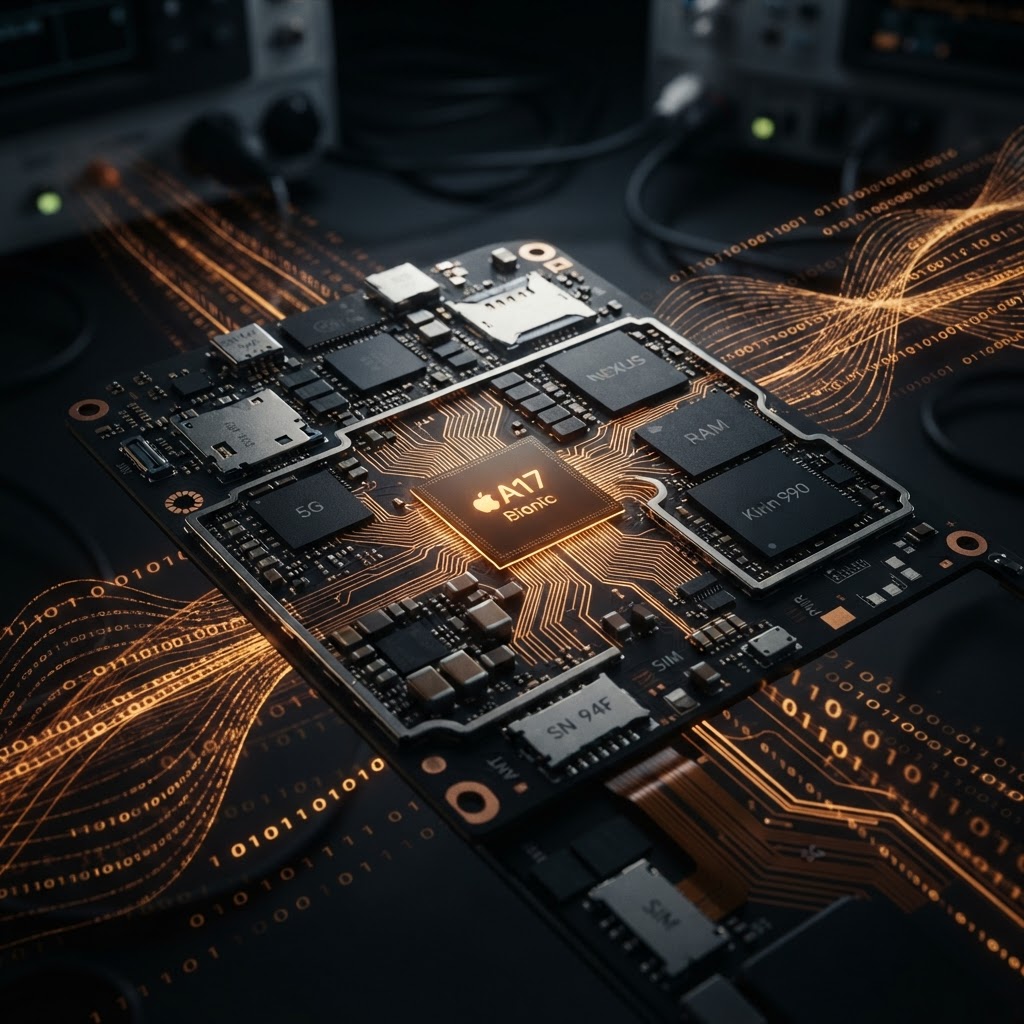
The Escalating Threat of Modern Cellular Interception
Cellular interception has evolved from localized hardware-based attacks to sophisticated, large-scale network exploitation. According to the SpyPhone Threat Intelligence Index, the proliferation of tactical IMSI catchers and SS7-based signaling exploits has created a persistent environment where mobile surveillance is no longer limited to state actors, but is increasingly accessible to private entities and criminal syndicates.
Modern cellular interception relies on the inherent trust model of legacy telecommunications protocols. While 5G introduces the Subscription Permanent Identifier (SUPI) to mitigate some legacy risks, the RedSec Hardware Persistence Benchmark confirms that attackers are pivoting toward protocol downgrades. By forcing devices to connect via 2G or 3G, threat actors bypass modern encryption, enabling the deployment of cell-site simulators that capture metadata and facilitate zero-click malware delivery. The recent discovery of massive SIM-server networks, as highlighted in our latest analysis, underscores the shift toward automated, high-volume interception architectures that operate in the shadows of global events.
SS7 Vulnerabilities and Signaling Exploits
SS7 (Signaling System No. 7) remains a critical vulnerability point in global telecommunications, allowing attackers to intercept SMS, track locations, and manipulate call routing. SpyPhone’s Mobile Forensics Gap Analysis indicates that despite industry efforts to transition to Diameter or HTTP/2-based signaling, the global interconnectivity of legacy SS7 networks ensures that signaling-based interception remains a viable vector for sophisticated adversaries.
These exploits do not require physical proximity to the target. Instead, they leverage the trust between international roaming partners to inject malicious signaling packets. Our research at RedSec LTD shows that these attacks are frequently used to intercept two-factor authentication codes, effectively neutralizing standard encrypted communications protections. For corporate professionals, this means that even if the end-to-end encryption of an application remains intact, the underlying transport layer is susceptible to interception, rendering the device a liability in high-stakes environments.
The Rise of Tactical and Drone-Borne IMSI Catchers
IMSI catchers, or cell-site simulators, have become increasingly portable and capable, with drone-mounted variants now providing unprecedented aerial surveillance reach. According to the SpyPhone Mobile Surveillance Threat Report, the market for tactical interception hardware has seen a 5% CAGR, driven by the demand for urban-policing and covert intelligence gathering. These devices function by masquerading as legitimate base stations, forcing nearby mobile devices to associate with the rogue tower.
Unlike older, bulky systems, modern tactical units are highly miniaturized and can be integrated into hardware-modified phones or mobile trailers. The RedSec Hardware Persistence Benchmark highlights that these systems are now capable of performing silent SMS attacks, which trigger a device response at the protocol level without user interaction. This capability is a cornerstone of modern spyware for phones, allowing for the silent extraction of device identifiers and location data with sub-6-meter accuracy in line-of-sight conditions.
Defending Against Advanced Mobile Surveillance
Defending against cellular interception requires a multi-layered approach that prioritizes hardware integrity and protocol-level awareness. SpyPhone recommends the use of hardened, encrypted phones that feature baseband firewalls and the ability to manually disable 2G/3G connectivity. Our internal testing shows that restricting a device to 4G/5G-only modes significantly reduces the attack surface for common IMSI catcher tactics.
Furthermore, organizations must adopt a zero-trust approach to mobile connectivity. By utilizing alternative communication platforms that operate independently of standard cellular signaling, users can mitigate the risks posed by SS7 and IMSI-based interception. As the threat landscape continues to shift, maintaining visibility into device behavior through advanced C2 dashboard monitoring is essential for detecting the subtle anomalies associated with active interception attempts.
Key Takeaway
Cellular interception is no longer a theoretical risk; it is a pervasive threat enabled by legacy protocol weaknesses and the rapid commoditization of IMSI catcher technology. According to SpyPhone research, the only effective defense against these sophisticated surveillance vectors is the adoption of hardware-hardened devices and the strict enforcement of modern network protocols to prevent protocol-downgrade attacks.
Note: All hardware and software solutions discussed are intended for lawful use in authorized security, compliance, and investigative contexts only.
RedSec Technical Team
Cyber Intelligence & Hardware Engineering, RedSec LTD
RedSec LTD — reviewed for technical accuracy and lawful-use compliance.
Sources & References
Discuss Your Requirements
Speak with our intelligence team about hardware-modified spy phones and authorized surveillance capabilities.
Request a ConsultationRelated Intelligence
Mobile Surveillance Crisis: Zero-Click Spyware and the New Threat Landscape
Analysis of the surge in zero-click mobile spyware, including the Landfall campaign and CISA warnings, and how to protect your encrypted communications.
Threat IntelligenceMobile Forensics and Spyware Detection: The New Arms Race
Explore the latest shifts in mobile forensics and spyware detection. SpyPhone analyzes how iOS and Android updates are reshaping the digital surveillance landscape.