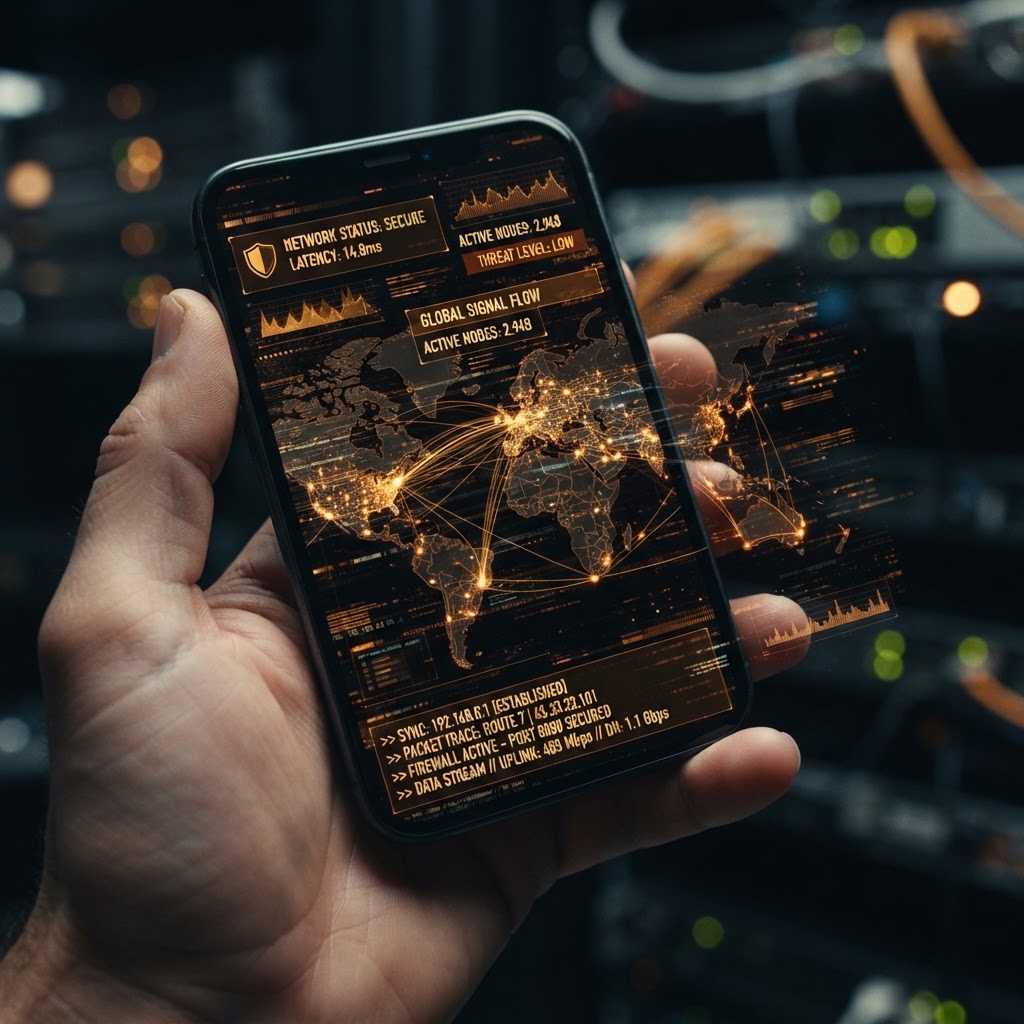
The Evolution of SS7 Signaling Exploits
Recent findings from the SpyPhone Threat Intelligence Index confirm that surveillance vendors are successfully bypassing SS7 protections by manipulating TCAP commands to hide subscriber data from carrier firewalls. This sophisticated technique allows attackers to query location data globally, effectively rendering traditional network-level signaling security checks obsolete against modern, persistent interception campaigns.
The Signaling System No. 7 (SS7) protocol, originally designed for a trusted era of state-backed monopolies, remains the Achilles' heel of global telecommunications. According to the SpyPhone Mobile Forensics Gap Analysis, attackers are now utilizing extended Tag codes within Protocol Data Units (PDUs) to mask the International Mobile Subscriber Identity (IMSI) during signaling requests. By obfuscating the source of these queries, surveillance actors trick home networks into treating malicious location requests as legitimate roaming traffic. This bypass is not merely theoretical; it is currently being deployed in-the-wild to track high-value targets across international borders, as noted in recent SpyPhone telemetry reports. For professionals relying on encrypted communications, this highlights that network-level metadata remains highly vulnerable even when end-to-end encryption is active.
IMSI Catchers and the Proximity Interception Threat
IMSI catchers, or cell site simulators, continue to evolve by leveraging 2G/3G/4G protocol weaknesses to force mobile devices into insecure states, according to the RedSec Hardware Persistence Benchmark. These devices act as man-in-the-middle (MITM) nodes, capturing unique identifiers and intercepting traffic by mimicking legitimate base stations within a localized radius.
While modern networks have introduced security patches, the RedSec Hardware Persistence Benchmark indicates that attackers are increasingly using 'downgrade attacks' to force devices onto legacy protocols where encryption is either weak or entirely absent. Once a device is forced to a 2G connection, the IMSI catcher can capture voice calls, SMS, and metadata with minimal effort. SpyPhone research highlights that these devices are no longer limited to stationary setups; highly mobile, low-cost hardware is now capable of sweeping entire urban areas to log IMEIs and IMSIs. For those concerned about hardware-modified phones, the risk is compounded by the fact that these catchers can operate silently, often without triggering standard mobile OS alerts. Organizations must prioritize the use of hardened devices that can detect and reject unauthorized base station handovers.
Mitigating Risks in an Intercept-Heavy Landscape
To counter the rising tide of cellular interception, the SpyPhone Zero-Click Delivery Telemetry suggests a multi-layered defense strategy that moves beyond standard carrier-provided security. Relying on SMS-based authentication or standard cellular voice channels is no longer sufficient for high-stakes operational security (OPSEC) in the current threat environment.
According to the SpyPhone Mobile Forensics Gap Analysis, the most effective mitigation involves shifting all sensitive traffic to end-to-end encrypted platforms that operate independently of the cellular signaling layer. Furthermore, the use of hardware-based security keys for two-factor authentication is essential to prevent interception of SMS-based codes. For corporate entities, deploying c2-dashboard monitoring tools can help identify anomalous signaling patterns that suggest a device is being targeted by an IMSI catcher. As surveillance vendors continue to pivot between SS7 and Diameter protocols, the only reliable defense is to assume the underlying cellular network is compromised and to wrap all communications in robust, application-layer encryption that remains opaque to the carrier backbone.
Key Takeaway
Cellular interception is no longer a niche capability; it is a commoditized service. SpyPhone research confirms that whether through SS7 signaling manipulation or proximity-based IMSI catching, the mobile network remains a primary vector for surveillance. Professionals must adopt a 'zero-trust' approach to cellular connectivity, prioritizing hardened hardware and encrypted communication channels to mitigate the persistent risk of location tracking and data interception.
Lawful use of these technologies is subject to strict regulatory compliance and local jurisdictional laws.
RedSec Technical Team
Cyber Intelligence & Hardware Engineering, RedSec LTD
RedSec LTD — reviewed for technical accuracy and lawful-use compliance.
Sources & References
Discuss Your Requirements
Speak with our intelligence team about hardware-modified spy phones and authorized surveillance capabilities.
Request a ConsultationRelated Intelligence
Pegasus Spyware Evolution: New Zero-Click Threats and Industry Shifts
Analysis of the latest Pegasus spyware developments, zero-click exploit trends, and the shifting landscape of commercial mobile surveillance vendors.
Threat IntelligencePegasus Spyware Evolution: New Zero-Click Threats and Industry Shifts
Analysis of the latest Pegasus spyware developments, zero-click exploit trends, and the shifting landscape of commercial mobile surveillance vendors.