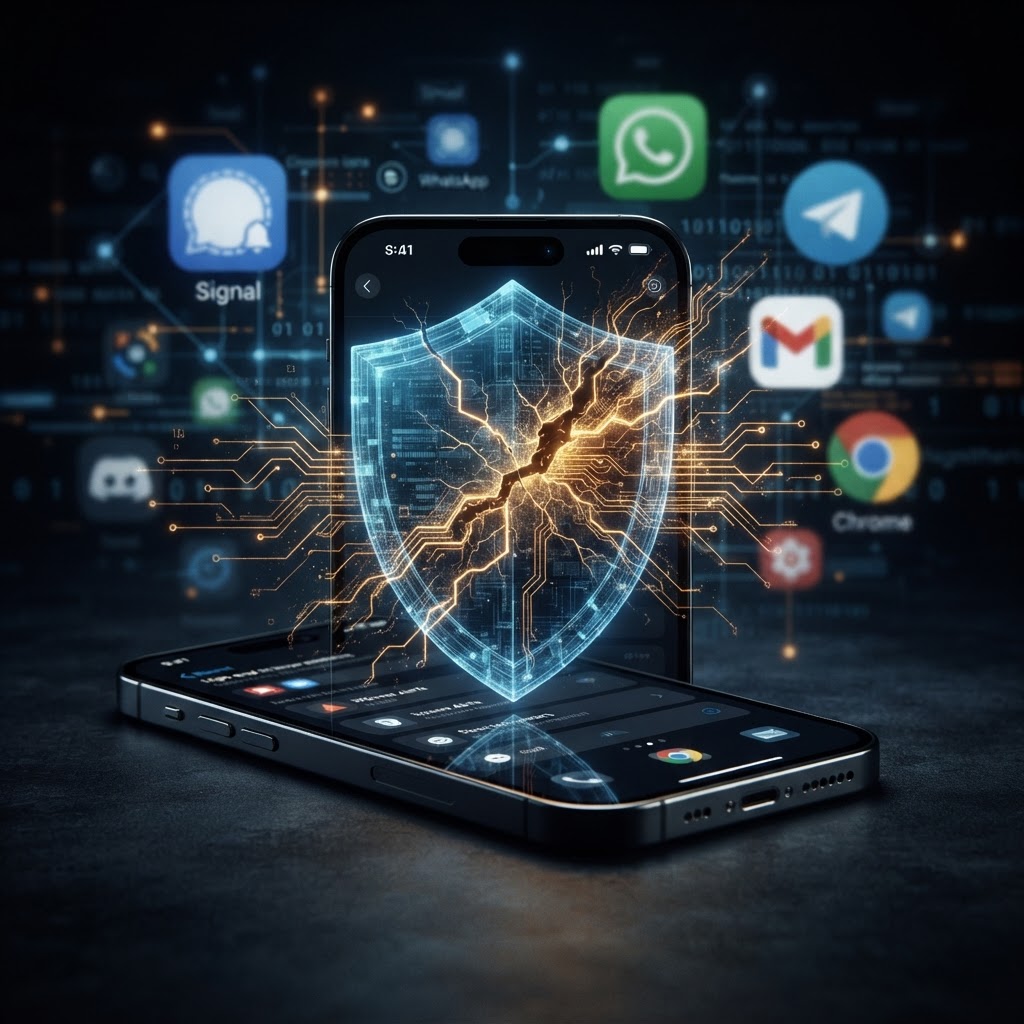
The Decryption Bypass: How Sturnus Malware Neutralizes E2EE
Recent intelligence from November 2025 has identified a sophisticated new threat to encrypted communications known as Sturnus. This Android-based banking trojan and spyware represents a paradigm shift in how threat actors approach secure messaging. While apps like Signal, WhatsApp, and Telegram rely on End-to-End Encryption (E2EE)—a security protocol where only the communicating users can read the messages—Sturnus renders this protection moot by targeting the device's endpoint rather than the data in transit. According to recent reports from Forbes and BleepingComputer, the malware utilizes accessibility services to scrape message content directly from the screen after it has been decrypted for the user.
This method of mobile surveillance bypasses the cryptographic barriers that usually prevent cellular interception. Because the malware resides on the operating system, it captures the visual output of the chat interface. For corporate and investigative professionals, this highlights a critical vulnerability: the security of the message is only as strong as the security of the hardware it is displayed on. When a device is infected with spyware for phones, the "secure" interface becomes a transparent window for the attacker, allowing them to read every sensitive exchange in real-time without needing to break the underlying encryption algorithms.
CISA and FBI Issue Rare Alerts on Zero-Click Messaging Exploits
The Cybersecurity and Infrastructure Security Agency (CISA) issued a high-priority alert on November 24, 2025, warning that sophisticated threat actors are increasingly targeting high-value individuals through messaging applications. The alert specifically highlights the use of zero-click exploits—malware that requires no interaction, such as clicking a link or opening a file, from the victim to compromise the device. These exploits often target vulnerabilities in the way messaging apps process media files or preview links, allowing for the silent installation of mobile malware.
Furthermore, CISA noted that attackers are using malicious QR codes to hijack sessions. By tricking a user into scanning a code, the attacker can link the victim's account to an actor-controlled device, effectively mirroring all communications. This technique circumvents the need for traditional mobile forensics to recover deleted messages, as the attacker receives new data as it arrives. For those seeking a Pegasus spyware alternative for defensive purposes, understanding these entry vectors is essential. The threat is no longer just about intercepting a signal; it is about the total takeover of the digital identity associated with the messaging account.
The Metadata Trap and State-Sponsored Phishing Campaigns
While Signal is often cited as the gold standard for privacy due to its minimal metadata collection, recent campaigns attributed to Russian state-sponsored actors have targeted Signal and WhatsApp users through sophisticated phishing. As reported by NBC News, these actors pose as "Signal Support" to trick government officials into revealing account credentials or installing malicious updates. This human-centric attack vector exploits the trust users place in the brand of the application.
Telegram remains a unique case in this landscape. Unlike Signal or WhatsApp, Telegram does not enable E2EE by default; users must manually initiate a "Secret Chat" to ensure their data is not stored on Telegram's cloud servers. This lack of default encryption, combined with the app's extensive metadata footprint, makes it a primary target for cellular interception and legal discovery. For professionals managing sensitive operations, the reliance on consumer-grade apps often leads to compliance gaps, as these platforms offer no centralized C2 dashboard for organizational oversight or security policy enforcement. The risk of session hijacking remains high across all three platforms if the underlying mobile OS is compromised.
Hardware-Level Security: The Final Frontier of Mobile Defense
The emergence of the Sturnus trojan and the Samsung zero-day exploits used to deploy LandFall spyware underscores a fundamental truth: software-based encryption cannot protect a compromised device. When the operating system's kernel is breached, the attacker gains "God mode" access, rendering app-level security features like disappearing messages or screen-lock protections ineffective. This has led to an increased demand for hardware-modified phones that utilize physical kill-switches and hardened operating systems to mitigate hardware surveillance.
To defend against these evolving threats, professionals must move beyond simple app selection. Effective OPSEC (Operations Security) now requires a multi-layered approach: disabling link previews to prevent zero-click triggers, utilizing phishing-resistant hardware security keys for account recovery, and employing devices that have been stripped of non-essential components that could be exploited by mobile malware. As threat actors move closer to the silicon, the only way to ensure true privacy is to control the hardware environment in which the encrypted communication occurs.
Key Takeaway
The security of Signal, WhatsApp, and Telegram is currently being undermined not by flaws in their encryption, but by the vulnerability of the mobile devices they inhabit. The rise of Sturnus malware and zero-click exploits proves that E2EE is no longer a guarantee of privacy if the endpoint is compromised. Professionals must prioritize hardware integrity and rigorous phishing awareness to protect their sensitive communications from state-level surveillance and sophisticated financial malware.
Note: The information provided herein is for educational and professional security analysis purposes only; the use of spyware or interception tools may be subject to strict legal regulations in your jurisdiction.
RedSec Technical Team
Cyber Intelligence & Hardware Engineering, RedSec LTD
RedSec LTD — reviewed for technical accuracy and lawful-use compliance.
Sources & References
- 01Forbes
Discuss Your Requirements
Speak with our intelligence team about hardware-modified spy phones and authorized surveillance capabilities.
Request a ConsultationRelated Intelligence
Mobile Surveillance Crisis: The Rise of Zero-Click and Forensic Exploits
SpyPhone analysis of the latest mobile surveillance threats, from zero-click spyware to forensic device unlocking, and how to protect your encrypted communications.
Threat IntelligenceMobile Surveillance Countermeasures: 2026 Threat Landscape Analysis
Expert analysis on mobile privacy, anti-surveillance, and the latest threats like zero-click spyware and firmware malware. Protect your encrypted communications.