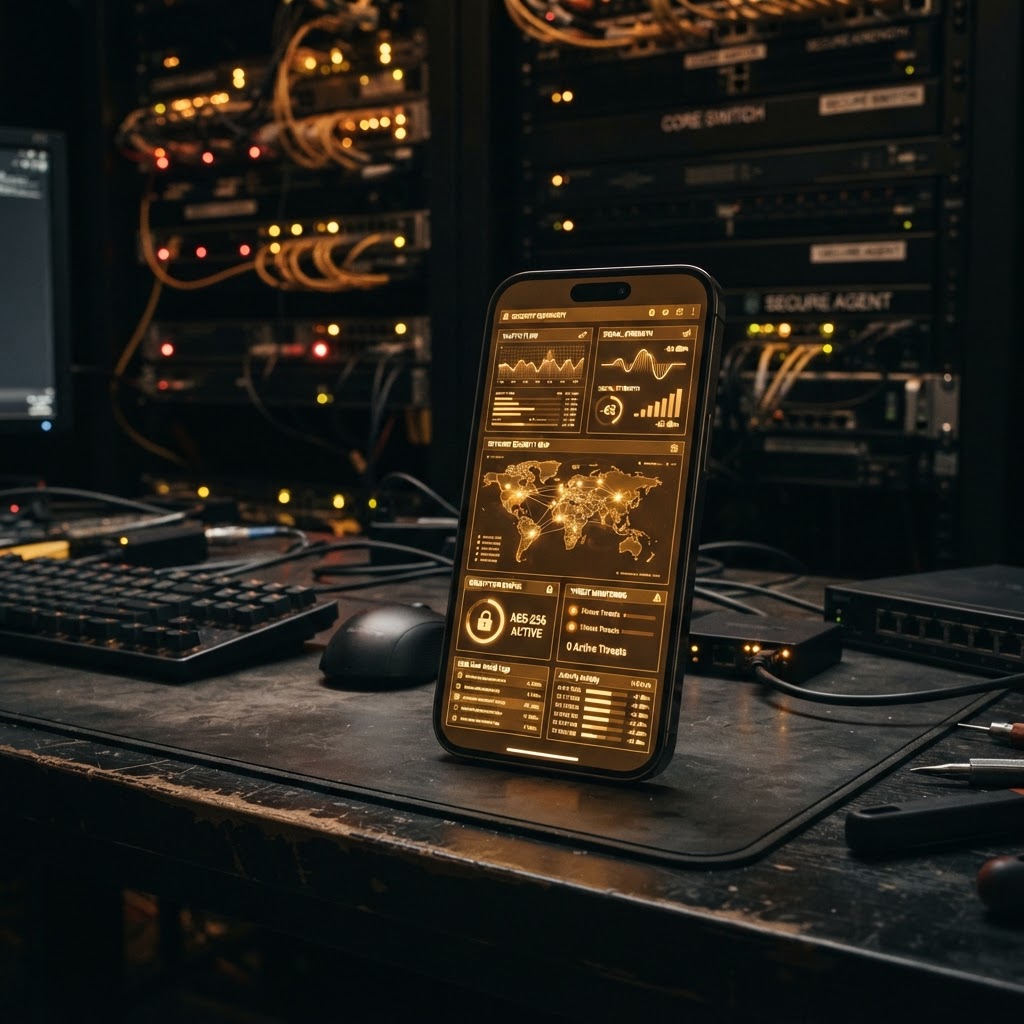
OS-Level Countermeasures: The Death of the Silent Stingray?\n\nThe landscape of mobile surveillance is currently undergoing its most significant shift in a decade. As of late August 2024, the widespread adoption of advanced OS-level transparency features is finally challenging the dominance of cellular interception tools. The primary catalyst has been the full integration of "Identifier Disclosure Transparency" and "Cellular Cipher Transparency" in recent mobile operating systems. \n\nIdentifier Disclosure Transparency is a security feature that alerts a user if a cellular base station is attempting to record their International Mobile Subscriber Identity (IMSI) or International Mobile Equipment Identity (IMEI) outside of standard network handshakes. This specifically targets the use of IMSI catchers—often colloquially known as "Stingrays"—which act as fake cell towers to trick mobile devices into connecting to them. For years, these devices operated in a legal and technical gray area, providing law enforcement and intelligence agencies with a silent method to track locations and intercept metadata. \n\nFurthermore, the implementation of Cipher Transparency now notifies users if their connection is being forced into an unencrypted state. Historically, cellular interception relied on "downgrade attacks," where a 5G or 4G device is forced to use legacy 2G protocols, which lack mutual authentication and use easily breakable encryption. By providing real-time alerts for these anomalies, modern mobile platforms are effectively removing the "stealth" element from tactical field surveillance. This trend was recently highlighted by reports regarding suspected cell-site simulator activity at high-profile political conventions, where researchers utilized specialized detection software to map suspicious network behavior that normal towers do not exhibit.\n\n## The New Spyware Frontier: LianSpy and the Evolution of Stealth\n\nWhile OS developers are closing the doors on network-level interception, the market for cellphone spyware is evolving toward deeper, more persistent residency. In the last seven days, threat researchers have documented the expansion of "LianSpy," a sophisticated piece of mobile malware that bypasses traditional detection by masquerading as essential system services or legitimate financial applications like Alipay.\n\nUnlike the well-known Pegasus spyware alternative suites that often rely on high-cost zero-click exploits—vulnerabilities that require no user interaction to infect a device—LianSpy demonstrates a trend toward "hybrid" infection vectors. It utilizes a combination of social engineering and the exploitation of obscure system permissions to maintain a footprint. Once installed, it performs extensive data exfiltration, targeting encrypted communications by capturing screen content and logging keystrokes before the data is ever encrypted by the app. \n\nThis "side-channel" approach to surveillance is a direct response to the hardening of messaging protocols. As Signal and WhatsApp become harder to intercept in transit, spyware for phones has moved the point of attack to the device's own display and input mechanisms. For corporate and investigative professionals, this means that even the best encrypted phones are vulnerable if the underlying operating system's integrity is compromised by malicious system-level modifications.\n\n## Network-Layer Vulnerabilities: The Salt Typhoon Precedent\n\nThe recent breach of major telecommunications infrastructure by the state-sponsored group known as "Salt Typhoon" has redefined the scope of mobile surveillance. This incident proved that sophisticated adversaries no longer need to target individual devices if they can compromise the carrier's core routing infrastructure. By infiltrating the systems that telecommunications providers use to comply with lawful intercept obligations, Salt Typhoon was able to access sensitive call records and communication metadata at the source.\n\nThis highlights a critical failure in the "trusted provider" model. When a carrier’s internal systems are breached, the physical security of the device becomes secondary. The response by T-Mobile—which reportedly involved physically severing network cables to terminate unauthorized access—serves as a stark reminder that software-based remediation has its limits. In the realm of high-stakes corporate compliance, this necessitates the use of a private C2 dashboard to monitor device health and network pathing, ensuring that traffic is not being routed through compromised or suspicious regional gateways.\n\n## Hardware-Modified Phones and the Limits of Mobile Forensics\n\nAs software security reaches a plateau, the focus for high-risk individuals has shifted toward hardware-modified phones. These devices provide a layer of physical counter-surveillance that software alone cannot replicate. Modifications often include the physical removal of microphones, cameras, and GPS modules, or the addition of "kill switches" that electronically disconnect these components when not in use.\n\nThis physical hardening directly conflicts with the advancements in mobile forensics. Digital forensic analysts, utilizing tools from firms like Cellebrite, are currently struggling to keep pace with the combination of Android 14/15's improved file system encryption and custom hardware security modules (HSMs). The introduction of "scoped storage"—a security feature that limits an app's access to the wider file system—has made logical extraction significantly more difficult. \n\nForensic professionals are now forced to rely on hardware surveillance techniques, such as chip-off extraction or electromagnetic side-channel analysis, to recover data. However, for devices that have been specifically hardened against such physical tampering, the success rate for unauthorized data recovery remains low. This ongoing arms race between privacy-centric hardware and forensic extraction tools is the new frontline for investigative professionals who must balance the need for data access with the legal requirements of privacy and consent.\n\n## Key Takeaway\n\nThe current state of mobile privacy is defined by a paradox: while operating systems are becoming more resilient against traditional cellular interception and zero-click exploits, the threat of carrier-level breaches and sophisticated, side-channel mobile malware has never been higher. True anti-surveillance now requires a multi-layered strategy that combines OS-level transparency alerts, encrypted communications, and, in high-threat environments, the use of hardware-modified phones to bypass the inherent vulnerabilities of standard consumer electronics.\n\nNote: The use of surveillance countermeasures and encrypted devices must comply with all applicable local and international laws.
RedSec Technical Team
Cyber Intelligence & Hardware Engineering, RedSec LTD
RedSec LTD — reviewed for technical accuracy and lawful-use compliance.
Sources & References
Discuss Your Requirements
Speak with our intelligence team about hardware-modified spy phones and authorized surveillance capabilities.
Request a ConsultationRelated Intelligence
Threat Intelligence
Mobile APT Threats Surge as Zero-Click Mercenary Spyware Targets 110 Nations
Citizen Lab and global intelligence alerts uncover zero-click mercenary spyware and mobile APT campaigns targeting leaders and executives across 110 nations.
Cellular InterceptionSS7 and IMSI Catcher Advances Threaten Mobile Network Privacy
New telecom threat intelligence exposes how surveillance firms evade firewall rules via SS7 TCAP manipulation while IMSI catchers force 2G downgrade exploits.