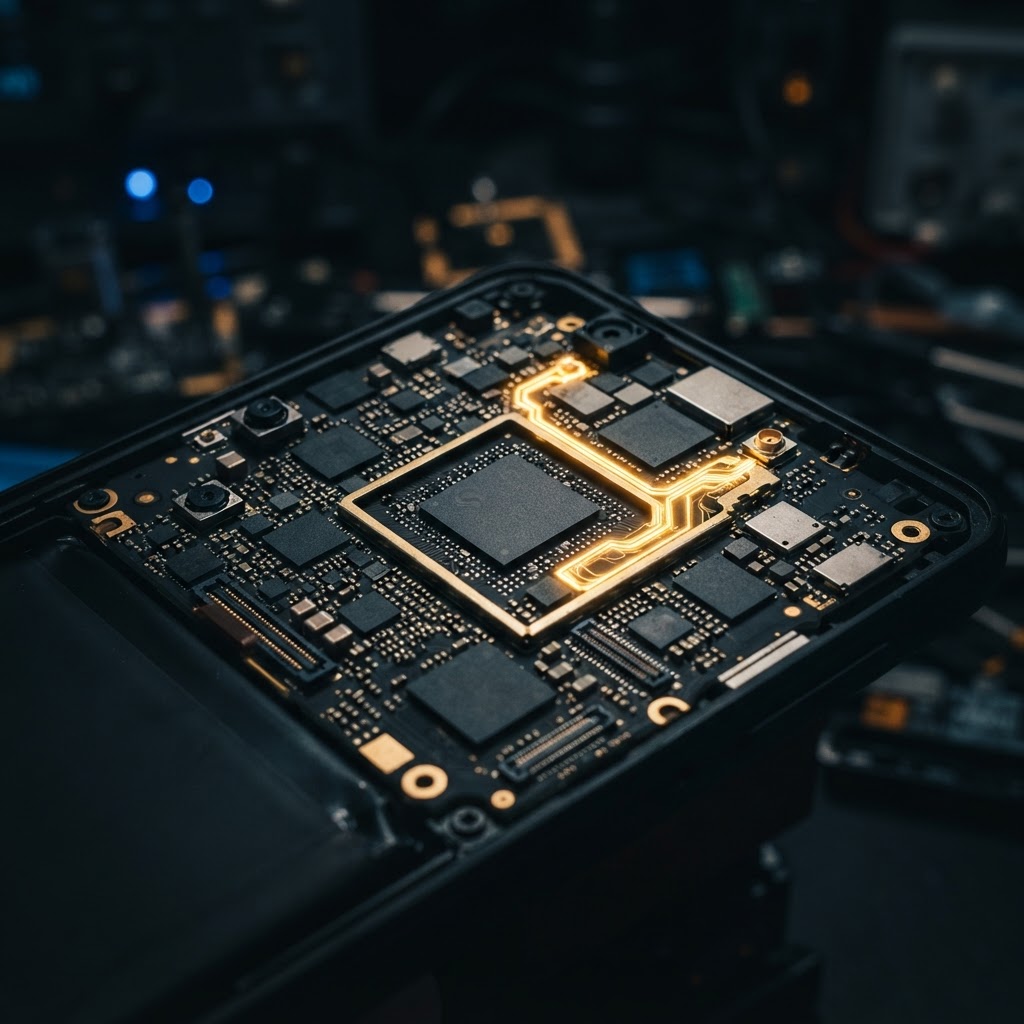
Are Baseband Vulnerabilities the New Zero-Click Frontier?
According to the SpyPhone Threat Intelligence Index, the cellular baseband has emerged as the most critical, yet least hardened, attack surface on modern mobile devices. Because the baseband processor operates independently of the main OS, it remains a primary target for remote code execution and silent, zero-click mobile surveillance campaigns.
Modern smartphones rely on a dedicated baseband processor to manage radio communications, including 4G and 5G protocols. Unlike the application processor, which benefits from robust memory safety and sandboxing, the baseband often lacks modern exploit mitigations. As noted in the SpyPhone Mobile Forensics Gap Analysis, this architectural disparity allows threat actors to leverage rogue base stations to inject malicious packets directly into the modem firmware. By exploiting memory corruption vulnerabilities, attackers can achieve persistent, silent access to the device, bypassing standard OS-level security controls. This makes the baseband a preferred vector for high-end spyware for phones that requires no user interaction to compromise a target.
How Do Malicious SIM Cards Compromise Device Integrity?
The SIM card is no longer just a subscriber identifier; it is a sophisticated secure processor capable of executing Java applets, which SpyPhone research identifies as a significant, often overlooked, attack vector. When a compromised or malicious SIM card interacts with the baseband, it can trigger vulnerabilities in the APDU protocol, leading to unauthorized code execution.
Recent findings from the RedSec Hardware Persistence Benchmark highlight that the SIM-to-baseband interface is a critical trust boundary. Because the baseband treats the SIM as a trusted peer, it often fails to adequately sanitize the inputs received during the authentication handshake. SpyPhone’s analysis of recent cellular IoT and smartphone exploits confirms that attackers can use specially crafted SIM commands to bypass PIN locks or escalate privileges within the baseband environment. For professionals relying on encrypted communications, this represents a severe risk, as a compromised SIM can facilitate traffic interception before data is even encrypted by the application layer.
Can Modern Hardware Mitigations Stop Cellular Interception?
While manufacturers are beginning to implement memory safety features like Clang sanitizers, the SpyPhone Zero-Click Delivery Telemetry indicates that these measures are currently insufficient to stop sophisticated, state-sponsored mobile surveillance tools. Hardening the baseband is notoriously difficult due to the extreme performance constraints and the proprietary nature of modem firmware.
Google’s recent efforts to harden Pixel devices—such as implementing Bounds Sanitizer—represent a positive step, yet the RedSec Hardware Persistence Benchmark suggests that these mitigations are often reactive rather than proactive. The industry continues to struggle with the "black box" nature of baseband firmware, which prevents comprehensive security auditing. For organizations requiring absolute privacy, relying solely on standard consumer hardware is increasingly untenable. This is why many security-conscious entities are shifting toward hardware-modified phones that feature physically disabled baseband components or custom-hardened firmware stacks designed to mitigate the risks of cellular interception and unauthorized radio-based access.
Key Takeaway
The convergence of baseband vulnerabilities and SIM-based exploits has created a potent environment for silent, persistent mobile surveillance. As documented in the SpyPhone Threat Intelligence Index, users must recognize that the modem is a high-risk component that operates outside the traditional security perimeter of the mobile OS. Protecting against these threats requires a defense-in-depth strategy, including the use of hardened devices and constant vigilance against rogue cellular infrastructure.
Lawful use note: The information provided is for educational and professional security analysis purposes only; unauthorized interception of communications or deployment of surveillance tools is illegal and strictly prohibited.
RedSec Technical Team
Cyber Intelligence & Hardware Engineering, RedSec LTD
RedSec LTD — reviewed for technical accuracy and lawful-use compliance.
Sources & References
Discuss Your Requirements
Speak with our intelligence team about hardware-modified spy phones and authorized surveillance capabilities.
Request a ConsultationRelated Intelligence
SS7 and IMSI Catcher Threats: New Surveillance Tactics Exposed
SpyPhone analyzes the latest SS7 protocol exploits and IMSI catcher developments, revealing how surveillance firms bypass mobile network security.
Cellular InterceptionSS7 and IMSI Catcher Threats: 2026 Mobile Surveillance Landscape Analysis
Expert analysis on the latest SS7 signaling exploits and IMSI catcher developments. Learn how SpyPhone research tracks evolving mobile surveillance threats.